Zimbabwe, August 2025
Overview of Rice Sector in Zimbabwe
by Abraham Mashumba, Director of Business Development, Ministry of Lands, Agriculture, Fisheries, Water and Rural Development – Focal Point, Coalition for African Rice Development –
Introduction
Rice has become one of the major staple food crops in Zimbabwe driven by a shift in consumption patterns. An increase in population has also seen an increase in the demand for rice in Zimbabwe. Rice consumption is expanding at 6% per annum whilst production is 4% per annum, hence a huge gap which needs to be filled. The country’s annual rice requirement is about 300,000 metric tones, while local production is at average 2,900 MT. Rice provides an attractive choice as food by virtue of the relative ease and efficiency with which it can be cooked (fuel and time) and long shelf life.
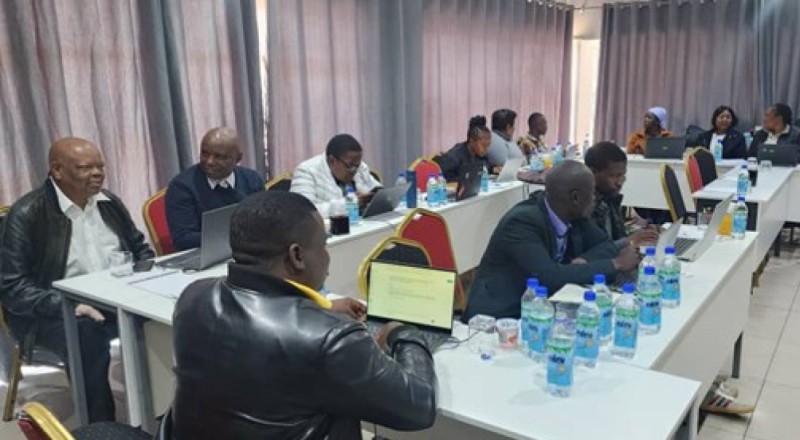
To gain momentum, the Ministry of Lands, Agriculture, Fisheries, Water and Rural Development, with technical and financial assistance from CARD Secretariat, organized two working weeks to develop the proposal of the country’s National Rice Development Strategy (NRDS) and Concept Notes respectively.
The country has 10,600 small, medium and large dams with the potential to irrigate more than 2 million hectares of land. Currently there are 462 functional irrigation schemes across the country suitable for rice production. Despite this comparative advantage, Zimbabwe is a net importer of rice.
The NRDS seeks to unlock this potential and reduce import bill of rice which calls for the need to develop a dedicated strategy to enable resources from the government, development partners and the private sector to be channeled towards the development of the rice value chain.
Overview of the rice sector in Zimbabwe
Rice has become one of the major staple food crops in Zimbabwe driven by a shift in consumption patterns. An increase in population has also seen an increase in the demand for rice in Zimbabwe. Rice consumption is expanding at 6% per annum whilst production is 4% per annum, hence a huge gap which needs to be filled. The country’s annual rice requirement is about 300,000 metric tones, while local production is at average 2,900 MT. Rice provides an attractive choice as food by virtue of the relative ease and efficiency with which it can be cooked (fuel and time) and long shelf life.
To gain momentum, the Ministry of Lands, Agriculture, Fisheries, Water and Rural Development, with technical and financial assistance from CARD Secretariat, organized two working weeks to develop the proposal of the country’s National Rice Development Strategy (NRDS) and Concept Notes respectively.
The country has 10,600 small, medium and large dams with the potential to irrigate more than 2 million hectares of land. Currently there are 462 functional irrigation schemes across the country suitable for rice production. Despite this comparative advantage, Zimbabwe is a net importer of rice.
The NRDS seeks to unlock this potential and reduce import bill of rice which calls for the need to develop a dedicated strategy to enable resources from the government, development partners and the private sector to be channeled towards the development of the rice value chain.
Key challenges and opportunities
In the opinion of our interviewee, to make Zimbabwe’s rice farming more dynamic and competitive, the main issues to be considered include building and rehabilitation of irrigation infrastructures, establishment of a rice seed system and financing the field operations in both low and upland ecosystems. Along with these, there is need to create a critical mass of experts to drive the rice value chain in collaboration with national, regional and international partners.
At same time, there will be a need to promote the consumption of local rice over imported. According to Mr. Mashumba, to protect domestic production, the Government will not issue import permits for rice during the period of harvesting rice in the country. This will be the case once the local rice production has reached the level of meeting local demand. This is a policy position that applies to all cereals grown in Zimbabwe.
Collaboration between CARD initiative with NRDS
Mr. Mashumba understands that CARD as a platform for learning, collaboration, regional market, sharing experiences, market share. He also believes that through CARD mechanism recently, it was possible the identify the pillars for the development of rice value chain in Zimbabwe namely:
Pillar 1. Sustainable production and productivity,
Pillar 2. Irrigation development and water management,
Pillar 3. Post harvest loss management and value addition,
Pillar 4. Market and market development,
Pillar 5. Research development, variety improvement and seed multiplication and,
Pillar 6. Policy and regulatory environment.
For the future, Mr. Mashumba expectation on CARD is to consolidate the collaboration with different institutions in the rice value chain with particular emphasis on research to generate technology packages suitable for the different agroecologies and farming systems of the country.
Sustainability and prospects
As for sustainability and prospects, Mr. Mashumba believes that sustainable production of rice can be achieved by increasing and expanding irrigation schemes having agriculture policies, strategies and plans that support rice production. Such production should be informed by technologies from scientific research, using projects co-financed by the Government and Development Partners. Such projects will require the involvement of key players and include, women, and young entrepreneurs. With this approach the goal of self-sufficiency in rice production is achievable in Zimbabwe. For this, he proposed drawing experiences from successful examples from the region and from other economies in Asia as a bench-marking initiative.