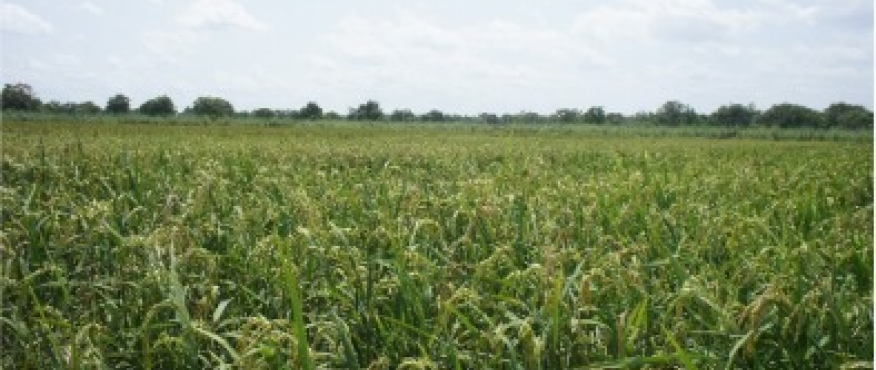
Mali, March 2026
Interview with the NRDS Focal Point of Mali
Rice in Mali: a pillar of food sovereignty, between ancestral traditions and contemporary challenges
In the heart of the Inner Niger Delta, rice is not only a cereal: it is a symbol of resilience, a daily food for millions of Malians, and a major challenge for national food security. In a country where harvests are facing the vagaries of climate and security tensions, rice is emerging as a central element of the agricultural economy. We interviewed Mr. Samba Barry, Focal Point of the National Rice Development Strategy (NRDS) and National Coordinator of the RICOWAS[1] project, to decipher this vital sector. “Rice is the foundation of our food sovereignty,” he says, pointing to a thousand-year-old heritage that is now facing modern challenges
[1] RICOWAS: Scaling up climate resilient rice production in West Africa
The point of view of a pillar of the NSDR
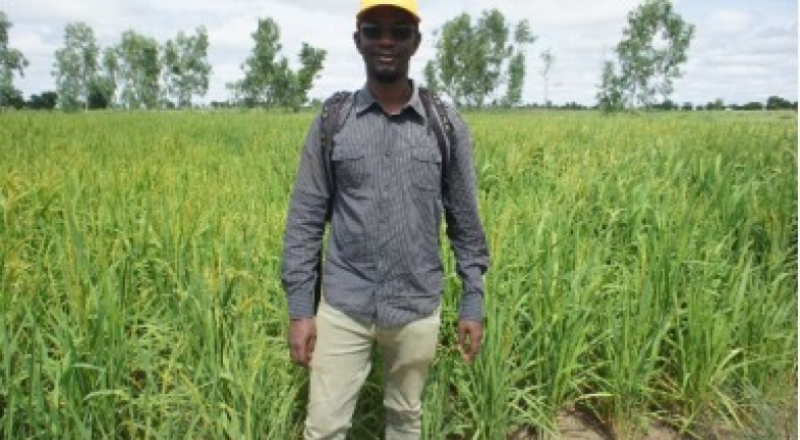
Samba Barry holds several technical roles: Focal Point of the NRDS, Head of the Statistical and Monitoring and Evaluation Office at the National Directorate of Agriculture, and since 2023 National Coordinator of the RICOWAS Project Implementing Entity. As such, he sheds major light on the state of the rice sector in Mali, its recent performance and its structural constraints.
Rice: a long history that structures Malian agriculture
Rice in Mali is not just a crop: it is an ancestral legacy that dates back thousands of years. Scientific studies place the origin of African rice cultivation in the Niger Delta, where the local variety “Oryza glaberrima” was domesticated about 3,000 years ago. Over the centuries, this cereal has become anchored in the agricultural and food practices of the great West African empires, such as those of Ghana, Mali and Songhai. From the days of the great kingdoms to modern tables, rice has always been an essential staple. With the arrival of Asian rice (Oryza sativa) from the sixteenth century, production practices were transformed, strengthening irrigated systems and yields. Today, rice remains ubiquitous in agricultural practices and eating habits, especially in riparian and urban areas where it has become a staple food.
In short, Malian rice cultivation is the result of a long millennial history that has seen rice evolve from a wild plant domesticated in the Niger Basin to a crop deeply rooted in the country’s agricultural and food practices, until it has become one of the staple crops essential to national food security.
Production and consumption: rice as the country’s second largest cereal
The first projections of the 2025 Agricultural Economic Survey (EAC) place rice at the heart of the Malian cereal landscape. The national paddy rice production is estimated at 2,882,502 tons for the 2025 season, almost a quarter of the country’s total cereal production. This performance is based on a rice cultivation area of about 871,261 hectares, representing nearly 14% of the national cereal area. Rice production remains highly concentrated in irrigated cultivation areas, particularly in the regions of Ségou, Mopti and Timbuktu. Ségou contributes to more than 28% of national production, largely driven by the Office du Niger and other special irrigation schemes. However, the 2025 campaign recorded a slight drop in production of about 6.6% compared to the previous year. The causes mentioned include localized flooding, difficulties in accessing inputs and some abandonment of plots related to insecurity, reflecting the double climatic and security constraints weighing on the sector.
Rice self-sufficiency in Mali: a close reality, but persistent fragilities
On the consumption side, rice plays a central role in household diets, especially in urban areas. Human consumption of rice is estimated at 1.88 million tons, or an average of about 76 kg per capita per year, which places rice at about 31% of total human cereal consumption in Mali. Estimated commercial rice imports for 2025 are around 237 000 tons, mainly to stabilize urban markets and meet quality requirements. Despite sustained demand, the forecast balance sheet shows a gross surplus of about 142,000 tons and, after taking into account trade, a net surplus of about 390,000 tons. However, these figures hide a complex reality: imports of about 237,000 tons are still needed to ensure regular supply and meet the quality preferences of urban consumers. Mali is thus moving closer to self-sufficiency, but the challenges of stability and quality reinforce the need to improve the competitiveness of local rice.
Persistent challenges still hinder full autonomy
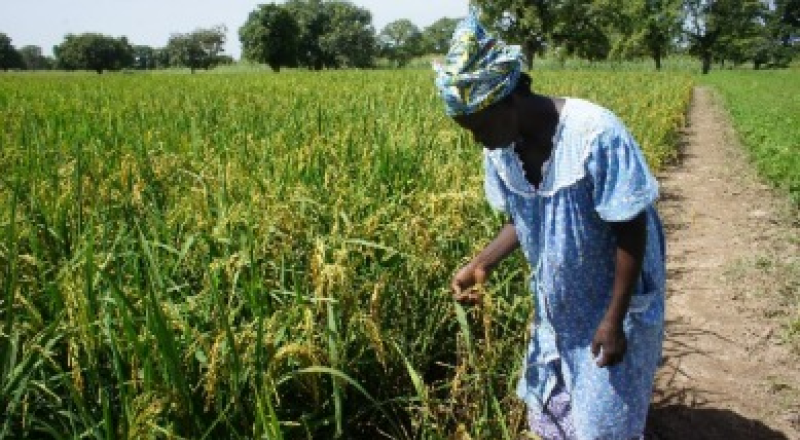
Despite its progress, Malian rice cultivation faces structural obstacles that hinder its full autonomy. Less than 30% of the land is reliably irrigated, making production vulnerable to climatic hazards. Small-scale producers, often limited to 0.6 to 0.8 hectares, struggle to access inputs, mechanization or financing. “The local producers are everyday heroes, but they lack the resources to modernize their practices.” Post-harvest losses, estimated between 20% and 25%, aggravate the problem: nearly 80% of rice is processed by hand, and storage infrastructure is insufficient. Add to this underfunded research and fierce competition from imported rice, which offers better quality and consistent availability. “Local rice is struggling to catch on, due to high costs and modest yields.”
Opportunities for a promising future
But it’s not all doom and gloom. Mali has immense potential, particularly with the possibility of extension of irrigation schemes developments, the reduction of post-harvest losses, which could increase the level of yields, and the strengthening of marketing and processing links, which could offer employment potential, particularly for young people and women. By investing in innovation and partnerships, local rice could be transformed
Local rice versus imported rice: competitiveness still insufficient but ongoing valuations
Despite significant progress, local rice is not able to compete sustainably with imported rice. High production costs, still modest yields in rainfed systems and significant post-harvest losses (estimated at between 20% and 25% of production) are slowing down import substitution, even though the country is multiplying measures to enhance the value of national rice and strengthen food sovereignty. Indeed, imported rice benefits from better availability throughout the year, attractive packaging and good value for money, more in line with the preferences of urban consumers.
To reverse this trend, the public authorities have initiated policies to support the production and development of local rice, through input subsidies, investments in hydro-agricultural facilities and the implementation of dedicated strategies such as the National Strategy for the Development of Rice Cultivation (NRDS), aligned with regional guidelines. The sub-regional initiatives also highlight the promotion of “local consumption”, led by States, professional organizations, and certain technical and financial partners, aimed at raising awareness among consumers, particularly in urban areas, of the quality and strategic importance of local rice for food sovereignty. In addition, efforts are being made to improve the processing, packaging, and branding of local rice, in particular through the installation of industrial rice mills, the labeling of certain productions (Office du Niger rice, local parboiled rice), and support for SMEs in the sector.
Membership of the CARD initiative: An opportunity to have a strategic and operational framework for regional and international cooperation dedicated to the development of rice cultivation
Membership of the CARD initiative provides a strategic and operational framework for regional and international cooperation dedicated to the development of rice cultivation through the mobilization of the financial resources necessary for the implementation of the NRDS and financial resources and promotes the sharing of experiences and good practices between African countries. In addition, the development of the NRDS strategic framework has made it possible to put in place structuring solutions aimed at sustainably increasing rice production and strengthening the competitiveness of local rice. These solutions are based on improved access to irrigation water, quality inputs, mechanization, financing, and research-based innovations. It also focuses on reducing post-harvest losses, developing storage and processing infrastructure, and improving the quality, packaging, and marketing of local rice. Although CARD’s support remains significant, Mali would like the institution to strengthen its support for the effective implementation of the NRDS. The expected assistance could take the form of targeted technical support, institutional capacity-building, and support for the mobilization of adequate financial resources.
NRDS: innovations at the heart of rice cultivation, towards more sustainable production
The prospects for the success of the NRDS are based on new and strengthened measures that cover the entire rice value chain. Upstream, the strategy should focus on better organization of producers, access to financing, gradual mechanization, and the adoption of efficient technical itineraries. Downstream, targeted investments will have to be made in post-harvest infrastructure and processing, labeling and branding of local rice, improved packaging, and better structuring of marketing channels, particularly to urban markets. The development of public-private partnerships and alignment with regional initiatives strengthens the credibility and feasibility of the objectives set.
In terms of sustainability and future prospects, the emphasis in the short term should be on a sustainable mechanism to improve access to inputs adapted to the ecological conditions and means of local producers and on the strengthening of technical supervision. In addition, a sustainable mechanism for the upkeep and maintenance of existing irrigated areas and irrigation networks has to be established. In the medium and long term, policies will have to be put in place aimed at a controlled extension of irrigation schemes development, the enhancement of lowlands, and the adoption of sustainable rice farming practices that are resilient to climate change, while strengthening research and innovation. By implementing these actions and especially by combining public and private investment, the Malian rice sector will be able to consolidate its central role in national food security, the modernization of agricultural practices and the improvement of post-harvest value chains.