Cote d’Ivoire, Dec 2025
THE WORKSHOP ON AFRICARICE IMPACT FROM SCIENCE WEEK IN COTE D’IVOIRE AND DISCUSSION WITH SOME INSTITUTIONS OF CARD STEERING COMMITTEE MEMBERS
Background
In order to accelerate Africa’s journey toward rice self-sufficiency by 2035, AfricaRice organized an event called AfricaRice Impact from Science Week (AISW) from December 1st to December 5th. The Event is comparable to the Annual Science Week previously held but with an added focus on strengthening the link between “Science” and “Impact.” The main objectives of the event were to:
- Highlight key innovations essential for achieving rice self-sufficiency in African countries, such as the Smart-Valleys Approach, promoting F1 Hybrid varieties as a game-changer for rice production, and enhancing reliable national rice statistics through sensing technologies and AI to monitor the progress of NRDS implementation.
- Discuss the roadmap that should align with the National Rice Development Strategy (NRDS) to attain self-sufficiency.
- Address current and anticipated constraints and issues, exploring possible solutions.
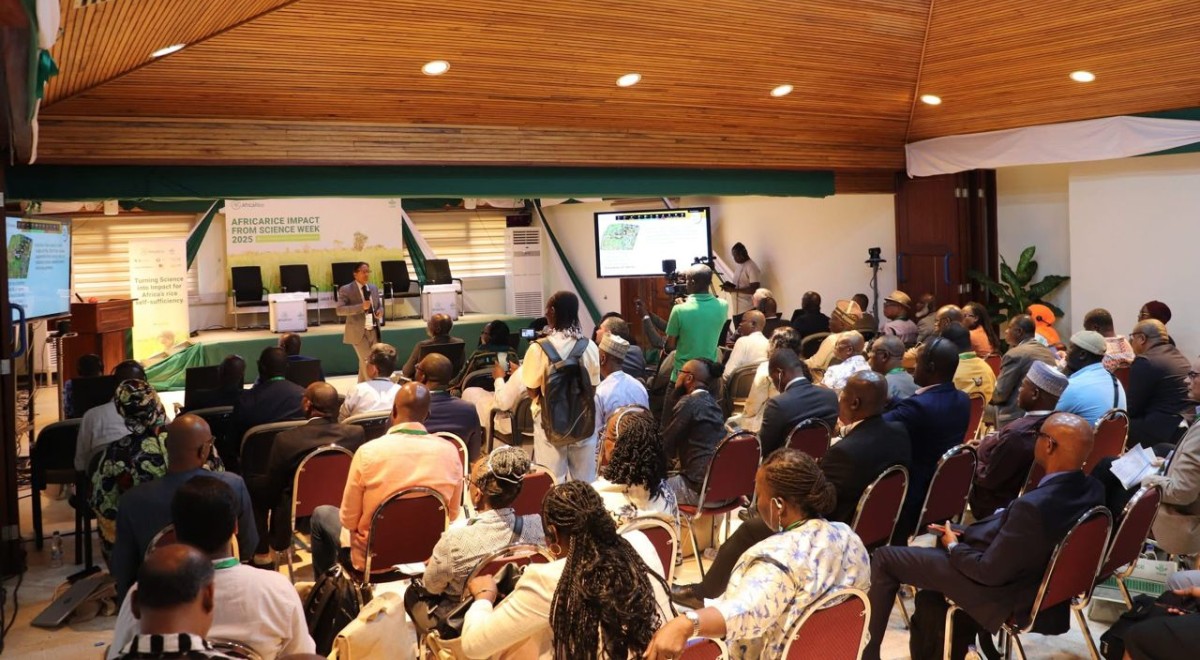
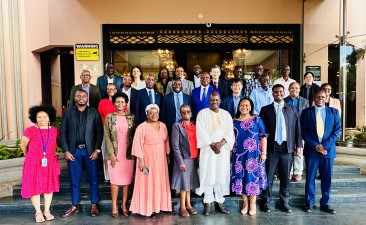
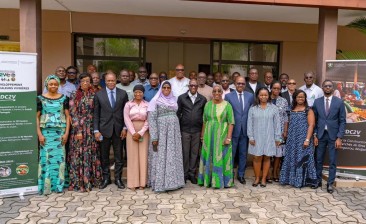
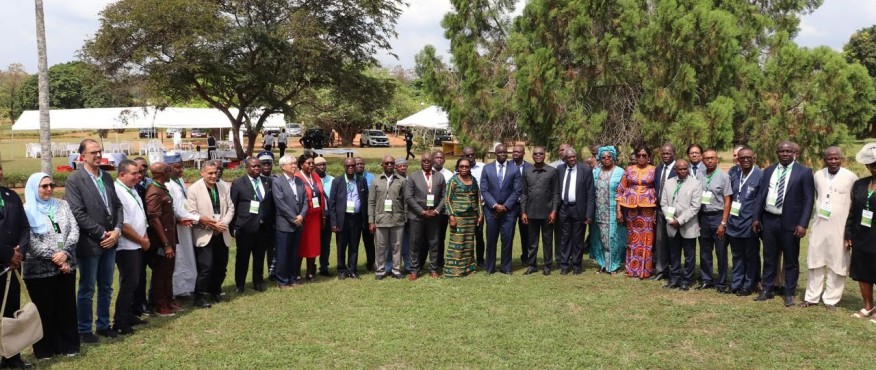
The event brought together government leaders (NRDS focal points from CARD member countries and rice strategy focal points from South Africa and Egypt), representatives of the National Agricultural Research and Extension Systems (NARES) from AfricaRice member countries, donors, AfricaRice scientists, and actors from the private sector and civil society involved in the rice value chain to strengthen the link between scientific innovation and real-world impact.
Methodology
The workshop was conducted in four phases:
- The opening ceremony
- Presentation of country profiles (posters) and an in-depth analysis of their progress towards rice self-sufficiency in seven CARD member countries
- Presentation of research results and discussions on AI, F1 Hybrid Seeds, and the Smart Valley Approach
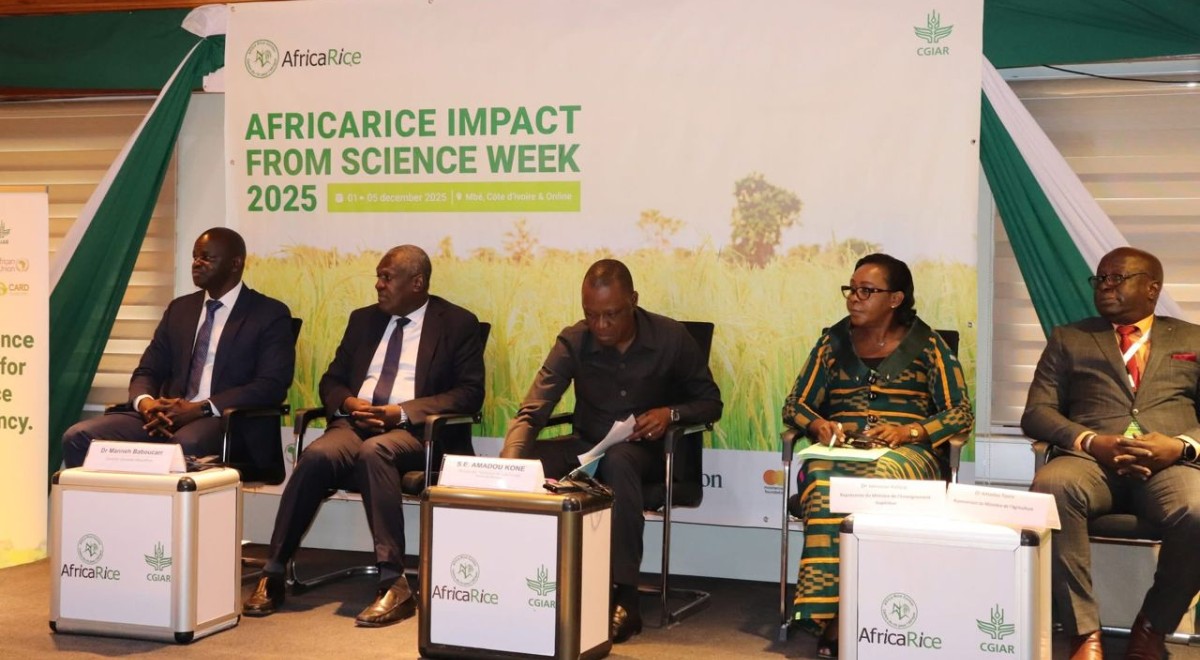
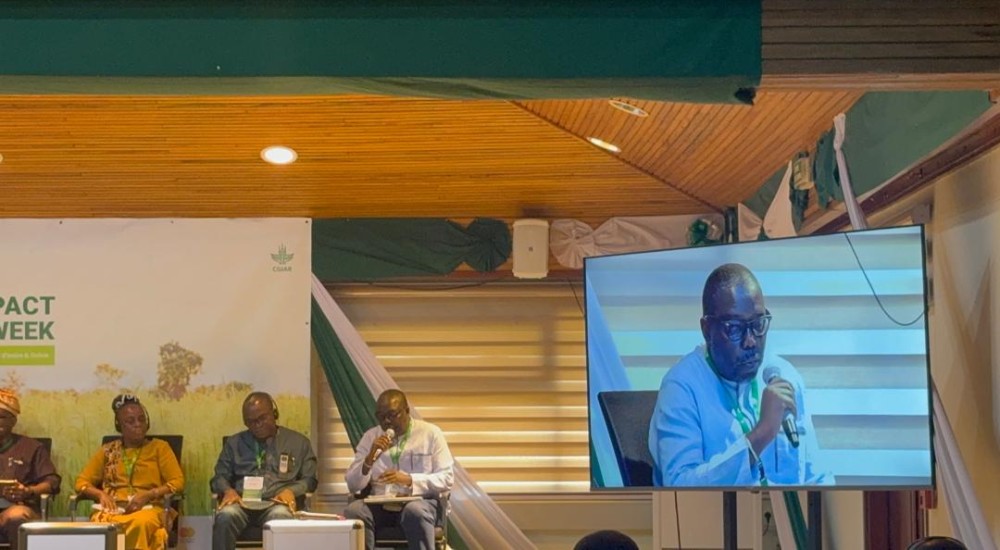
- Panel discussions.
Key results of the AISW workshop
The workshop emphasized AfricaRice’s ambition to collaborate with all stakeholders to fulfill its promise of helping Africa achieve rice self-sufficiency by 2035. It was highlighted that countries must leverage research findings to accelerate the implementation of their NRDS. Accordingly, country rice profiles posters illustrating the current state of the rice sector in terms of production, area harvested, yields, NRDS objectives, investment needs, and the actions expected from AfricaRice were shared.
Following this, seven countries, namely Senegal, Côte d’Ivoire, Madagascar, The Gambia, Kenya, Nigeria, and Tanzania conducted detailed analyses of their NRDS using an econometric model. This model projected, by 2035, the specific segments of the value chain where priority investments are needed, along with the estimated levels of investment required to achieve rice self-sufficiency. The findings revealed that the segments identified for prioritized investment by the model largely coincide with those outlined in the NRDS, with the main difference being the time frame to reach the goal, an inconsistency likely due to differing assumptions in the calculation.
After discussions on the NRDS, in-depth reviews of scientific research for 2026 took place, focusing on the Smart-Valleys approach, the use of F1 Hybrid seeds, and AI-powered monitoring tools to better track the progress of NRDS implementation.
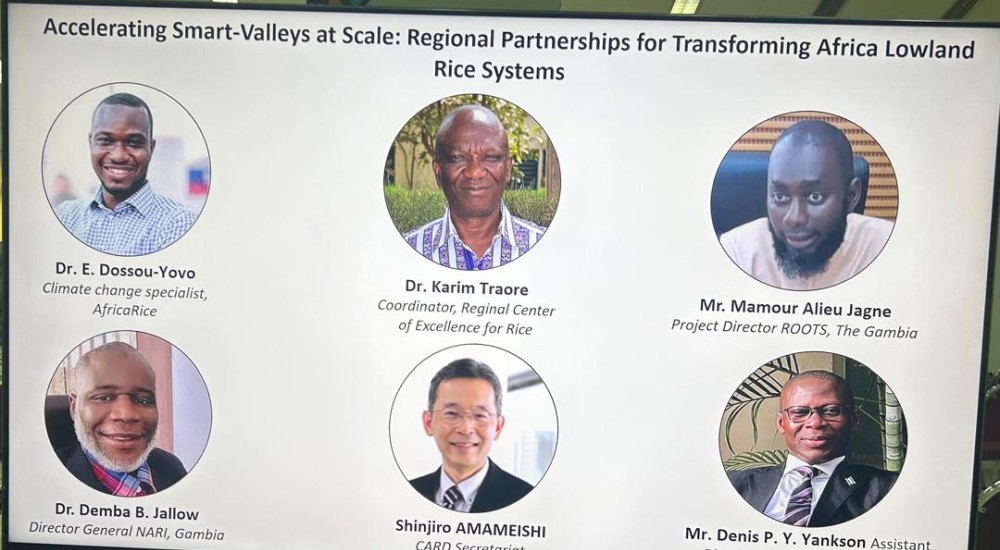
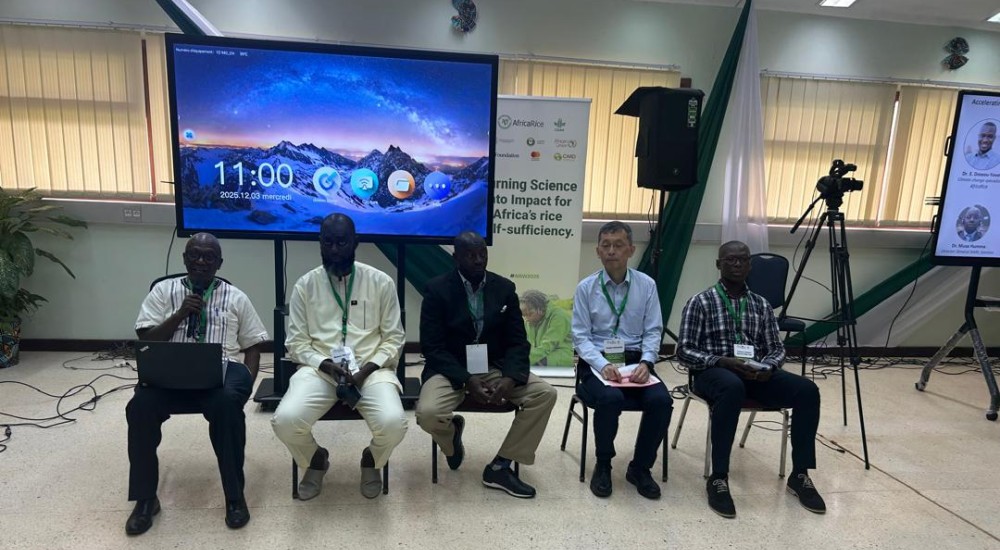
The AISW featured panels on the Smart-Valleys approach, AI technologies, and how to better implement national and regional rice strategies. The CARD Secretariat was involved in facilitating some of the panels such as discussions related to rice strategies and the Smart-Valleys approach.
At the conclusion of the workshop, participants highlighted groundbreaking approaches such as the Smart-Valleys strategy, promoting F1 Hybrid rice varieties as a game-changer, and leveraging sensing technologies and AI to improve national rice statistics and monitor progress. They also expressed appreciation for the excellent organization. Participants left motivated, with a shared commitment to turn scientific advances into tangible results. The event marked a significant step forward in fostering stronger partnerships and innovative solutions to secure rice independence for Africa.
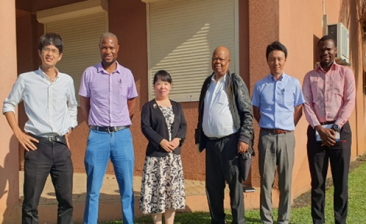
On the sidelines of the event, high-level meetings between the CARD Secretariat and partners such as AfricaRice, the African Development Bank (AfDB), and the World Bank (WB) took place. These discussions aimed to boost collaboration and ensure a coordinated effort toward achieving Africa’s rice self-sufficiency. It also emerged that there is a need to enhance coordination and synergy among stakeholders to ensure more effective and efficient implementation of the NRDS.