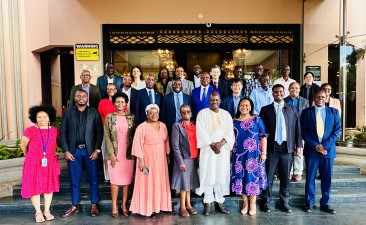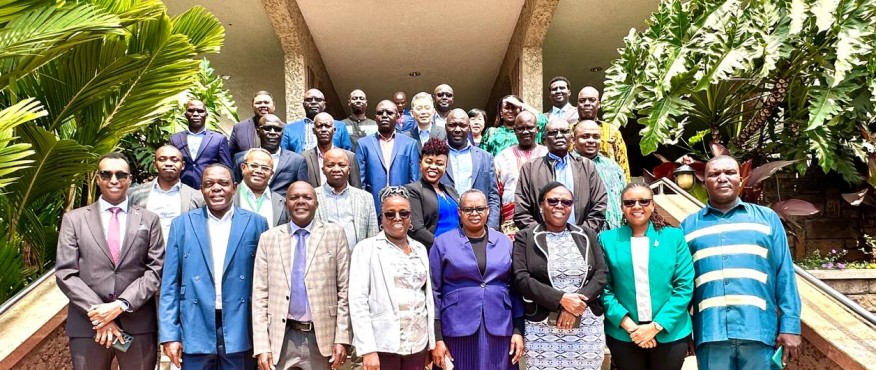
EAC meeting, August 2025
Workshop on Monitoring & Evaluation of EAC Rice Development Strategy on 13 – 15 August 2025
Rice has become an integral part of the food systems in the East African Community (EAC). Total rice consumption in the region has recently increased significantly by 25%, from 4.82 million tons in 2019 to 6.03 million tons in 2023. Although the supply of locally produced rice (milled) has also increased by 17%, from 3.44 million tons to 4.03 million tons during the same period, the deficit of 32.1% in 2023 is presently filled by markets through importation of rice from outside the EAC region.
To increase the share of local supply in regional markets through enhanced production and intraregional trade; the EAC Rice Platform (ERP) members, with technical assistance from CARD, have formulated and validated EAC Rice Development Strategy and Implementation Plan (ERDSIP). It aims to double the regional rice (before milling) production to 13.65 million tons by 2030, by deepening regional integration through mutualism and complementarity to the National Rice Development Strategy (NRDS) of the individual Partner States.
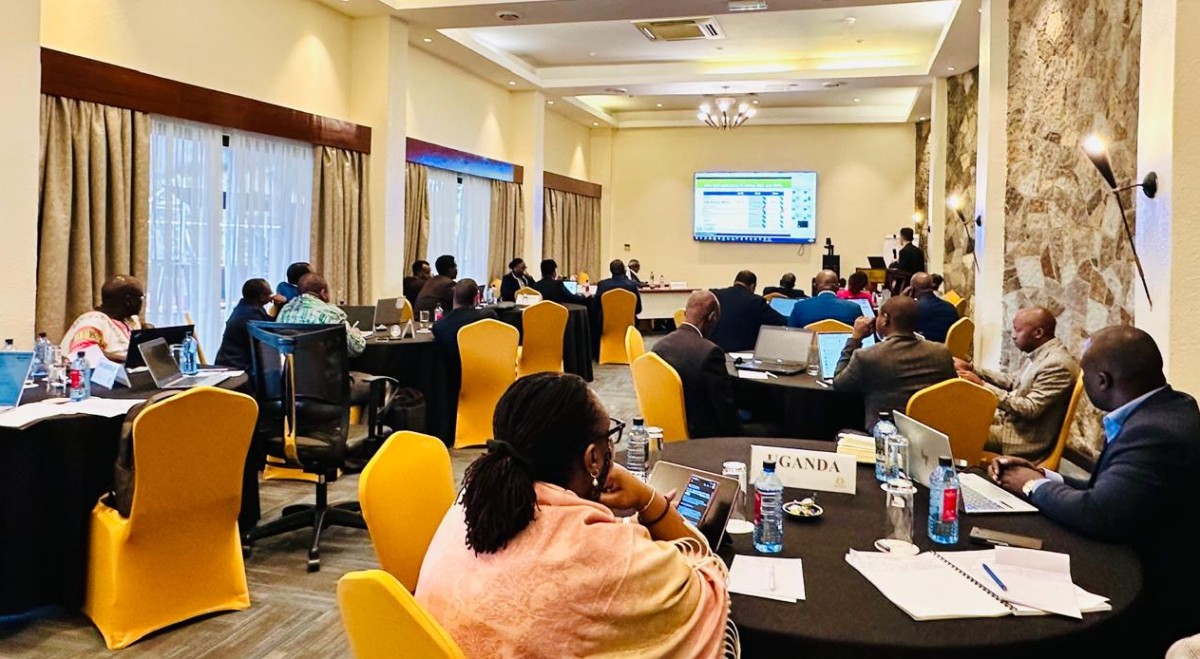
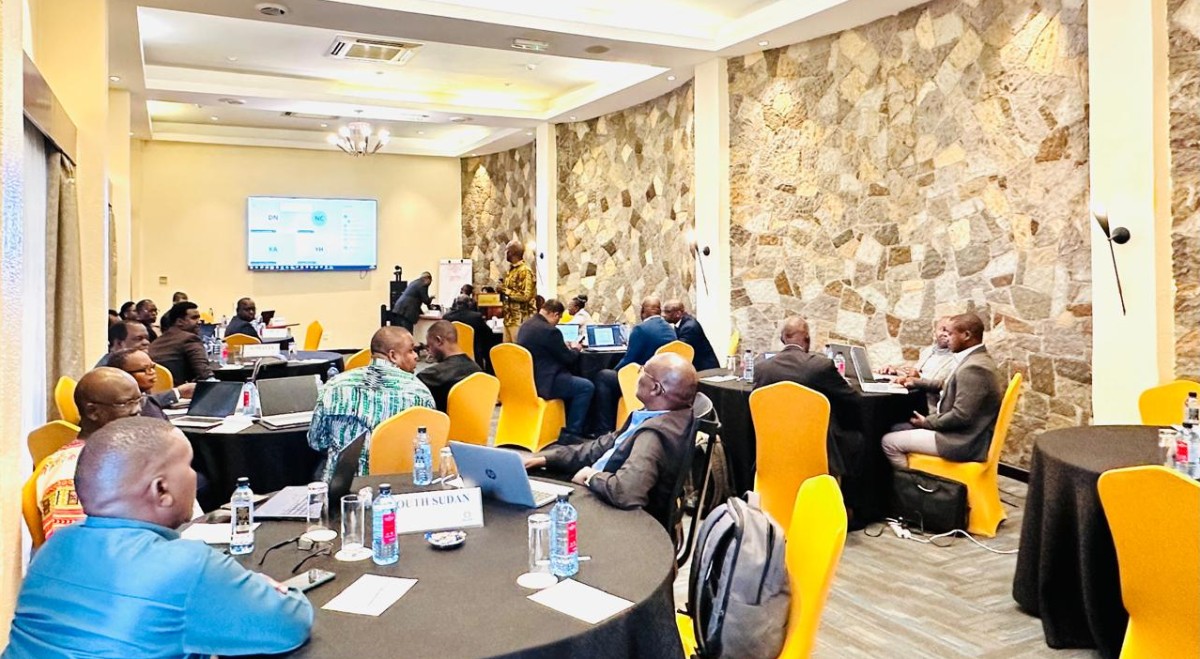
The ERDSIP also provides a monitoring and evaluation (M&E) framework to assess the progress made under ERDS by tracking 16 indicators – 4 overall and 2 each under Resilience (R), Industrialization (I), Competitiveness and Empowerment (E) of the integration of the regional rice value chain. The ERP members share their M&E results and the gaps in interventions that are required in executing the ERDSIP annually with stakeholders by organizing the Annual Regional Rice Sector Review Meeting (ARSRM). The EAC Secretariat and the ERP members requested the CARD Secretariat to support to organize a technical meeting to prepare for the M&E and the ARSRM for 2025-26. Subsequently the EAC Secretariat in collaboration with the CARD Secretariat organized a workshop for the ERP members at Hotel Sarova PanAfric in Nairobi during 13-15 August, 2025. This report provides a summary of outputs from the workshop.
1. Outputs and Way Forward
The expected outputs from the workshop include (1) review of M&E indicators based on lessons learnt from last years’ experience and consensus on responsibilities and timeline for the next cycle of data collection, (2) updating of gaps in funding for the ERDSIP and exploring prospects of resource mobilization, (3) formulation of new concept notes for fund mobilization through mutual consensus, and (4) planning for the next ARSRM (2025-26).
1.1. M&E indicators and data collection
Firstly, the ERP members reviewed the challenges encountered during the previous M&E data collection (2024–2025). Drawing on the lessons learned, they engaged in extensive discussions on each ERDS indicator and made adjustments to refine the indicator definitions, secondary data sources, and data collection methodology. In addition, the members unanimously agreed on assigning data collection responsibilities for the upcoming M&E exercise (2025–2026).
1.2. Gaps in funding and Resource Mobilization
The ERDSIP proposes several major activities that are required to achieve its key strategic outcomes. Using a logical framework; risks, mitigation measures, verifiable indicators, institutions, timeline and budget required for these activities have also been illustrated in the ERDSIP. However, the regional projects that are currently sponsored by various development partners and agencies do not adequately cover these proposed activities.
Using a Subsector Intervention Element Matrix (SIEM); the ERP members identified the gaps and characterized the importance of these gaps using color codes – wherein red symbolizes gaps that are urgent and severely insufficient, yellow represents important but insufficient, and white (blank) indicates areas that need attention in the future. Based on information on new rice-related projects that are on the ground and projects/interventions that are on pipeline, the ERP members discussed and updated the SIEM for the EAC region.
Resources and approaches that are required to mobilize future interventions under the ERDSIP were discussed by the ERP members. A representative from AGRA (Ms. Stella Massawe, East and Southern Africa) initiated the discussion by pointing out the importance of reflecting the ERDSIP under AU-CAADP’s Regional Agriculture and Food Security Investment Plan (RASIP) of EAC. Ms. Stella Massawe also agreed to support the EAC Secretariat in this regard. The ERP members agreed to this proposal and also suggested direct solicitation from the development partners through EAC-ARSRM event.
1.3. Formulation of Concept Notes
In line with the guiding principles (mutualism and complementarity to NRDSs) of the ERDS, the ERP members from each Partner State first discussed and ranked their top six priorities of the ERDS’ strategic outcomes that are complementary to their own NRDSs. These top priorities were weighed, pooled and ranked cumulatively to collectively identify the top 4 priorities for the EAC region. Efforts were made to include the top-most priorities of all the EAC Partner States within these top 4 regional priorities. Rwanda’s top priority on expansion of land area under rice cultivation was however dropped due to lack of scope for EAC on land-related policies/interventions in Partner States. Based on the scores, ranks and strategic outcomes identified by the ERP members through consensus, topics for concept notes were agreed.
The ERP members then formed two groups – with at least one representative from each Partner State in each group. Each group was led by a group leader who was responsible for chairing the discussions on preparing 2 bankable project concept notes each. A total of 4 concept notes were prepared by the two groups. Through a plenary session, the various elements of the 2 concept notes prepared by the two groups were then presented by the group leaders and collectively peer-reviewed. Based on the feedback from all the participants, the groups finalized the project concept notes for mobilizing funds.
2. Way forward
The NRDS Focal points from the Partner States shall submit the data collected under the M&E indicators to EAC Secretariat by 30th September. Validation of the submitted data will be held online amongst the ERP members. The ERP members have agreed to hold their second EAC-ARSRM on 20th February, 2026 at Nairobi.