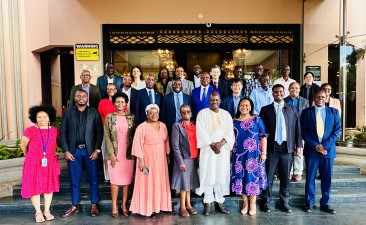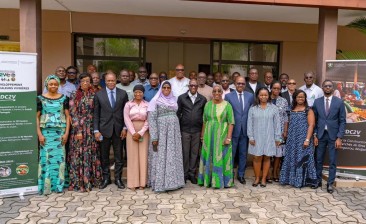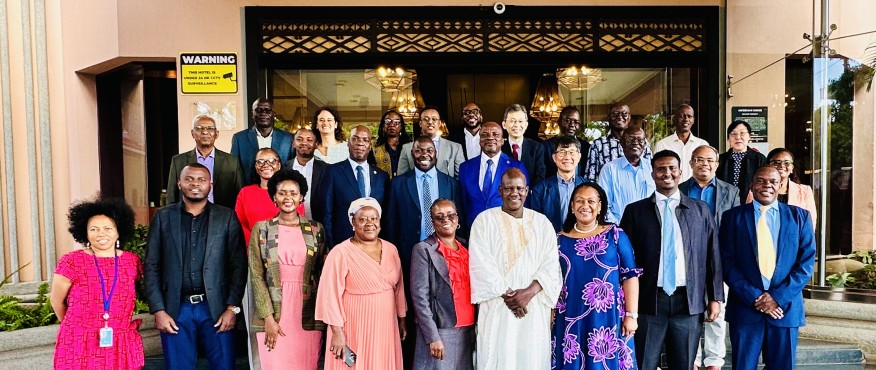
EAC meeting, January 2026
East African Community (EAC)’s Second Annual Rice Sector Review Meeting
Having become the second most important cereal crop, rice has attained socioeconomic significance for both the producers and consumers in the East African Community (EAC) region. Because the food markets of the EAC Partner States are interconnected, a sustainable rice sector development in the region warrants a coherent integration of rice value chains of individual Partner States. It is with this intention that EAC Rice Platform (ERP), with financial and technical assistance from Coalition for African Rice Development (CARD) and EAC Secretariat, formulated EAC Rice Development Strategy (ERDS) in 2022.
The ERDS aims to about double the cumulative regional rice production from 6.6 million tons to 13.6 million tons by 2030 and outlines various approaches for enhancing resilience (R), accelerating industrialization (I), improving competitiveness (C) and empowering (E) the stakeholders of rice value chain in the region. Under the phase-II (2019-2030), the CARD initiative is committed to conduct Monitoring & evaluation (M&E) of national and regional rice development strategies. In this context, the ERP members collected data on a total of 13 indicators (4 overall, 2 each under R, I, C, and E, and market prices) under the M&E framework of the ERDS to assess the progress made. The collected M&E data from the region were validated by the ERP members on 25th November in 2025. Subsequently, the ERP members requested the Secretariats of EAC and CARD to organize the second Annual Rice Sector Review Meeting (ARSRM) for the stakeholders.
The purpose of the ARSRM is to share the assessments made on ERDS implementation through the M&E process with development partners and solicit further investments on rice value chain development in the region. This report highlights the key proceedings and outputs from the 2nd EAC-ARSRM.
Outputs from EAC’s 2nd ARSRM
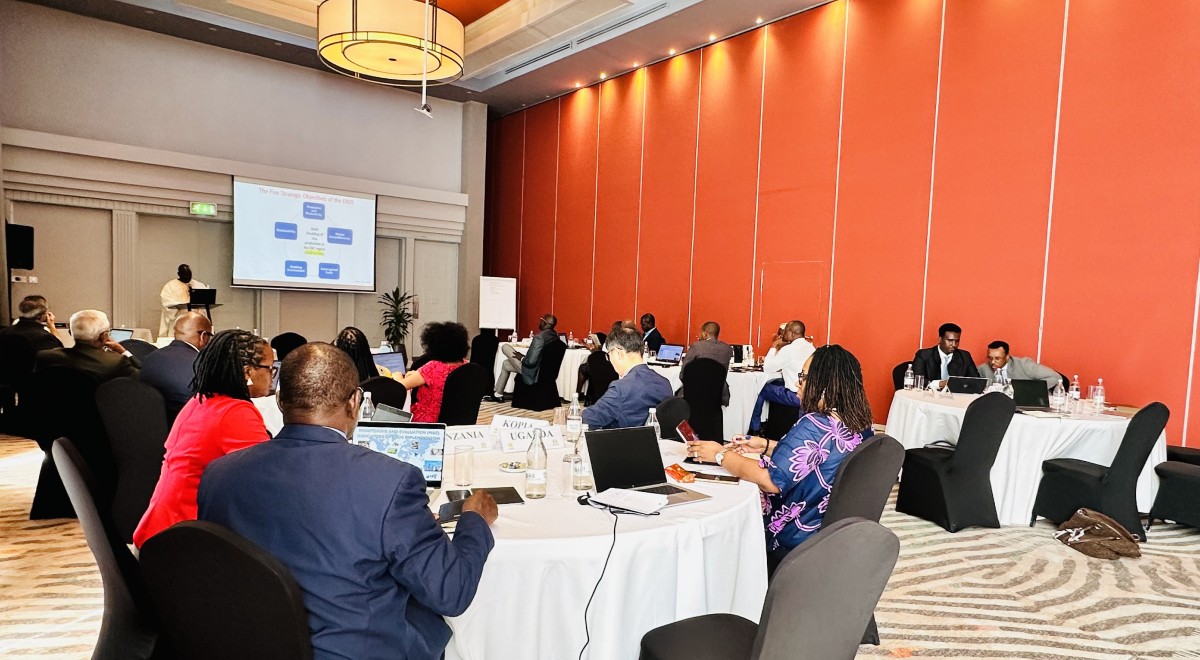
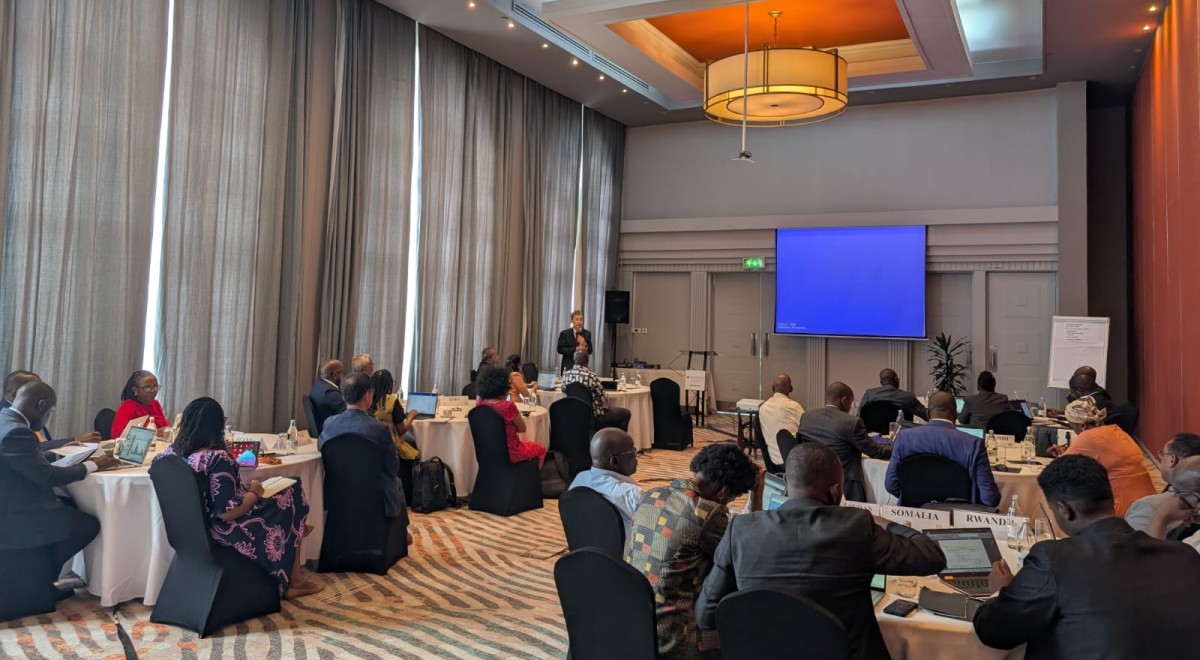
The 2nd EAC-ARSRM was organized by EAC Secretariat with technical and financial assistance from CARD Secretariat on 20th January of 2026 in Nairobi. One representative each from public- and private sectors of all the 8 EAC Partner States namely Republics of Burundi (BDI), Congo (DRC), Kenya (KEN), Rwanda (RWA), Somalia (FRS), South Sudan (RSS), Uganda (UGA) and Tanzania (TZA) participated in the meeting. To inject synergies with the NRDS implementation in EAC Partner States, the NRDS Focal Points (FPs), who in many cases also serve as ERP members, represented as delegates from the public sector of the Partner States. In addition, institutional representatives from International Rice Research Institute (IRRI), South Korea Program on International Agriculture (KOPIA), World Food Program (WFP) and Alliance for Green Revolution in Africa (AGRA) also participated.
The meeting was chaired by Dr. Mary Mutembei representing KEN and overseen by Dr. Abdullahi Hussein of FRS as rapporteur. Mr. Peter Dhamuzungu, the NRDS FP from UGA, provided an overview of the ERDS by outlining the rationale, goal, objectives, and the expected outcomes. Mr. Jimmy Kato, the private sector representative from RSS, elaborated on the major activities planned under each strategic objective of the ERDS and shared the expected outputs and budget. Mr. Geoffrey Rwiza, representing the Rice Council of Tanzania (RCT) outlined the M&E framework of the ERDS and illustrated the secondary data collected by the ERP members on each indicator for the calendar year 2023 and 2024. Dr. Abdullahi Hussein, the NRDS FP from FRS, presented intervention gaps and prioritized areas identified with project concepts to approach systematically towards resource mobilization to implement ERDS.
Based on the trends observed, Mr. Rwiza emphasized the importance of increasing technical interventions by the stakeholders to achieve the targets set under the ERDS for 2030. Dr. Abdullahi Hussein of FRS explained to the participants how the ERP members identified the existing gaps in funding for implementation of the ERDS. He pointed out that several of the prioritized interventions from across the rice value chain remain either under-funded or not yet funded. Dr. Hussein requested the development partners to consider the 5 project proposals that the ERP members have drawn on the most critical priorities for the region.
Emerging challenges and solutions for regional rice sector development
Ms. Rachel Mbabazi, representing the rice private sector in UGA, invited the development partners and the ERP members to discuss the emerging challenges by calling their attention to a highly variable but stagnant levels of on-farm productivity among the EAC Partner States and the ensuing self-sufficiency rates in rice production. The participants discussed several issues that are imminent across the value chain and deliberated on how to address the challenges.
The participants raised seasonal availability of rice affects the stability of market supply and import substitution in the region and suggested it could be tackled by improving logistics. The stakeholders concurred that the cost of local rice production needs to be significantly reduced through appropriate mechanization practices and by adopting bulk procurement of inputs and sustainable rice production practices. The participants also discussed the need for policy regulations on cross-border movement of raw paddy grains, food safety of milled grains and representation of apex bodies at the national and regional level under the ERP. The ERP members expressed serious concern on how to reduce greenhouse gas (GHG) emission from rice fields and agreed to prepare a project concept note that will identify, test and disseminate proven mitigation and adaptation measures in the region for funding.
Way Forward
Going forward, the EAC Secretariat will sensitize the Partner States on activities related to ‘seeds without border’ and extension, and officially kick-start the implementation from July. The ERP members have agreed to undertake M&E activities for 2026-27 and elaborate new concept notes on GHG emission and policy regulations to tackle the emerging challenges mentioned in the above section. The members have also decided to synchronize their next meeting with that of EAC’s Council of Ministers (COM) so as to enable sensitization and lobbying of COMs and other development partners for new projects that will further accelerate the regional rice sector development.