Kenya, July 2025
Workshop on Monitoring & Evaluation of NRDS-2 in Kisumu, Kenya
Rice has become a mainstay of Kenya’s food system. Increasing rice production is hence pivotal to food security and nutrition in Kenya. With CARD’s technical assistance, Government of Kenya has formulated Second phase of National Rice Development Strategy (NRDS-2; 2019-2030). The NRDS-2 aims to increase milled rice production by 6.6-fold from 128,000 tons to 846,000 tons to achieve self-sufficiency. It plans to achieve this goal by increasing area under rice cultivation to 174,000 Ha and national average rice productivity to 4.8 t/Ha. Resilience in production and supply (R), industrialization of the value chain (I), competitive local rice (C), and empowerment of stakeholders (E) are the underlying strategic approaches of Kenya’s NRDS-2.
To assess progress made along these key elements, the NRDS taskforce has established a monitoring and evaluation (M&E) framework through which data for 4 overall (O) indicators and 2 indicators each of the four R.I.C.E. components are collected annually. Through Annual Rice Sector Review Meeting (ARSRM), the taskforce members illustrate the progress on implementation of the NRDS-2 to wider stakeholders. Since the ARSRM also provides an opportunity for the stakeholders to apprise gaps in funding for the rice sector, the NRDS taskforce members prepare new and update existing concept notes with the potential funding sources such as government, development partners and private sector.
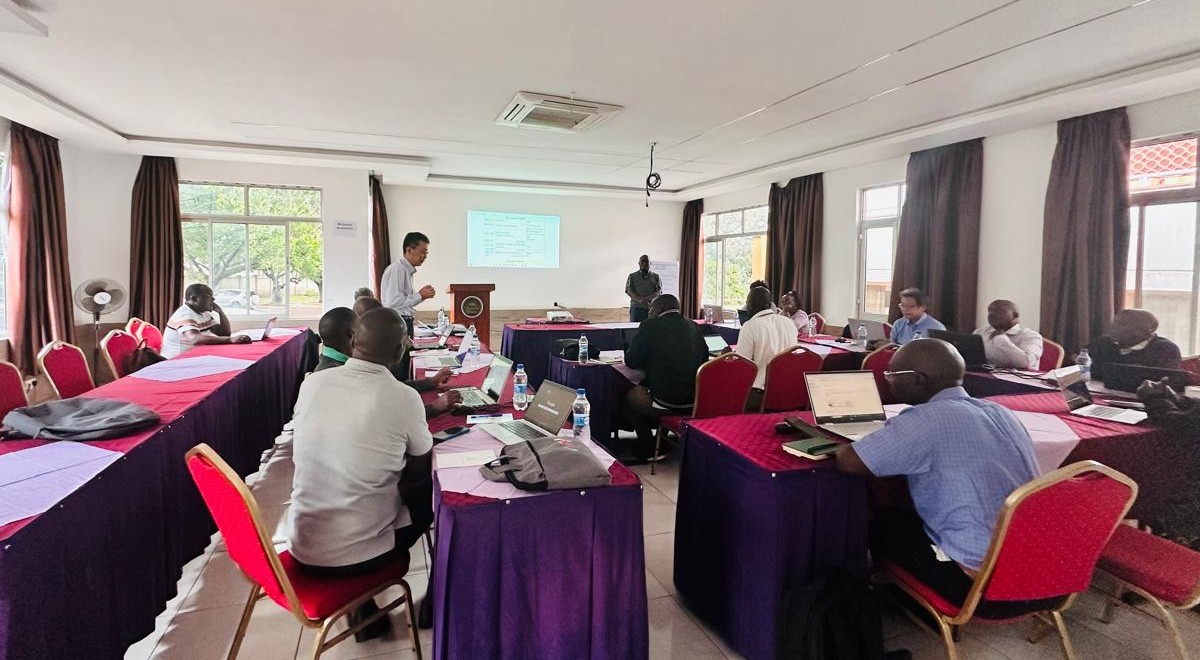
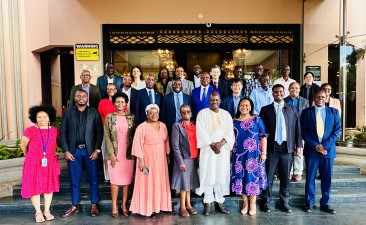
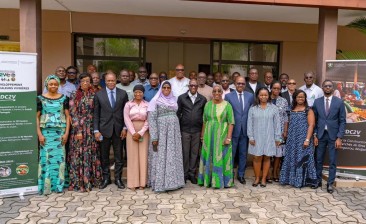
Kick off meeting on M&E in Kenya
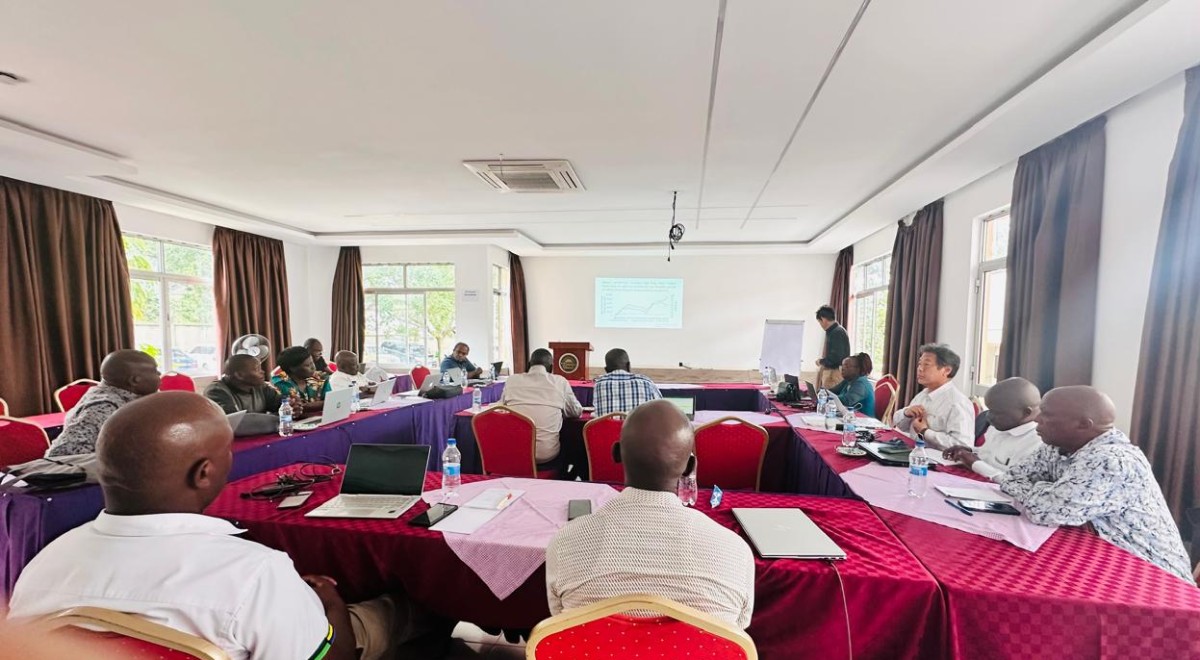
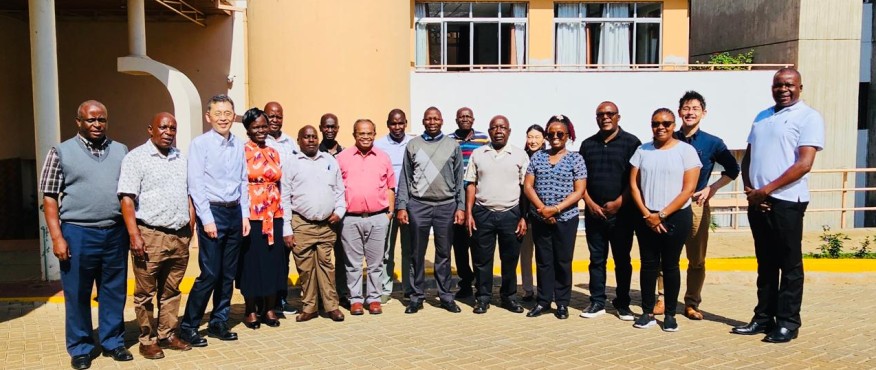
With financial and technical support from JICA’s Advisor (Mr. Takanori Satoyama) to Kenya’s Ministry of Agriculture and Livestock Development (MoALD), the workshop was organized between 9th and 11th of July in Kisumu. CARD supported the NRDS taskforce by providing necessary technical support in achieving the objectives of the workshop.
While the main objective of the workshop was to kick-start the activities towards the next ARSRM in Kenya, the expected outputs include (1) consensus on M&E indicators and responsibilities on data collection, (2) analyses of gaps in funding and exploring prospects of resource mobilization for rice sector, and (3) updating of project concept notes for promoting implementation of the NRDS-2.
Key outputs from the meeting
The NRDS taskforce members first reviewed the challenges met by them while collecting data for the 16 M&E indicators last year (2024-25). Based on the lessons learnt, the taskforce made changes in fine-tuning the definition and/or characteristics of the M&E indicators, the secondary sources of data, and targets for some of the R.I.C.E indicators.
Using Subsector Intervention Element Matrix (SIEM), the NRDS TF members updated the needs (demands; identified from 2024 exercise) of the NRDS-2 and on-going interventions (supply). By overlaying the demand and supply, gaps in funding across the rice value chain were revealed. The NRDS TF members identified 4 different pathways through which funds can be mobilized for rice sector development in Kenya and agreed on the possible steps that could be taken to realize more funds.
Based on the inputs on new project ideas from the stakeholders at the ARSRM-2024 and other emerging issues in the rice sector, the NRDS TF members formed four groups. Each group was led by a group leader and updated existing project concept notes and/or formulated new project concept note. The new project formulated by the TF members was focussed on sustainable financing mechanisms (based on recent successes) for rice value chain actors. It is estimated that a total of about 1 billion USD will be required to realize tangible outputs envisaged under the NRDS-2.
Way forward
The taskforce members have agreed to collect the data and submit to the NRDS-2 Focal point by the end of August. The collected data will be analyzed and preparations for ARSRM will be carried out during next CARD workshop in September 2025. The taskforce members have also tentatively agreed that the next ARSRM shall be held during the last week of November, 2025.