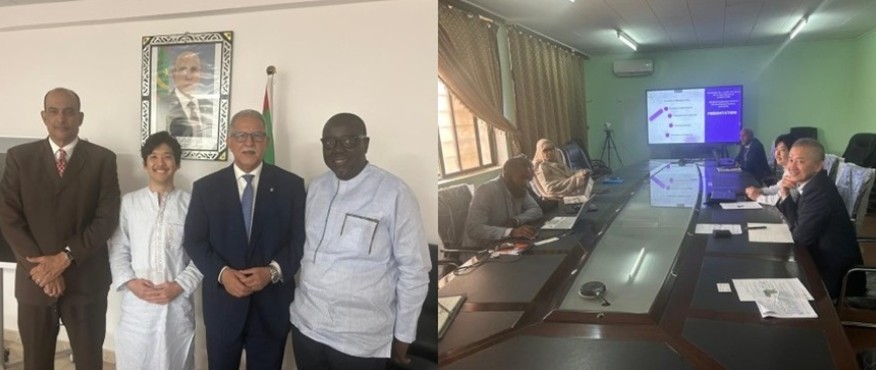
Mauritania, June 2025
THE PREPARATION OF MAURITANIA’S ACCESSION TO THE CARD INITIATIVE
-
Background of the mission
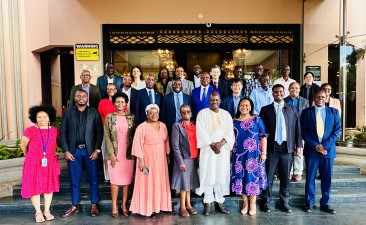
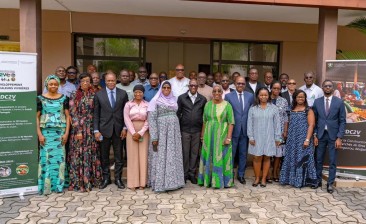
As part of the enlargement of the member countries of the CARD initiative, a mission from the CARD Secretariat visited Mauritania during the period from 25th to 27th June 2025, in order to prepare the country’s accession to the CARD initiative and to assess the strategic importance of the rice sector in the national context.
The objective was to see how to strengthen the cooperation with CARD Secretariat and support the promotion of the sustainable development of Mauritanian agriculture, particularly through the rice sector, which plays a key role in food security and the local economy.
The members of the mission were on the CARD side the Technical Coordinator (TC) and the Senior Regional Advisor (SRA) accompanied by the JICA Technical Advisor to the Ministry of Agriculture and the Technical Advisor to the Ministry in charge of Cooperation. In addition, there is the technical team of the National Society for Rural Development (SONADER).
-
Methodology
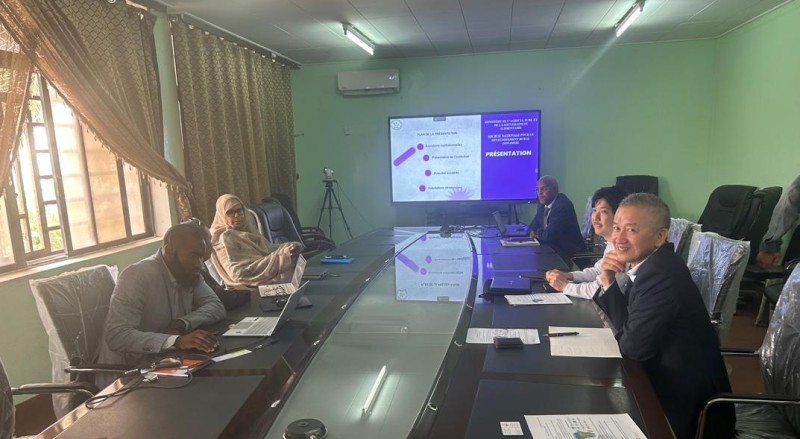
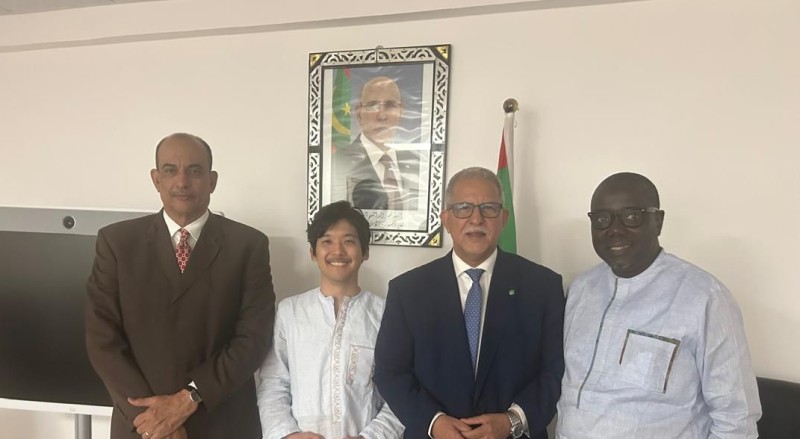
The approach used to carry out the mission was, on the one hand, to hold a technical meeting with the experts of the National Society for Rural Development (SONADER) who are in charge of the promotion of rice cultivation and, on the other hand, to exchange with the High Rank officials of the Ministry to understand the place and role of rice in agricultural policy and in the economy.
-
Key outputs/ Results
During the technical meeting, it was indicated that SONADER’s main objective is rural development, in particular through the development and management of rural areas, the protection of natural resources, as well as support for research, training and the extension of agricultural techniques.
- Overview of Rice sector, self-sufficiency rate is around 90%
Regarding the rice sector, the Director of Information Management and Programming stressed the strategic importance rice as essential component of food security, accounting for 14% of national cereal needs and contributing nearly 10% of rural producers’ income. National production has grown significantly, covering about 90% of the country’s needs, with production in the 2022-2023 season estimated at nearly 400,000 tons. The area sown in the 2023 autumn season reached 44,063 hectares, the largest to date, reflecting increased dynamism in the sector. Import levels have been significantly reduced from 60,000 tonnes to 14,000 tonnes. This progress is the result of an ambitious agricultural policy aimed at developing the rice sector and ensuring the country’s food self-sufficiency.
- High yield in irrigated areas, but still with potential
The results observed are the result of combined actions to rehabilitate and develop new irrigation schemes and intensify production systems. The average yield of irrigated crops is estimated at 4 tonnes per hectare, with a potential of up to 6 to 8 tonnes per hectare. This high level of productivity is due to the introduction of high-performance seeds, small-scale mechanization, as well as actions to improve soil fertility. At the same time, efforts are being made to improve rice processing, marketing and quality. Contractual farming system are established between rice farmers and millers to ensure a steady supply of inputs and to ensure availability of paddy. In addition, SONADER encourages agricultural diversification by promoting vegetable cultivation and setting up various agricultural farms to strengthen the resilience of the sector.
- Major challenges in rice sector
Despite these encouraging results, the Mauritanian rice sector faces several major challenges, including:
- the smallness of the agricultural plots,
- difficulties in accessing credit,
- complex water management,
- the decline in soil fertility,
- bird attacks,
- the high processing costs, particularly related to the location of the Rosso industrial rice plant, which is far from certain production areas,
- the need to improve the quality of rice,
- competitiveness with imported rice, and
- the untapped potential of arable land in irrigated areas
- Join the membership of the CARD
Following the presentation of SONADER, representatives of the CARD Secretariat presented the CARD initiative and the monitoring and evaluation (M&E) system put in place to support the development of the sector. These exchanges made it possible to strengthen mutual understanding of the current situation and the prospects for improvement. the mission also explained to the Mauritanian side the procedure for joining the CARD. In this regard, they were told that it will be at the 10th General Meeting of CARD scheduled on October 2025 in Madagascar that Mauritania’s request will be submitted. Thus, they were told that the country will be invited to participate in this meeting. The Mauritanian side, after having welcomed this information, expressed its willingness to have at least three participants in this meeting even if it has to take care of the participants in extra.
At the end of des discussions, it was agreed that during the period from July to mid-October 2025, Mauritania will have to finalize the list of members of the NRDS Task Force of Rice.