Senegal, November 2025
Senegal, a country where excellence and ambition shape a prosperous rice future
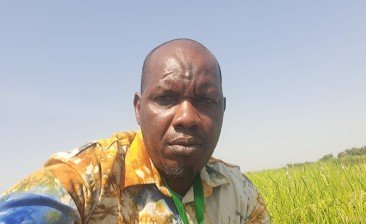
Dr. Waly Diouf, Coordinator of the National Rice Self-Sufficiency Program (PNAR)[1] and Focal Point of the CARD, responsible for steering “the Senegalese canoe” on the banks of rice self-sufficiency. With his insightful vision, unwavering rigor, and methodical, disciplined approach, he assesses progress and celebrates each success, helping to lead the country toward its goals.
Overview and Importance of Rice in Senegal
Rice is the most widely consumed cereal in the country, but its production remains insufficient, leading to imports exceeding one million tons each year. Nowadays, a dynamic economy has developed around the rice sector, encompassing various sectors such as consulting, studies, engineering, banking, insurance, mechanization, and trade, as well as production and processing.
The modernization of rice production began with the establishment of SAED [2] in 1965 and SODAGRI[3] in 1974, both of which promoted irrigated rice cultivation in the Senegal River Valley and in Anambé in the Kolda region (south of Senegal). It is important to note that rice was grown in all administrative regions of Senegal. However, droughts in the 1970s, combined with the intrusion of saltwater into fertile land near the coast, caused the decline in rainfed rice cultivation. This decline in the hinterland is also due to insufficient research that has not provided farmers with varieties adapted to climate change, as well as the lack of agricultural advice to support the activity in many areas.
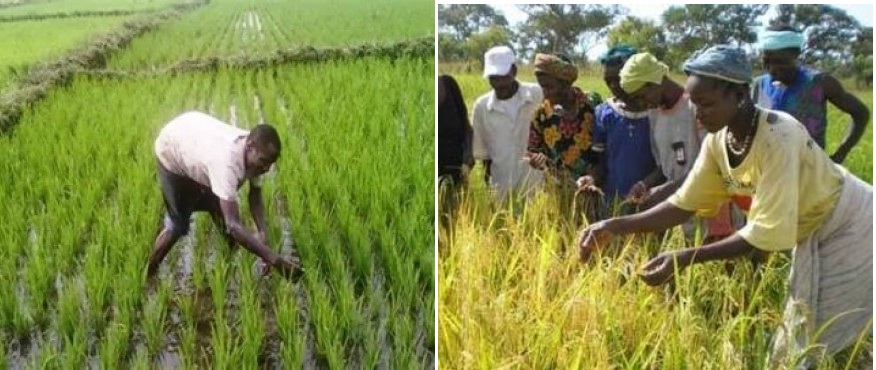
However, thanks to efforts in recent years to strengthen the place of rice in the economy, production has increased sharply from 559,022 tons in 2014 to 1,526,803 tons of paddy in 2023. This growth is mainly due to the increase in cultivated areas, which increased from 134,973 hectares in 2014 to 398,193 hectares in 2023.
Domestic demand for rice
Domestic demand remains difficult to assess. Studies do not agree on per capita consumption, with figures varying between 70 kg and more than 100 kg per person per year. This makes it difficult to calculate the rice self-sufficiency ratio. However, it is possible to empirically observe an increase in the number of people who have achieved local self-sufficiency, as well as a continuous availability of good-quality local rice throughout the national territory. In addition, campaigns to promote local rice have helped to increase interest in it. It should be noted that the Senegalese consumer prefers broken rice.
On the other hand, it should be noted that imports remain high and may even increase. Thus, at the end of October 2025, the stock of imported rice was enough to cover six months of consumption, according to the Minister of Trade. During this period, the rice mills of the Senegal River Valley had considerable stocks of white rice. This clearly illustrates that import volumes are not necessarily correlated with the evolution of national production.
[1] PNAR: same as NRDS
[2] SAED (Senegal River Delta Land Development Management Agency): Office to promote irrigated rice cultivation in the Senegalese river Valley
[3] SODAGRI: Agricultural and Industrial Development Company of Senegal
Challenges and opportunities
The main challenges to be addressed in a serious manner include, among others, water management; access to appropriate mechanization; the availability of quality inputs adapted to climate change; improved connectivity between production areas to the market; access to adequate storage infrastructure; and the provision of appropriate financing and quality advisory services. In addition to these challenges, there are major constraints, including the lack of financial resources that limit research, despite the fact that it has competent specialists. It is imperative to increase the financial resources allocated to existing research services and to create new ones, such as a national Centre for scientific research. For research to be effective, it must have sufficient financial resources, the possibility of collaborating with the world’s leading research centers, and adequate equipment.
Growth opportunities?
The entire value chain is full of segments with high growth potential. No segment of the rice value chain has covered its potential, whether it is research, production, harvesting, agro-industrial processing, marketing, or services; the optimum development has not yet been reached.
Advantages of joining the CARD initiative
CARD is an initiative supporting efforts to promote the rice sector. It facilitates the exchange of good practices and failures, while building relationships that promote collaboration and the development of the sector. With the support of CARD, member countries, including Senegal, have developed their national strategies, which are primarily seen as tools for decision-makers to become aware of the efforts needed to ensure sufficient production. It is noteworthy that the existence of the NRDS enabled the mobilization of significant resources, thereby contributing to increased production. CARD has also been instrumental in informing private-sector decision-making. As a result, the private sector, cognizant of the opportunities presented by the rice industry, has made substantial investments in processing and service delivery. With this well-thought-out mission, CARD must continue to fulfil its role in supporting the sustainable development of the rice sector.
Sustainability and prospects of the rice sector
Faced with climate change challenges, Senegal has focused on water management, strengthening mechanization, and the use of climate-smart seeds to ensure sustainable production. Between 2020 and 2023, four years made it possible to achieve, or even slightly exceed, the annual production targets set in the NRDS. By continuing on this path, facilitating access to quality inputs, strengthening mechanization, equipment, water management and consulting; and, above all, by setting up the “program contract” linking the State and the inter-professional association, which serves as a five-year contractual framework based on a result-oriented approach, coordinating actions, clarifying responsibilities, and effectively mobilizing the necessary resources, we can look forward with confidence to the achievement of the objectives of the NRDS.