South Sudan, March 2026
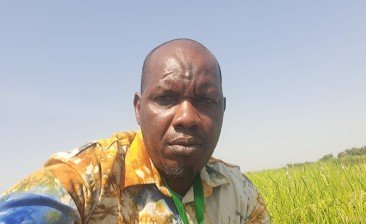
Interview with the Focal Point of the National Rice Development Strategy (NRDS) of South Sudan, Mr. Alfred Wani
Rice in the Republic of South Sudan is increasingly considered a staple crop. Over the last few years, due to changes in lifestyle and rapid urbanization, many people have gravitated toward meals that can be prepared quickly and conveniently, and rice effectively fills this role. With the steady growth in population, rice consumption has continued to rise. However, domestic production has not kept pace with demand, and the resulting deficit is largely met through imports.
Recognizing the magnitude of this challenge and the strain placed on scarce government resources to finance rice imports, a significant policy shift has taken place in recent years. The Government of South Sudan has begun to give greater attention to rice development, a crop that was previously less prioritized compared to other cereals such as maize, sorghum (guinea corn), and millet.
In this interview, Mr. Alfred Wani, Focal Point for the National Rice Development Strategy (NRDS), responds to questions posed by Dr. Mike Nasamu, Senior Regional Advisor for the Coalition for African Rice Development (CARD), and shares insights into the history and origin of rice cultivation in South Sudan. Mr. Wani explains that rice is predominantly grown at the subsistence level, characterized by the use of low-quality seeds, limited mechanization, inadequate irrigation infrastructure, and a weak research and extension system. These constraints have contributed to low productivity and limited commercialization of the rice sector.
Despite these challenges, Mr. Wani paints an optimistic picture of the future. He highlights South Sudan’s vast areas of favorable ecology suitable for rice production, including rain-fed lowlands/upland and irrigable plains, as well as the renewed commitment of the government and development partners to strengthen the sector. With improved seed systems, enhanced mechanization, increased investment in research and extension, and stronger private sector participation. The rice sector holds significant potential to improve national food security, reduce import dependency, create employment opportunities, and stimulate rural economic growth.
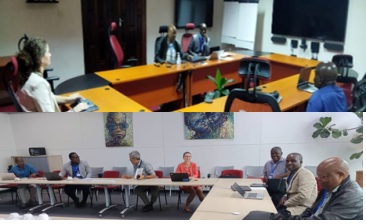
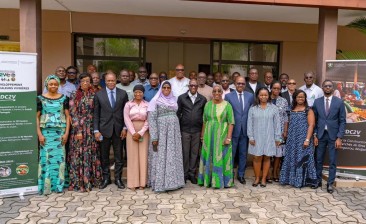
The interview was conducted at the JICA Training Center in Tsukuba, Japan.
GENERAL OVERVIEW OF RICE IN THE COUNTRY
Rice in South Sudan is grown mainly in a smallholder rain-fed system, with limited irrigation and low mechanization. Production remains modest, so imports fill most consumption needs. Rice is increasingly consumed in urban areas, valued for its convenience and cultural diversity. Government and partners are promoting expansion through improved seeds, training, and infrastructure to strengthen national food security”.
(A) History of rice cultivation in the country? When did it first become a staple crop here?
Rice cultivation in South Sudan began during the 1940s under Anglo-Egyptian rule through small irrigation schemes. It became, to some extent, a staple starting in early 1972, when South Sudan gained self-rule from Khartoum, and was mostly consumed in urban areas such as Juba, Yei, Malakal, and Wau. Thus, urbanization and imports have greatly increased rice consumption.
(B) Comparison to other staple crops in terms of importance in the country?
In importance, rice is considered number two crop after sorghum, followed by maize, cassava, and groundnuts, which dominate diets and production. It’s growing in relevance, especially in towns, but domestic output is low and imports meet most demand. Its strategic value is rising as the government prioritizes diversification and food security.
The Main players involved in this sector
Producers are mainly smallholders; processors include local millers and emerging private investors; distributors are traders and urban wholesalers; consumers are growing urban households, institutions, and markets, increasingly adopting rice alongside traditional staples
The current level of national rice production in relation to domestic demand. Is South Sudan self-sufficient or dependent on imports?
National rice production is far below domestic demand; 38,000 MT was produced in 2024, covering only a small share of the consumption of 92,950 MT. South Sudan is not self-sufficient yet and relies heavily on imports, especially for urban markets, making rice one of the country’s most import-dependent staples.
CHALLENGES AND OPPOTUNITIES
(A) What are three (3) major challenges that rice farmers face in the country today?
Rice farmers face limited access to quality seed and fertilizers. Minimal mechanization that keeps labor costs high and inadequate irrigation infrastructure. Financing is scarce, restricting expansion, while poor roads and weak extension services further constrain productivity and market access.
The main constraints faced by researchers
Researchers face limited funding, weak laboratory and field infrastructure, scarce data, and minimal long-term trials. Insecurity restricts site access, while poor coordination and few trained rice scientists hinder technology development, adaptation, and dissemination nationwide.
(B) What are the challenges in replacing imported rice with local rice?
Replacing imports is constrained by low domestic production, inconsistent quality, weak milling capacity, limited irrigation, high costs, and poor market linkages. Consumer preferences for polished imported rice and unreliable supply chains further hinder the competitiveness of local rice.
(C) Are there any initiatives to promote the consumption of local rice over imported rice?
Yes, government programs, donor support, and awareness campaigns promote local rice through improved seed, better milling, branding, and market linkages. Urban sensitization encourages consumers to choose fresher, locally produced rice over imports.
(D) Are there any significant opportunities for growth or improvement in the rice industry here?
Significant opportunities include expanding irrigation, improving seed systems, strengthening mechanization services, modernizing milling and packaging, and building strong market linkages. Research investment and private sector participation can boost productivity, quality, competitiveness, and overall growth of the rice industry
CARD AND NRDS
(A) What is the major benefits of joining CARD?
Joining CARD offers stronger regional collaboration, better access to technological expertise, improved seed and irrigation strategies, coordinated policy support, and greater investment opportunities to accelerate national rice development and competitiveness.
(B) What solutions has the NRDS put in place to boost production and improve the competitiveness of local rice?
NRDS advances improved seed systems, expands irrigation, strengthens mechanization, upgrades milling, enhances extension services, promotes market linkages, and branding to boost productivity, quality, and competitiveness of locally produced rice nationwide.
(C) Some expectations to CARD?
Stronger technical support and expanded research collaboration.
SUSTAINABILITY AND FUTURE OUTLOOK
(A) What steps are being taken to ensure sustainable rice production in the country and at the sub-regional level and towards increasing rice production in the short, long terms?
Sustainable rice production is supported through better seed systems, expanded irrigation, climate-smart practices, mechanization, stronger and efficient research, and regional collaboration with a short-term focus on seed and extension and long-term emphasis on irrigation.
(B) What is your position regarding Inclusive farming?
Inclusive farming raises questions on women’s access to land, youth participation, support for vulnerable groups, equitable input distribution, fair market access, and ensuring all farmers benefit from rice sector growth.
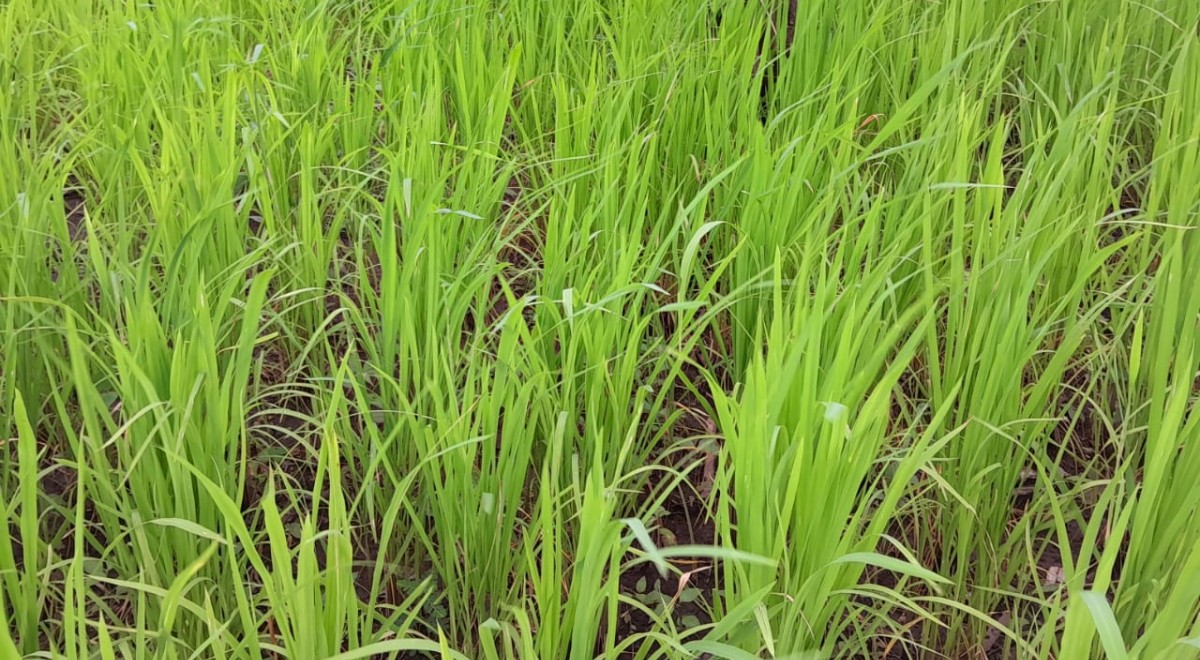
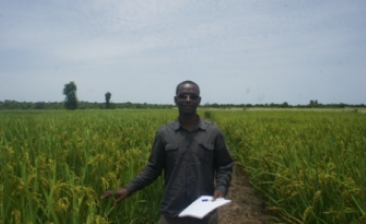
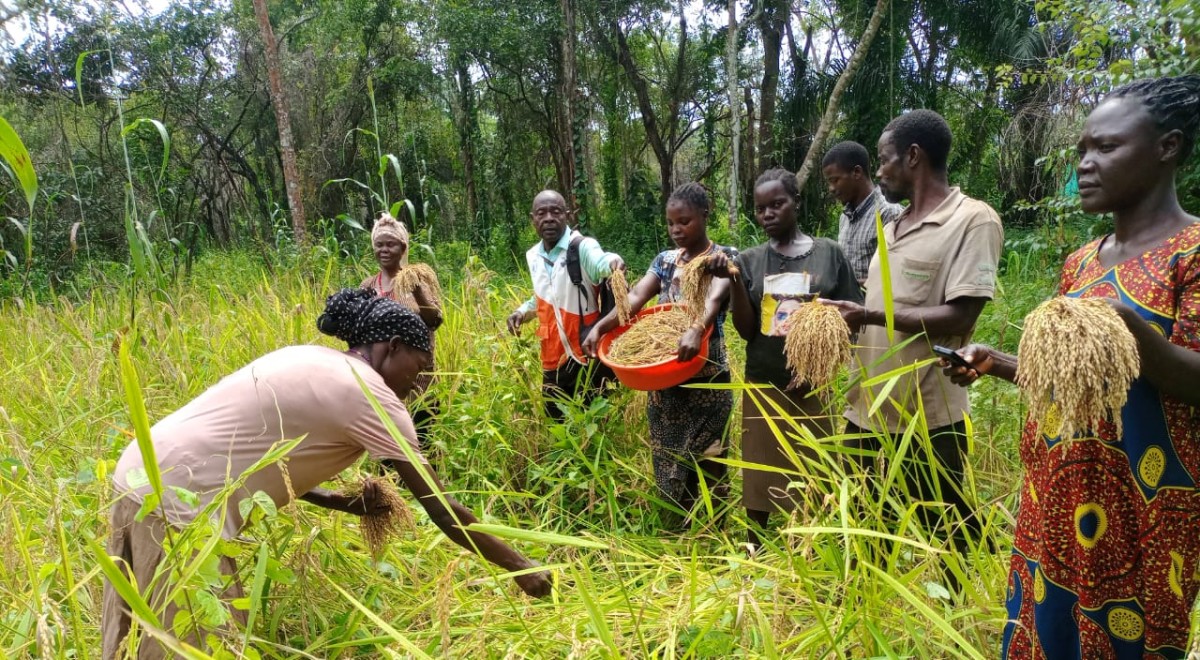
Upland rice field in Yambio, Western Equatoria State, Republic of South Sudan
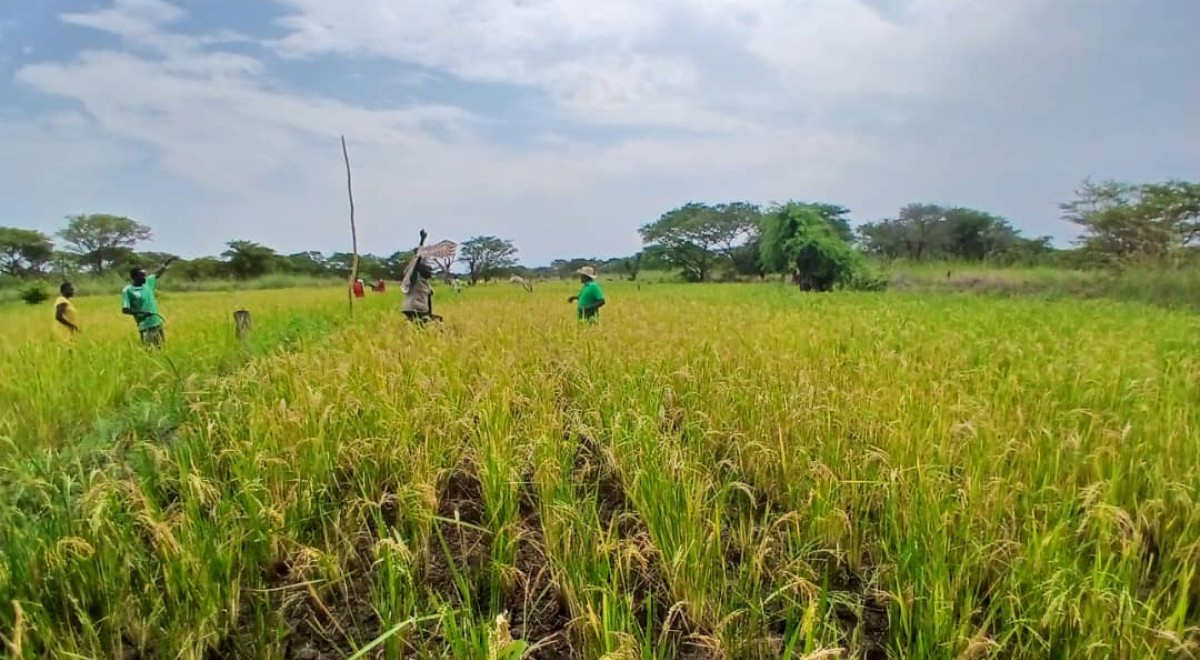
Rice field planted with technical support by WFP & AAH in Warrap State, in Bahr el Ghazal Region of South Sudan
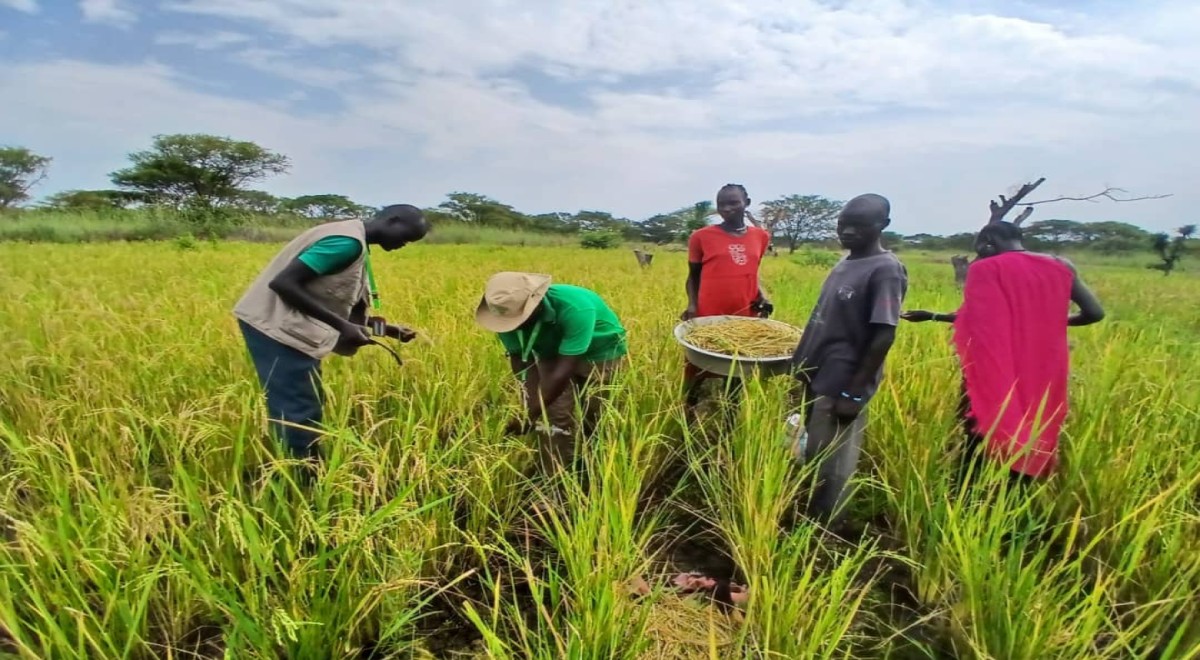
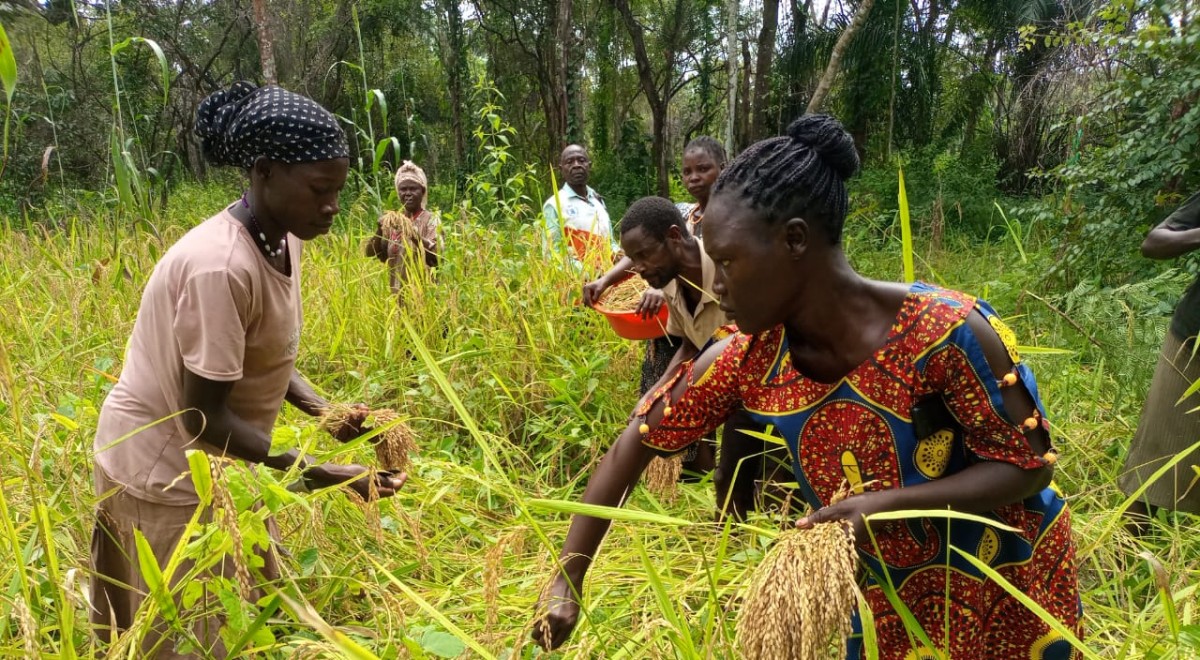
Small scalesubsistence level harvesting techniques being imparted to small-scale farmers
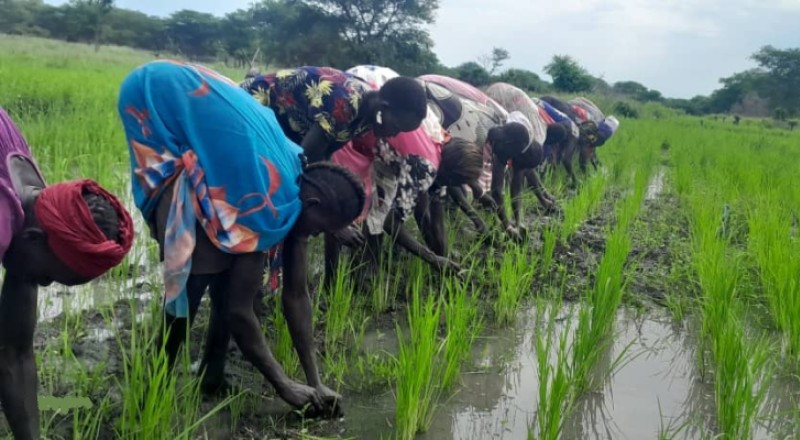
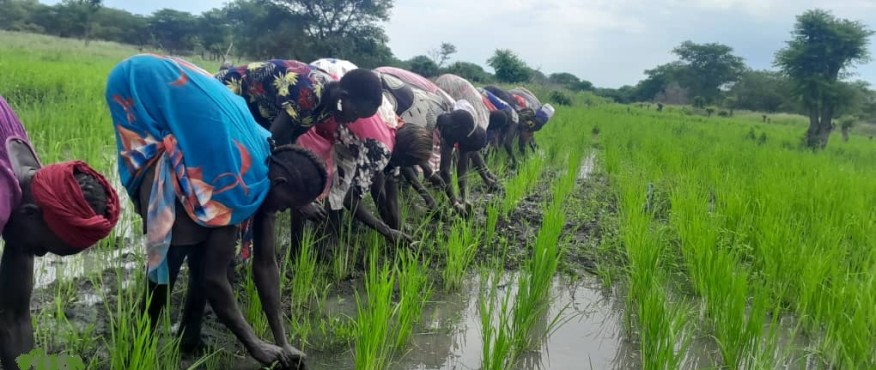
Women, working in lowland rice field in Warrap State
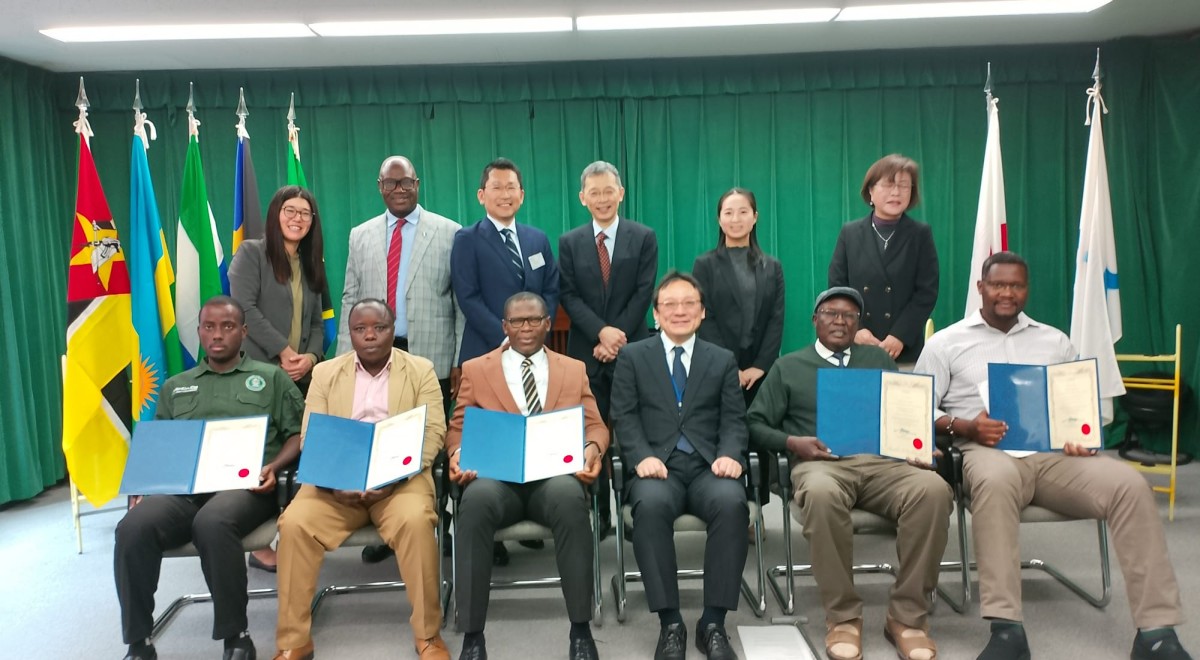
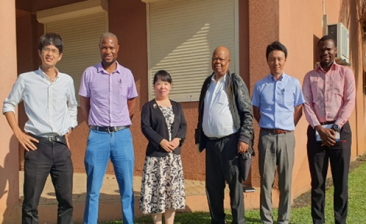
Tsukuba training in Japan
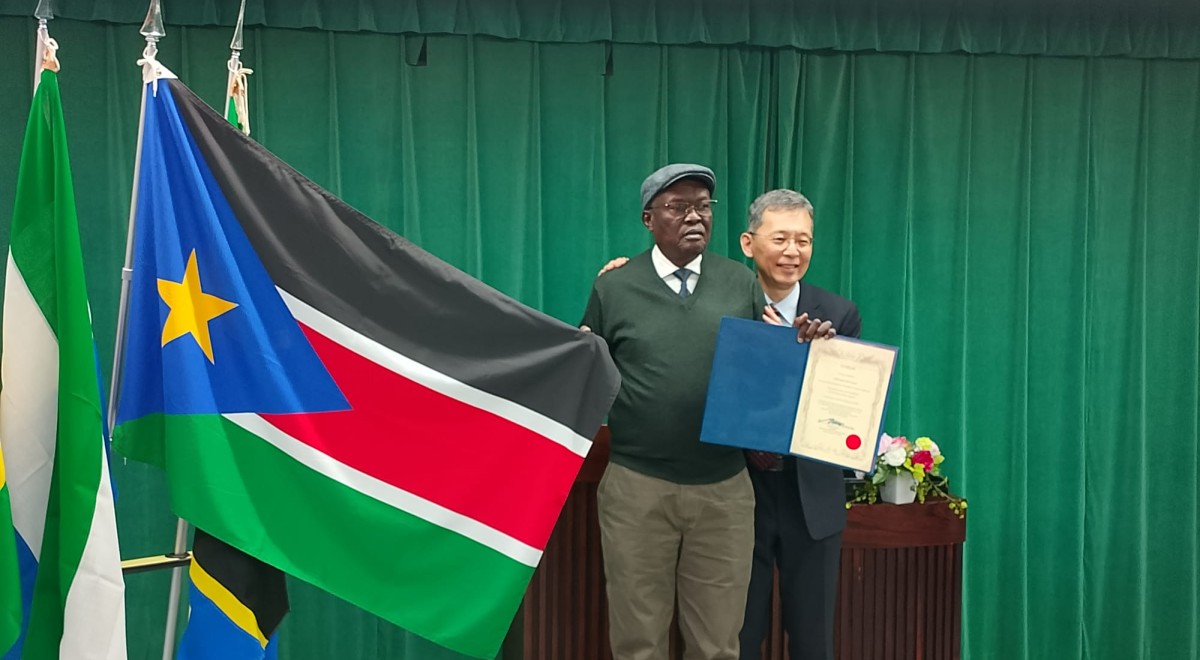
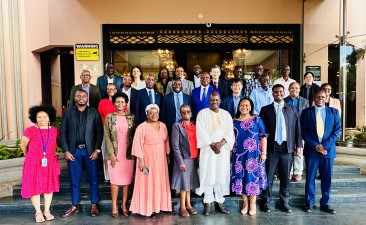
with General Coordinator of CARD Secretariat