Uganda, August 2025
Overview of the rice sector development in Uganda
Mr Peter Dhamuzungu is the focal point (FP) of the National Rice Development Strategy (NRDS) for Uganda. As the FP, he is responsible for coordinating all activities of the Coalition for African Rice Development (CARD) in Uganda.
In this interview, Mr Dhamuzungu provides an overview of the rice sector of Uganda by explaining the current rice production and demand pattern, challenges, and the way forward for the sector to meet the set objective of increasing production to reduce reliance on importation.
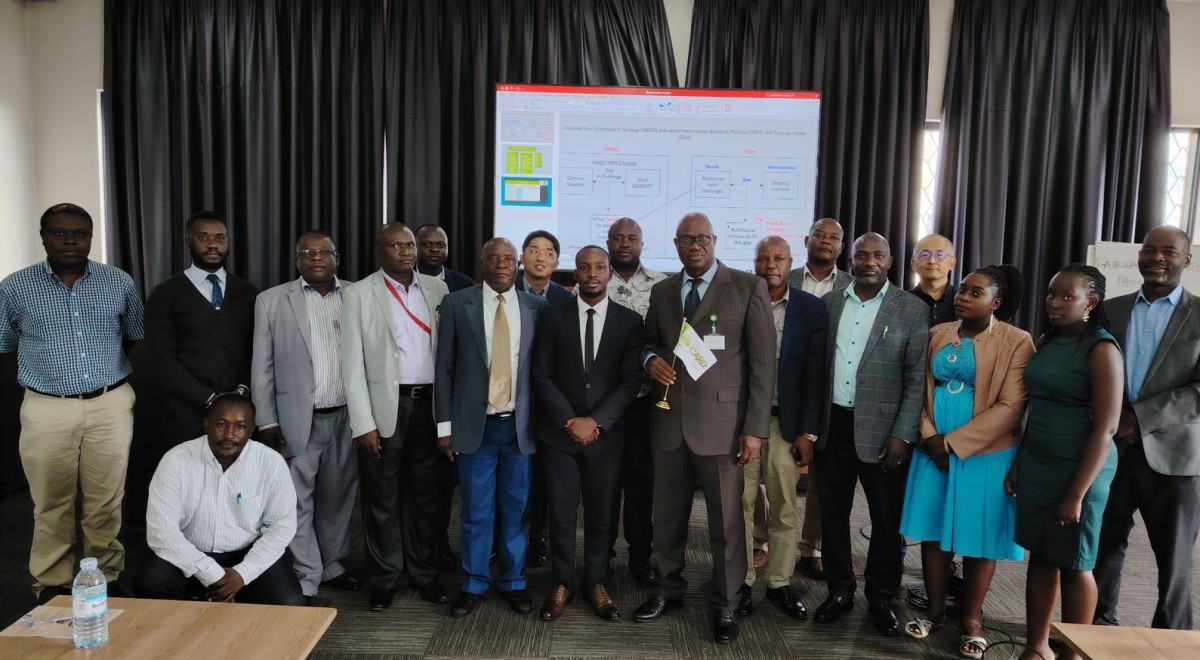
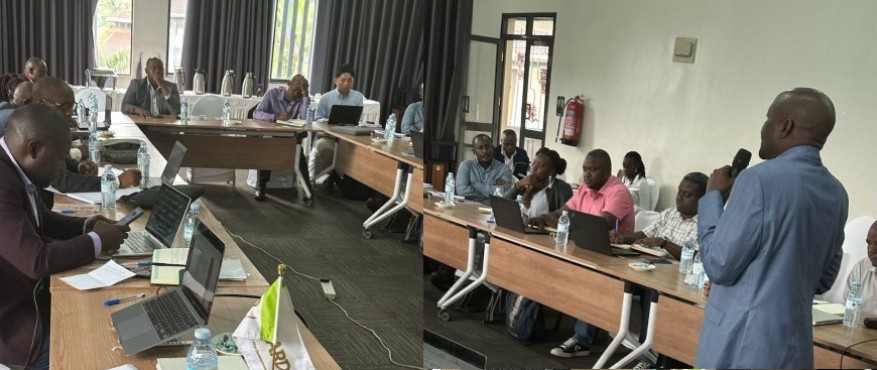
The interview was conducted by the CARD Senior Regional Advisor in charge of Uganda at the Fairway Hotel, Kampala, during the elaboration of concept notes for NRDS
Overview of the Uganda rice sector
Rice production in Uganda is a significant sector, with the crop being the second most important cereal after maize in terms of production volume. In terms of production, Rice is grown mostly by smallholder farmers for food and income. Uganda’s rice production is estimated at 200,000 metric tons, with local production meeting only about 60-70% of the country’s demand. Most of the rice production comes from small-holder farmers, with some projects promoting commercial agriculture to increase production.
Superior rice varieties like NERICA 4 and NAMCHE 5, among others, are drought-tolerant and disease-resistant, making them suitable for Uganda’s climate.
Rice consumption in Uganda is increasing at a rate of 4% per annum, driven by rising urbanization, changing consumption preferences, and population growth. The average Ugandan consumes about 5.6 kilograms of rice per year, significantly lower than the global average of 50 kilograms per capita. Annual rice consumption in the country is estimated at 346,309-350,000 metric tons.
Historical perspective of rice cultivation
Rice was introduced to Uganda in the early 1900s as a milled product for consumption, with Indians later introducing rice cultivars that were aromatic and grown under rain-fed lowland conditions around the same time. However, some sources suggest Portuguese traders may have introduced rice to East Africa as early as the 16th century.
In 1920s, the British government established experimental farms to promote rice cultivation in Uganda, focusing on eastern and northern climates.
In 1970s, Chinese initiatives led to the development of rice schemes, introducing semi-dwarf rice varieties like Kaiso (K5, K85, and K98).
Comparison of rice to other staple crops
The Ugandan government has prioritized rice as a strategic commodity. Rice is served as both a staple food and a cash crop. Its importance can be compared to other staple crops in terms of food security, economic value, and adaptability.
Although maize, sorghum, cassava and sweet potatoes are staple food crops, widely grown and consumed, rice is increasingly becoming a key player in food security and popular due to its versatility and economic value.
The major players in the sector
- Rice Millers: private companies investing in multi-stage milling capacity to process rice of high quality
- Traders: aggregators and traders who purchase rice from farmers and sell it to processors or consumers.
- Processors: companies that process rice for both domestic consumption and export.
- Smallholder Farmers and farmer organizations: the backbone of rice production in Uganda, often organized into cooperatives or associations to improve their bargaining power and access to markets.
Current level of national rice production in relation to domestic demand. Is Uganda self-sufficient or dependent on imports?
Uganda’s current rice production stands at approximately 200,000 metric tons per year, while domestic demand is estimated at around 350,000 metric tons per year. This leaves a significant gap of about 150,000 metric tons, which is partly filled by imports. In fact, imports meet between 20%-45% of the country’s rice demand. Overall, the country is not self-sufficient.
Challenges and opportunities
- Three (3) major challenges faced by rice farmers
Despite its growth, rice productivity remains low due to limited irrigation, mechanization, and access to improved agricultural inputs such as seeds and fertilizers.
- Main constraints faced by researchers
Rice researchers in Uganda face several constraints that hinder the development and dissemination of improved rice technologies. Some of the main constraints include:
Insufficient funding for rice research and development constrains the ability to conduct comprehensive studies, develop new varieties, and disseminate technologies to farmers.
Lack of modern research facilities, laboratories, and greenhouses limits the capacity to conduct high-quality research and develop improved rice varieties.
- Challenges in replacing imported rice with local rice
Replacing imported rice with local rice in Uganda faces several challenges, including:
Rice yields in Uganda are remarkably low, averaging 2.5 tons per hectare, compared to other countries like Tanzania. Many farmers lack access to high-quality seeds, leading to low yields and poor crop quality. Poor road networks and limited storage facilities hinder farmers’ ability to get their rice to market, resulting in delays and increased costs. Local rice often competes with imported rice, which can depress prices and lower farmer incomes. Farmers struggle to obtain affordable credit due to strict eligibility criteria and high-interest rates. Limited knowledge of good post-harvest practices leads to low grain quality, reducing potential income and market volume.
Initiatives to promote the consumption of local rice over imported rice
Efforts are being made to develop domestic and international markets for local rice, including establishing rice processing factories and promoting market competitiveness. The government has implemented policies like tax levies on imported rice to encourage domestic production.
Significant opportunities for growth or improvement in the rice industry in Uganda
Uganda’s rice industry has significant opportunities for growth and improvement, driven by increasing domestic demand due to population growth, urbanization, and changing dietary preferences.
CARD and NRDS
Uganda’s membership of the Coalition for African Rice Development (CARD) would offer several benefits, including:
- Knowledge Sharing: CARD provides a platform for knowledge sharing, capacity building, and technology transfer, enabling Uganda to learn from other countries’ experiences and best practices in rice development.
- Policy Support; CARD’s policy initiatives and advocacy help to shape Uganda’s agricultural policies, creating a more favorable environment for rice production and trade.
Solutions put in place by the NRDS to boost production and improve the competitiveness of local rice
The strategy focuses on improving seed quality standards, expanding market reach, fostering human capital development, and reinforcing the sector’s sustainability.
The NRDS seeks to improve market access for farmers, strengthen market linkages, and promote value addition to increase farmers’ incomes and competitiveness.
The strategy emphasizes building capacity among farmers, extension workers, and other stakeholders to improve coordination along the rice value chain.
The NRDS promotes sustainable practices, climate-resilient agriculture, and efficient use of resources to ensure the long-term sustainability of the rice sector.
Sustainability and Future Outlook in the country and sub-region
To ensure sustainable rice production in Uganda and the sub-region, several steps are being taken:
Actions taken in the short term should include
- Improving rice yields through sustainable agricultural practices, irrigation development, and access to quality seeds and fertilizers.
- Strengthening market linkages and promoting value addition to increase farmers’ incomes and competitiveness.
The long term, include
- Developing and promoting sustainable rice production systems that are resilient to climate change, conserve natural resources, and minimize environmental impact.
- Encouraging increased investment in irrigation infrastructure, research and development, and capacity building to support sustainable rice production.
- Regional Cooperation: Fostering regional cooperation and knowledge sharing to address common challenges and opportunities in rice production and trade.