Central African Republic, June 2026
At the heart of rice farming in the Central African Republic
Interview with Ms. Sylvie Solange NDODET BETIBANGUI, Focal Point NRDS Task Force, Agriculture Mission Officer
Rice consumption undergoing rapid change in the Central African Republic
In the Central African Republic, dietary habits are undergoing profound change. Once reserved for celebrations and special occasions, rice has now become part of the daily diet of Central Africans, including in school canteens. Its ease of preparation and changing consumption patterns have enabled it to gain increasing popularity. According to the Focal Point, rice is now the country’s second most consumed food commodity after cassava. The growing demand for rice is reflected in a gradual increase in per capita consumption, which is estimated to have risen from around 4.5 kg to approximately 7.5 kg per person per year. This trend suggests an increasing national demand for milled rice. However, domestic production remains insufficient to meet this growing demand, resulting in a continued reliance on imports to satisfy consumption needs.
Production spread across several agricultural zones
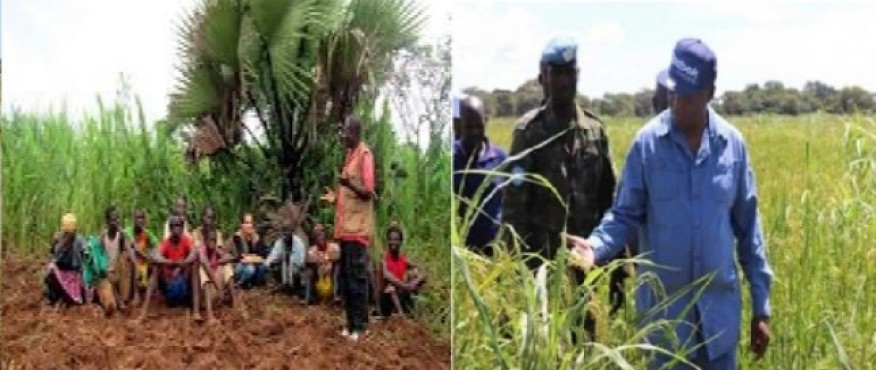
Rice cultivation is practiced in various parts of the country, notably in Sakai, Bozoum, Bambari, Kombot, Alindao, and Pissa. The rice sector is based on three complementary production ecologies: upland rice, lowland rice, and irrigated rice, with irrigated rice being identified by the NRDS as the main driver for sustainably increasing national rice production. Farmers mainly grow NERICA varieties as well as local varieties adapted to agroecological conditions. Despite notable progress, production systems remain largely traditional and only minimally mechanized, which continues to limit the sector’s development.
Rice at the heart of Central African food culture
Central Africans consume rice in many forms: traditional dishes, porridge, cakes, pancakes, fritters, and even local beverages. Among the most appreciated specialties is “Gbari,” a preparation combining rice and cowpea. However, white rice remains the preferred staple on dining tables.
Persistent challenges for producers
Producers face numerous challenges, including floods, droughts, bird damage, aging infrastructure, and limited market access. Rice processing also remains a major issue, as a large share of production is still processed using artisanal methods, limiting value addition.
Enormous potential to reduce imports
The development of the rice value chain represents a major opportunity for the national economy. Consumers appreciate locally produced rice and often express a preference for domestic products when available, which could help reduce the country’s import bill. The Central African Republic currently imports approximately 12,000 tons of milled rice annually, with an estimated value of nearly CFAF 8.9 billion. Beyond food security, the sector could create rural jobs and stimulate local economic activity.
An ambitious vision for the future
The Central African Republic has many strengths that can accelerate the development of its rice sector: fertile land, relatively abundant water resources, and large areas still available for agriculture. Innovations are gradually being introduced, including line transplanting, improved cultivation techniques, and the development of parboiling.
The Central African Republic’s expectations from CARD
Despite its efforts, the Central African Republic remains highly dependent on imports to meet its rice demand. The Focal Point emphasized the need for CARD’s continued support to accelerate the implementation of the National Rural Development Strategy (SNDR) and achieve its food security ambitions.
Among the key expectations are stronger support for resource mobilization to finance priority investments identified in the SNDR, as well as assistance in formulating and promoting transformative projects capable of attracting technical and financial partners.
Ms. NDODET-BETABANGUI also highlighted CARD’s importance as a platform for coordination, learning, and experience sharing among African countries. In this regard, the Central African Republic wishes to continue benefiting from best practices developed in other member countries, particularly in the areas of rice scheme development, mechanization, seed production, rice processing, and marketing.
“CARD plays an important role in strengthening the capacities of stakeholders in the rice value chain and in mobilizing partners around the implementation of the SNDR. We hope to continue this collaboration to further develop our rice sector and gradually reduce our dependence on imports,” concluded the Focal Point.
Building a promising future together
Driven by growing demand, considerable agricultural potential, and the commitment of producers, the Central African rice sector has the foundations necessary to play a major role in transforming the national food system.
| “Rice has a promising future in the Central African Republic. With greater investment, technical support, and coordination among stakeholders, we can make rice a true driver of economic development and food security for our country.” |

Ms. Sylvie Solange NDODET BETIBANGUI, Focal Point NRDS Task Force, Agriculture Mission Officer