Malawi, June 2026
The High-level dialogues between the African Union Commission (AUC) and the Government of Malawi: Rice as one of the priority food commodities for the Malawian People
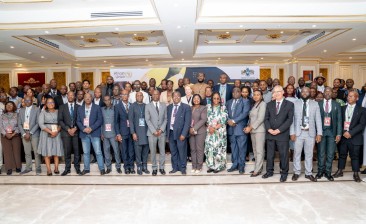
The CARD General Coordinator (GC) attended discussions between the AUC high-level mission and the Malawian government in early June. With the aim of accelerating the implementation of the CAADP Kampala Declaration, the AUC dispatched a high-level mission to Malawi headed by H.E. Moses Vilakati, AUC Commissioner for Agriculture, Rural Development, Blue Economy, and Sustainable Environment (ARBE). For the AUC, Malawi is the first country to which a mission has been dispatched for this purpose.
Since taking office last year, the AUC Commissioner for ARBE has emphasized that coordination with development partners is essential to addressing the challenges facing African agriculture and has developed the “100-day rolling plan,” an action plan for implementation. One of the rolling plan’s priority areas is achieving food security and self-sufficiency—that is, ensuring the continent can feed the African people. This directly contributes to the goals outlined in the CAADP Kampala Declaration regarding “intensifying sustainable food production, agro-industrialization, and trade,” particularly the target to “increase agrifood output by 45% by 2035 through adoption of sustainable agricultural practices to meet the growing Africa food requirements.” To further promote food security through rice development in collaboration with the AUC, the CARD GC attended a series of discussions in Malawi. As a result of active discussions between the AUC and the Malawian government, priority collaborative actions were formulated, and rice was identified as one of the priority commodities.
In Malawi, the NRDS plans to expand rice production from 147 thousand tons (2024–25) to 330 thousand tons (2030). However, rice productivity remains at 1.72 t/ha (2024–25), which is approximately 20 percent below the Sub-Saharan Africa (SSA) average of 2.11 t/ha. There is still significant room for increasing rice production in Malawi. Regarding the rice in the above priority collaborative actions, seeds, agronomy (extension and capacity building), post-harvest, and markets were identified as key challenges. Furthermore, irrigation development through public-private partnerships and resource mobilization for rice value chain development were identified as priority interventions moving forward.
In the closing session, both the AUC Commissioner and Malawi’s Minister of Agriculture, Irrigation and Water Development emphasized that implementation after planning is crucial, and made it clear that a monitoring mechanism would be established to track progress. Advancing the priority collaborative actions requires the public and private sectors to work together to promote rice development.
Subsequently, the CARD GC held discussions with Mr. Zalinga Dinala, Malawi’s CARD Focal Point, and it was confirmed that an NRDS Task Force meeting would be convened shortly to concretize plans for advancing priority collaborative actions, and that the 1st Annual Rice Sector Review Meeting (ARSRM) would be held in late October 2026 to report on progress. The ARSRM is expected to be attended by representatives from the AUC and high-level officials from the Government of Malawi. It is hoped that the promotion of rice development through CARD will lead to the implementation of the CAADP Kampala Declaration and the 100-day rolling plan in Malawi, thereby having a positive impact on the advancement of other key issues in the priority collaborative actions.
CARD GC’s participation in these discussions in Malawi has further deepened the trusting relationship between the AUC and CARD. At the CARD General Meeting in Madagascar last March, it was confirmed that one of the key priority directions on the promotion of CARD Phase 2 is to move forward with medium- to long-term sustainable rice development by strengthening relationships with continental bodies (AUC, AUDA-NEPAD, etc) to ensure alignment with the continental agenda, such as the CAADP Kampala Declaration. Strengthening ties with the AUC is exactly in line with this direction. While demand for rice has been growing significantly in Africa in recent years, it is essential to ensure that rice can sufficiently feed the African people as a staple food in the future. To achieve this, in addition to accelerating the increase in rice production to reach the target of CARD Phase 2 (56 million tons in 2030), rice development must be prioritized in Africa’s development agenda from a long-term perspective beyond 2030. Beginning with Malawi, efforts will be made to promote long-term rice development in various African countries so that it progresses in a sustainable manner with the participation of a wide range of stakeholders.
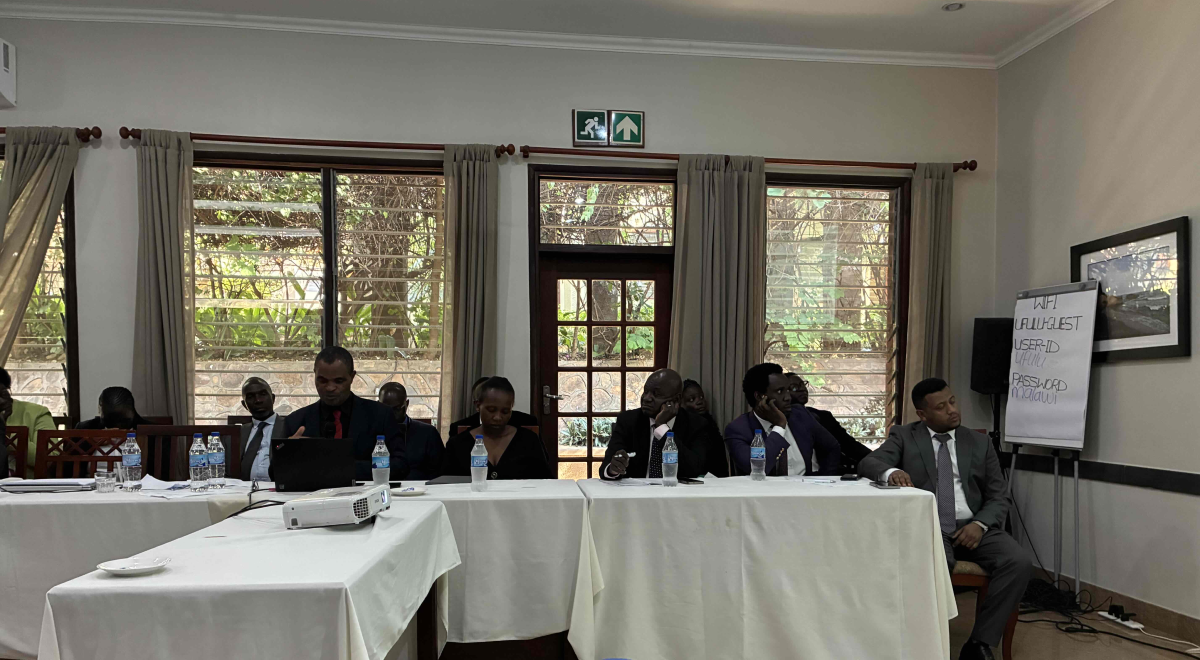
Reporting of priority collaborative actions by the Advisor to the AUC Commissioner
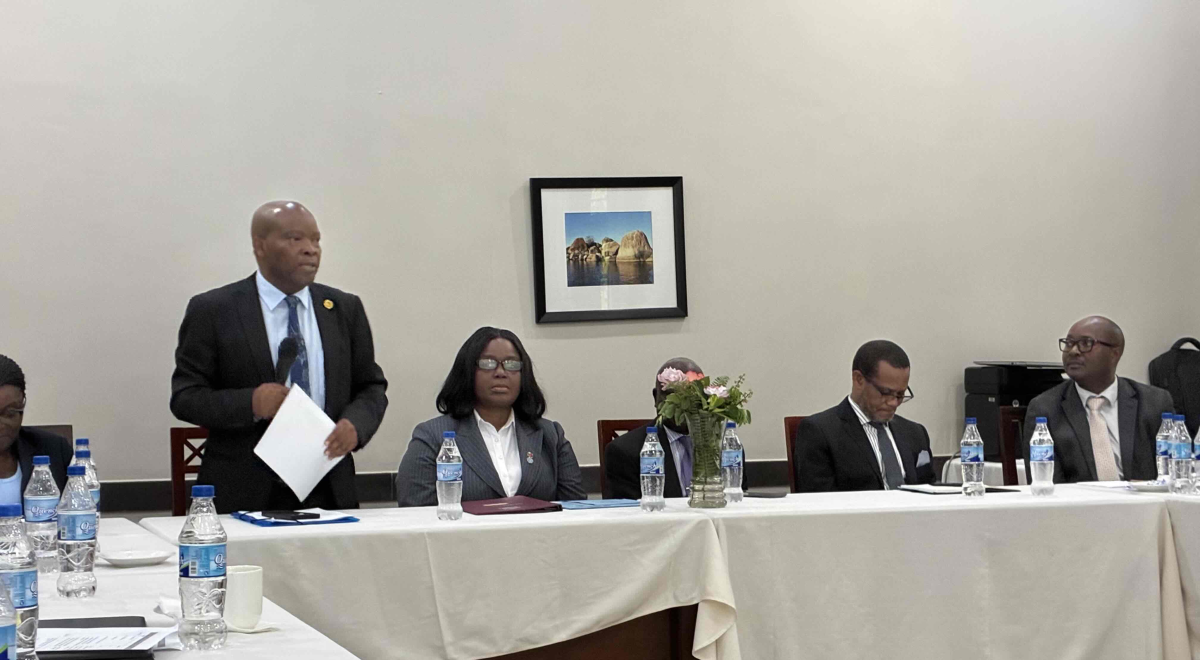
Remarks by the AUC Commissioner for ARBE, right next is the Malawian Minister of Agriculture, Irrigation and Water Development
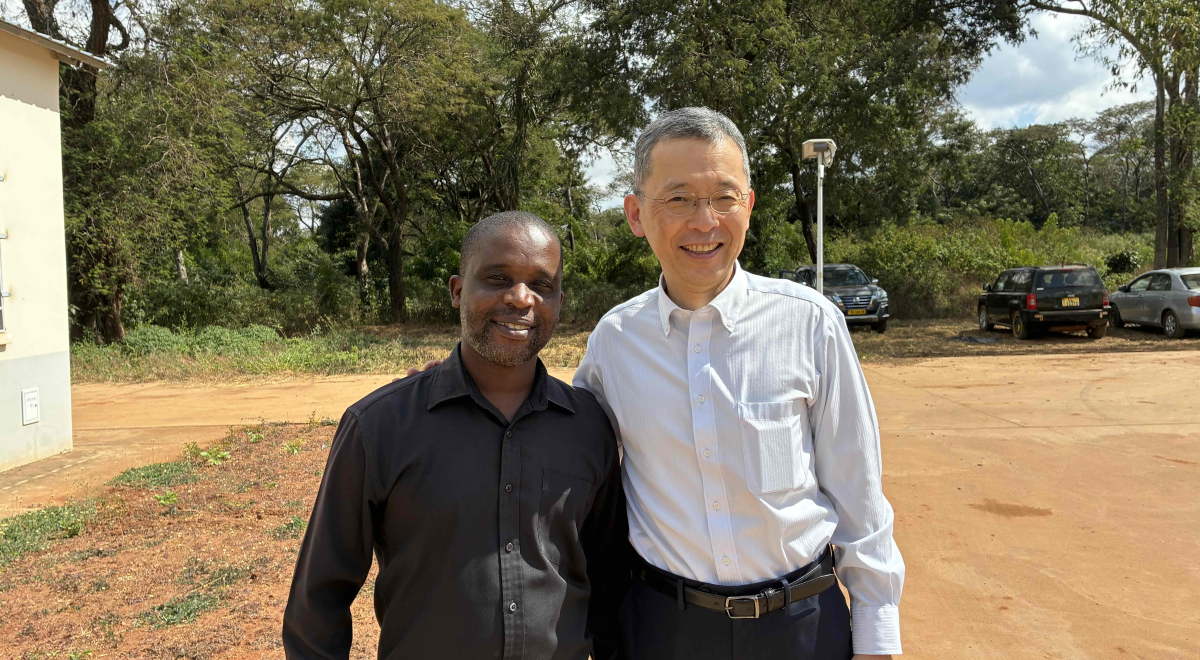
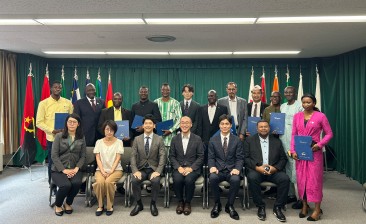
Zalinga Dinala, the Malawi CARD Focal Point, and the CARD Secretariat GC