Uganda, May 2026
Uganda‘s 1st Annual Rice Sector Review Meeting-May 2026
1. Background
The Ugandan Annual Rice Sector Review Meeting (ARSRM) is the first to be organized in the country. The review meeting was held as a part of a broader mechanism for monitoring, evaluating, sharing and planning for the continuous implementations of the second National Rice Development Strategy (NRDS2). Alongside the ARSRM was the donor round table business meeting (DRTBM). The primary objective of the meeting was to strengthen stakeholders’ engagement, coordination and resource mobilization to support the implementation of the NRDS2. By reviewing progress, achievements, constraints and future investment priorities for the effective implementation of the NRDS2, as well as guide sustainable development of the Uganda rice sector.
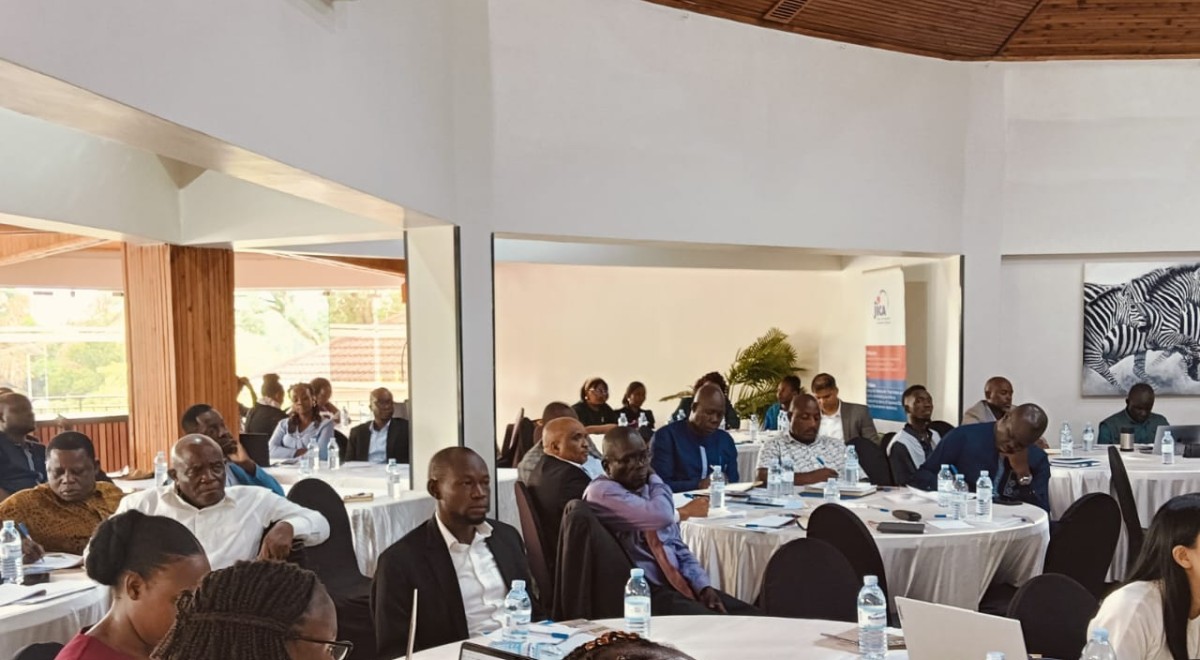
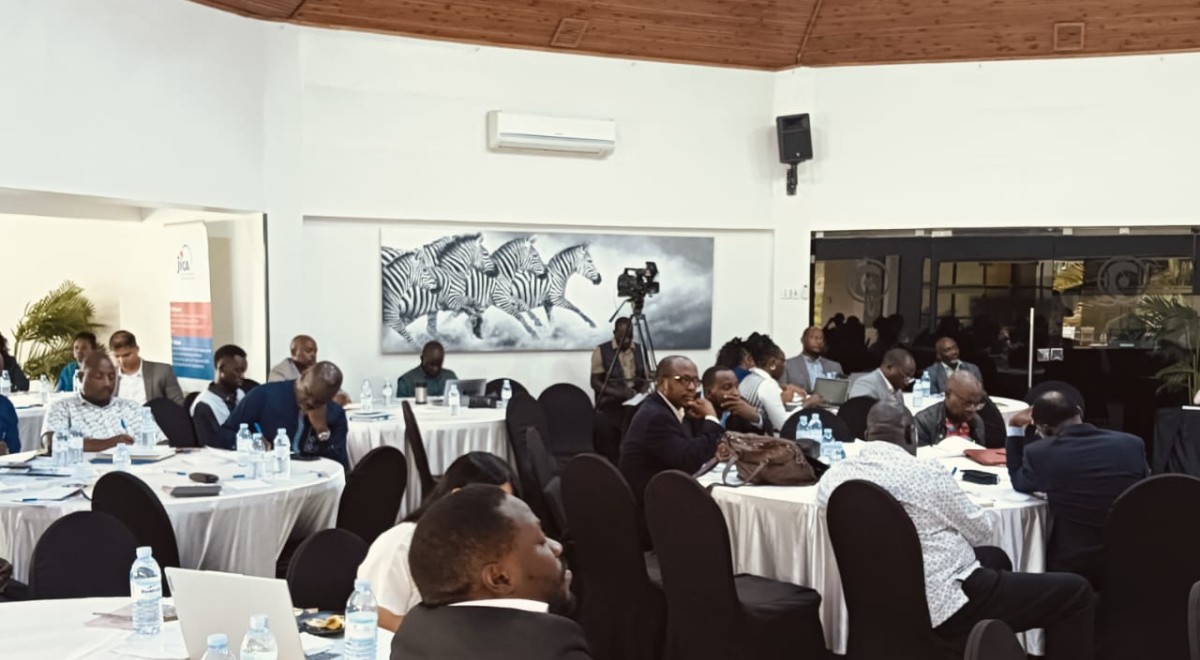
The meeting was held on 21st May at the Fairway Hotel in Kampala, Uganda. The meeting was attended by 70 participants (37 females, 33 males) representing various stakeholders, including officials from the Ministries, departments, and agencies, donors/funding agencies, national and international research organizations and universities, implementing partners, private sector players, and farmers. The meeting was opened by welcome remarks, goodwill messages and a keynote address. The opening session was followed by stakeholder presentations and discussions covering
- The annual sector report
- Presentations on M&E, SIEM and concept notes
- Advancing rice seeds’ self-sufficiency in Uganda 2020-2030
- Impact of imported rice on the competitiveness and sustainability of local rice production in Uganda
- Harnessing available technologies to improve mechanization across the rice value chain in Uganda.
2. Opening ceremony
In his welcome address, the Assistant Commissioner of Agriculture Mr John Ludongokol, who represented the permanent Secretary of the Ministry of Agriculture Animal Industry and Fisheries (MAAIF), pointed out that MAAIF has the mandate to establish and strengthen legal and institutional framework for advancing the national rice agenda. He underscored the importance of the meeting, considering that Uganda imports significant quantity of rice despite having a strong potential for local production. He encouraged all stakeholders present to take advantage of the meeting to reduce the trade gap by generating practical solutions using technologies generated by the National Agriculture Research Organization (NARO). He concluded by thanking all participants and stakeholders for their continued commitment to the development of the Uganda rice sector and urged them to continue in mobilizing resources, sharing knowledge and working together to build a competitive, resilient and self-sufficient rice industry.
Goodwill messages were delivered by other key actors and stakeholders in the rice sector, including: the representative of JICA, the General Coordinator of CARD, representatives from IRRI, AfricaRice, FAO, AGRA, Kilimo Trust, and other line ministries such as the Ministry of Finance, Ministry of Trade, Industry and Cooperatives and the Presidential Adviser on Agriculture.
The keynote address was delivered by Ambassador Phillip Indro. In his address he emphasized the need for institutional linkages among the line ministries and the research institutes in order to accelerate rice sector development. He pointed out the urgent need to develop the seed system to supply quality seeds to the farmer. Furthermore, harvest and post-harvest losses challenges needs to be addressed in order to cut down losses which currently stands at between 20-30%. He concluded by underscoring the need to design interventions that are agro-ecology specific.
3. Presentations
Following the opening ceremonies, various presentations were made;
- Annual report of progress of rice sector in Uganda. The presenter Semakula Alex presented the progress of the rice sector built on the following
- Review on the NRDS implementation
- Result of M&E
- Sub-sector intervention element matrix
- Project concept notes and
- Strategy for mobilizing funding through partners engagement
The goal of the NRDS2, currently under implementation, is to take the country towards self-sufficiency by 2030 through an increase in paddy production from 247,000MT in 2023 to 717,000 MT, harvested area from 115,000ha to 190,000ha, and yield from 2.1t/ha to 3.8t/ha by 2030. It was further highlighted that:
- Farmers are still using saved seeds, hence lower productivity
- JICA introduced small line planters for efficiency and to help eliminate weeds
- Boom sprayers are being introduced and agricultural drones are being promoted.
- Harvesting is through harvesters and the difference with the local harvester is significant.
- Drying is still a challenge, with no adequate dryers, so investment can be targeted here.
- Storage is still an issue
The implementation of the NRDS is based on Resilience, Industrialization, Competitiveness and Empowerment (RICE).
Other presentations done include
1) Attaining rice seed self-sufficiency in Uganda (2020-2030)
2) The impact of imported rice on the competitiveness and sustainability of local rice production in Uganda
3) Harnessing available technologies to improve mechanization across the Rice Value Chain(RVC)
4. Donor Round Table Business Meeting (DRTBM)
Part two of the meeting was the donor’s business round table meeting.
The business round table saw renewed commitments from stakeholders to work collaboratively to ensure the realization of the goal of achieving the dream of rice self-sufficiency in Uganda by 2030.
4.1 Comments by the stakeholders during the Donor’s meeting
4.1.1 AfricaRice:
AfricaRice pledged to work with NARO in enhancing certified seed production to continue to enhance rice quality in supporting the concept of market access and enhancement of quality. Specifically, it will promote processing of parboiled rice, develop varieties that support parboiled rice, and conduct market studies to understand the quality of rice that consumers want. Supported the development and testing of prototypes of weeders with farmers to make adjustments that address the farmers’ needs highlighted.
4.1.2 International Rice Research Institute (IRRI):
Highlighted that the concept note at IRRI was built based on the SWOT (Strengths, Weaknesses, Opportunities, Threats) of NRDSII. It will support the following Strategic areas;
- Enhance food and nutrition security
- Accelerate tech transfer
- Leverage on sustainable development of climate-resilient agriculture, Scale Climate Smart Agriculture (CSA) technologies,
They hope that the interventions will support behavioral change.
4.1.3 Japan International Corporation Agency (JICA):
Part of the process for JICA support to MAAIF are
- Generate appropriate mechanization for small scale farmers
- Dispatch the Central and Local Government personnel to other countries to build their technical capacity.
- Rice farm production and irrigation: potential irrigation scheme sites were identified, development plans formulated, and actual infrastructure development ongoing alongside building capacity for operation, maintenance and management of the irrigation schemes. Through the Eco-PRiDe project, already working with MAAIF and NARO to strengthen the seed supply chain, and in effect feeding into the CN on ‘Enhancing rice seed value chain to promote sustainable rice production for food security.
- Discussions ongoing, internally, on the possibility of future support to agricultural mechanization.
- Reaffirmed their commitment to work with the MAAIF, NARO and rice industry.
5. Message from CARD
In his message the CARD General Coordinator pointed out that the Uganda inaugural National Annual Rice Sector Review Meeting represents a landmark achievement that CARD strongly endorses as a critical step toward advancing African rice development in the region. The meeting successfully brought together a comprehensive range of stakeholders from government ministries, national and international research institutions, development partners, private sector players, and farmers, creating an unprecedented platform for strategic planning and discussion around Uganda’s rice sector. CARD particularly values the meeting’s emphasis on evidence-based problem identification and the development of bankable concept notes, which align with NRDS2. The strong participation of 70 stakeholders, combined with the integration of the Donor Roundtable Business Meeting, reflects Uganda’s commitment to advancing systemic transformation of the rice sector through a coordinated and multi-sectoral approach. Such an approach can help strengthen agricultural competitiveness, food security, and rural prosperity across the region.
VIDEO clip Uganda 1st ARSRM captured by local television
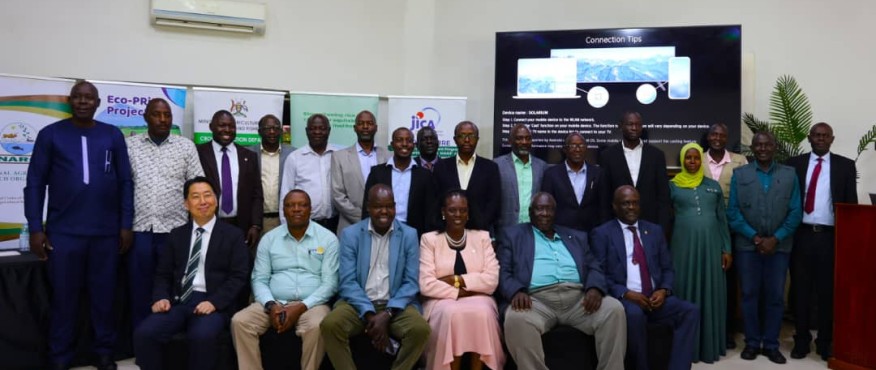
During Annual Rice Sector Review Meeting (ARSRM)