TICAD 9, August 2025
TICAD 9 was held in Japan in August 2025: AGRA President and CARD General Coordinator visited Japan
The Ninth Tokyo International Conference on African Development (TICAD 9) was held on August 20 to 22, 2025 in Yokohama, Japan. Mr.Shinjiro Amameishi, General Coordinator of CARD Secretariat, presented CARD Phase 2 at a JICA-organized side event. Mr. Fahari Marwa, Principal Agricultural Economist at the East African Community (EAC), also reported the rice development at sub-regional level at this event. For TICAD9, AGRA sent a delegation led by President Alice Ruhweza, which held a series of meetings with Japanese government agencies and the private sector, and presented at the multiple events.
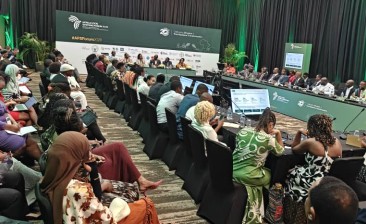
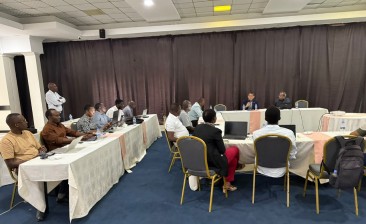
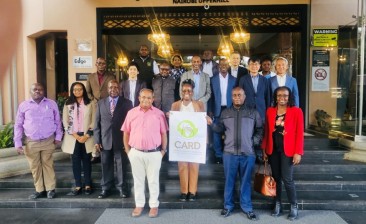
Mr. Amameishi participated in the side event “Enhancing Continental Food Self-sufficiency and Job Creation through Resilient Food Systems and Private Sector Development in Africa” held on August 20. This event started from keynote speeches by three international leaders, namely, Dr. Akihiko Tanaka, President of JICA, Ms. Nardos Bekele-Thomas, CEO of AUDA-NEPAD, and Dr. Ibrahim Assane Mayaki, African Union Special Envoy for Food Systems and former Prime Minister of Niger. Following this, Mr. Amameishi made a presentation and highlighted that among Africa’s four major food crops (cassava, maize, rice, and wheat), only rice has seen an increase in both share of supply and imports. It means that rice demand in Africa is rapidly expanding, leading to a growing proportion of rice imports. Furthermore, it noted that rice productivity in Africa remains low, still less than half that of Asia. He emphasized that while rice production in Africa is steadily increasing, it is failing to keep pace with demand growth due to low productivity. He stressed the need for proactive resource mobilization to improve productivity. Mr. Fahari Marwa, Principal Agricultural Economist at the East African Community (EAC) and CARD focal point person, also attended as a panelist. He presented the promotion of EAC rice development strategy (ERDS).In order to promote rice development at sub-regional level, the EAC with support from the CARD Secretariat held a workshop in Kenya from August 13 to 15, attended by representatives from all eight EAC partner states. Moving forward, data will be collected and analyzed based on the M&E Framework developed by the EAC, progress to date and action plans will be compiled, and the Annual Rice Sector Review Meeting (ARSRM) will be organized by the EAC in January 2026. The results of ARSRM are expected to be reported at the EAC’s Sectoral Council on Agricultural and Food Security planned for around May 2026. At this TICAD9 side event, presentations were also given by the Chief Economist of the World Bank and other key resource persons. Finally, considering the importance of continental food security, it was agreed that the collective actions including the private sector investment are needed to improve food self-sufficiency and promote intra-regional distribution of food crops.
During TICAD9 period, AGRA President Alice Ruhweza met with Vice-President of JICA and the Vice-Minister of the Ministry of Agriculture, Forestry and Fisheries (MAFF), Japan, to discuss future collaboration, in particular on the promotion of CARD Phase2. On August 21, an event “For an Inclusive and Sustainable Food System in Africa: AGRA’s Promotion Event with Japanese Private Sectors” was held to build relationships with broader Japanese private companies. Furthermore, on August 22, with significant contribution by the Japan International Research Center for Agricultural Science (JIRCAS), a “Special Seminar with AGRA President, AGRA-JICA-JIRCAS: Building Climate Resilient Agrifood Systems in Africa – the Role of Science and Public-Private Partnerships” was organized. The AGRA President delivered a keynote speech focusing on the impacts of climate change on agriculture in Africa. The AGRA President highlighted AGRA’s efforts to improve productivity through enhanced seed development (e.g. early generation seeds) and building the capacity of African plant breeders. The AGRA President emphasized that sustainably improving productivity requires a coordinated effort across the entire food system. This includes effective extension systems to deliver seeds and transfer know-how to farmers through village-based advisors (VBAs), market mechanisms to determine farmers’ incentives, and policy support.
At TICAD9, the importance of rice development in Sub-Saharan Africa and further advancement of CARD Phase 2 were widely disseminated. CARD Phase 2 will be further promoted by enhancing the ownership and autonomy of each of 32 CARD member countries and 5 RECs, and deepening understanding and attracting financial and technical resources from a broad range of stakeholders.
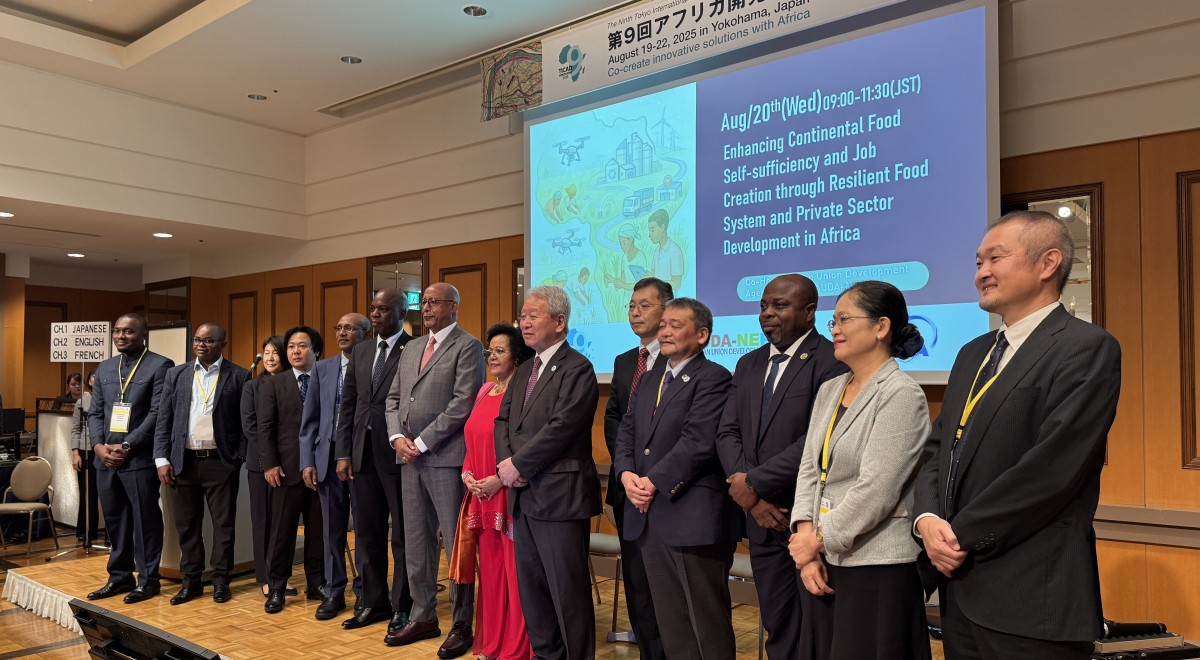
Keynote speakers and panelists
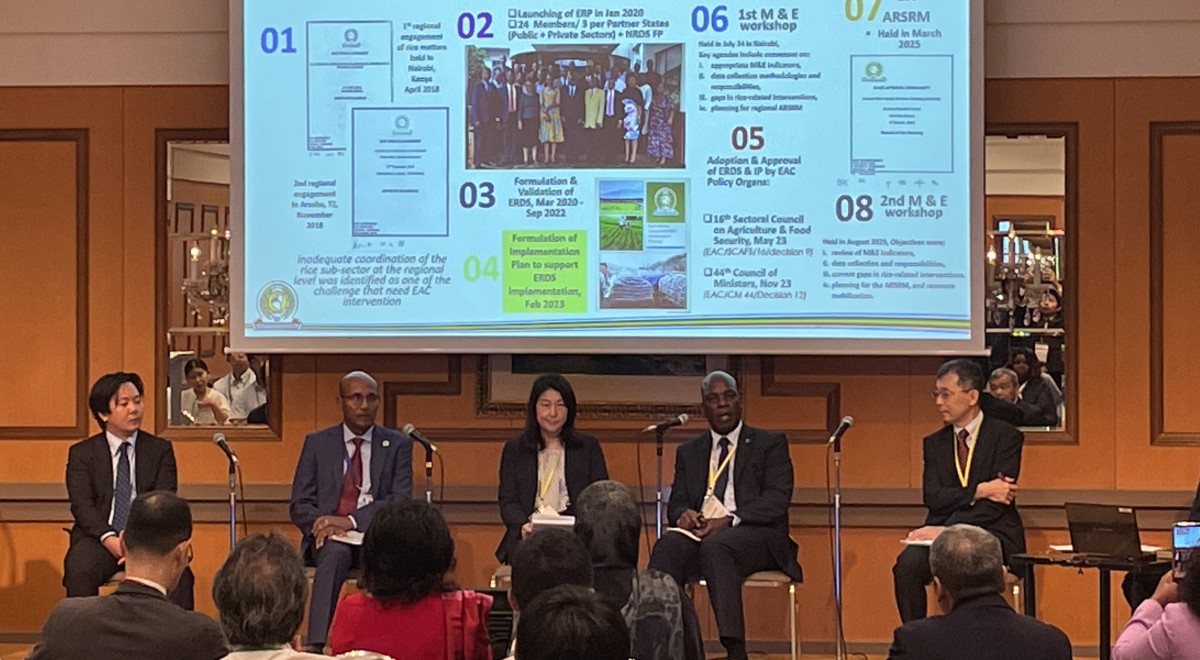
Mr. Marwa presented the promotion of EAC rice development strategy (ERDS)

Alice Ruhweza, AGRA President at a Special Seminar on 22nd August
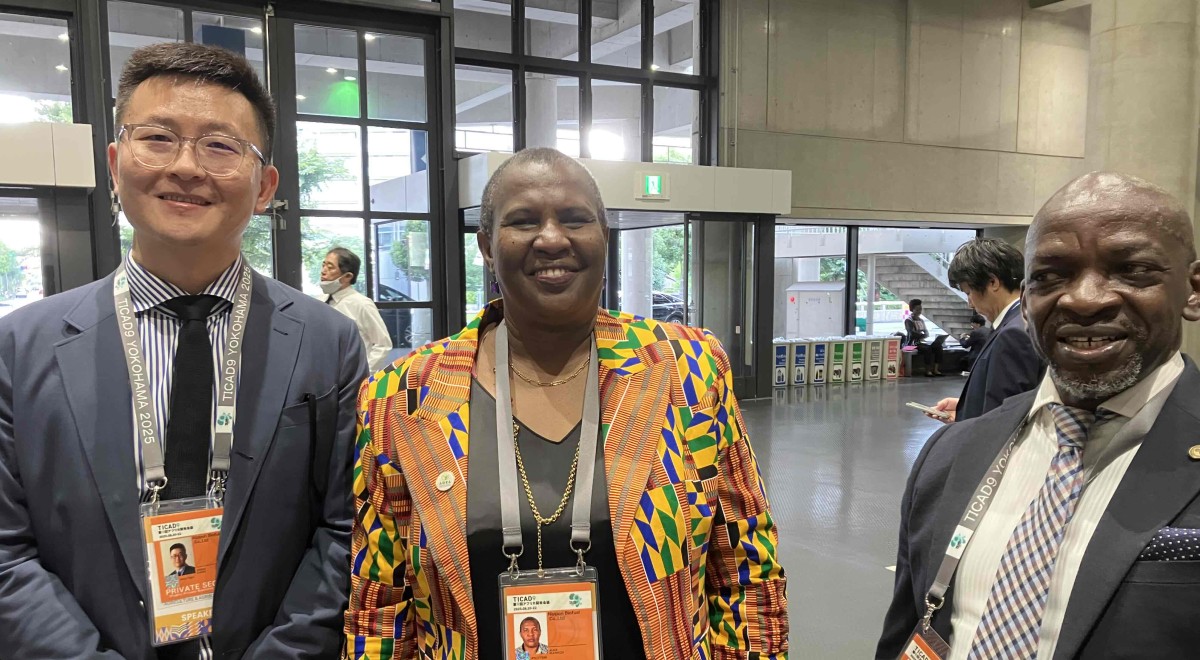
AGRA team from left, Cheng Cheng/Lead of Asian Partnership, the President, Boaz Keizire/Director of Policy and State Capability