Sierra Leone, May 2026
Interview with the Focal Point of the National Rice Development Strategy (NRDS) of Sierra Leone, Mr. Dennis Philip Yaw Yankson
From Import Dependence to Self-Sufficiency: Sierra Leone’s Challenge in Promoting Local Rice Production
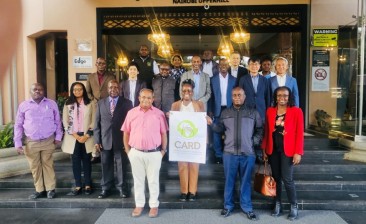
This interview was conducted by CARD Senior Regional Advisor, Dr. Michael Nasamu, during the JICA training on Promotion of African Rice Development for Sub-Saharan African Countries held at Tsukuba center, Japan, in February 2026 where Sierra Leone’s NRDS Focal Point, Mr. Dennis Yankson, gave a perspective of the rice sector, current challenges and actions required for the development of the rice sector in the country.
In Sierra Leone, the main staple food is rice, and therefore the most important crop for its populace. It is consumed daily by nearly all households. Sierra Leone is among the highest consumers of rice in Sub-Saharan Africa with an annual per capita consumption of 131Kg per person. As the country works to reduce its dependence on imported rice, strengthening local rice production has become a national priority.
1. Rice as a staple food in Sierra Leone
Rice production in Sierra Leone is mainly rainfed, with the majority of farmers engaged in subsistence cultivation. Production ecologies include upland, which involves predominantly slash and burn farming practice, Inland Valley Swamp (IVS), Boliland (seasonal swamp), Mangrove Swamp and Riverine grassland. The Ministry of Agriculture and Food Security (MAFS) is promoting lowland rice cultivation, particularly IVS due to its high productivity potential and multiple cropping cycle advantage as well as its availability countrywide. MAFS is discouraging upland rice cultivation by only providing lowland seed varieties to farmers in order to reduce deforestation and its attendant problems.
1a) The main players involved in this sector (producers, processors, distributors, consumers)
The main players in Sierra Leone’s rice sector are predominantly smallholder farmers, processors and distributors. A few private companies are now engaged in medium to large-scale production. Distributors are largely local traders and private enterprises, while consumers comprise households and government institutions such as schools, correctional centers etc.
1b) The current level of national rice production in relation to domestic demand and self-sufficiency.
The total area cultivated has increased from 511,430 Ha to 636,473 Ha from 2022 to 2024. There is a gradual increase in paddy production from 1,315,368 MT in 2023 to 1,382,854 MT in 2024, and yield has also increased from 2.13 to 2.19 MT, i.e., 1.53% increase (2024 Sierra Leone Crop Yield and Production Report, MAFS). Local rice production outpaces national consumption; thus, the deficit is compensated for through imports. Rice import volume has reduced from 386,437 MT in 2021 to 361,322 MT in 2024, which is about 30% of the national requirement coupled with a decline in the import value from US $ 166,546,983 in 2023 to US $ 159,143,199 in 2024 (Ministry of Trade and Industry, 2025). Self-sufficiency has increased from 56.3% in 2019 to about 72% in 2024.
2. Challenges that hinder progress towards self-sufficiency
2a) The major challenges for rice farmers
The three (3) major challenges faced by rice farmers include i) limited access to agricultural inputs i.e. machinery/equipment, improved seeds, fertilizers and pesticides coupled with their high costs; ii) limited access to financial services and iii) climate change.
2b) Main constraints faced by researchers
The main constraints faced by rice researchers are inadequate funding for research activities, inadequate infrastructure such as advanced laboratory facilities and modern storage facilities/gene bank and limited trained and qualified researchers.
2c) Challenges in replacing imported rice with local rice
Mr. Yankson noted that while the Feed Salone Strategy (2023 – 2028) aimed at reducing imports, replacing imported rice with local rice is a major challenge. High production cost coupled with low yields results to low availability of local rice, consequently high market price. There are limited modern rice processing and storage facilities resulting to high post-harvest losses and poor-quality rice. Dependence on rainfed production with limited investment in irrigation infrastructure including poor road condition and network to market centers coupled with rising transportation costs result to limited availability of local rice in urban market.
3. Opportunities to promote rice self-sufficiency
3a) Promoting local rice consumption
Current initiatives are driven by the Feed Salone Strategy geared towards increasing the quantity and quality of local rice. In 2023, the government instituted regulatory reforms to boost local production and reduce imports. The Rice Importers Policy aimed at reducing imports and engage importers to participate in the rice value chain to increase local supply which is now a prerequisite for obtaining import license. The Institutional Feeding Policy aims at increasing home-grown food in government institutional diets such as schools, correctional centers etc. and cut down on import expenditure.
3b) Investment opportunities in the Rice Sub-Sector
Significant opportunities for growth in Sierra Leone’s rice industry exist through production intensification, increasing yields, upgrading milling infrastructure, and improving post-harvest handling and marketing including research and private sector participation. Key investments comprise mechanized farming, development/rehabilitation of IVS and other irrigation systems, and strengthening the local rice value chain to substitute imports. Investment in seed and input systems to increase the supply of high-quality, certified seeds and resilient varieties, fertilizers, and pesticides to boost productivity; mechanization to enhance access to machinery; irrigation to increase the current low productivity level; and processing infrastructure to improve quality and compete with imported rice. Increased donor and private sector investment is crucial going forward.
4. CARD`s contribution through NRDS
4a) The major benefits of joining CARD
CARD support for the development and implementation of the NRDS has helped the country identify challenges in the rice sector and propose strategic actions to address them. CARD has also supported technical capacity building of key stakeholders as well as experience sharing between member countries.
4b) Strategic Priorities under the NRDS
The NRDS clearly highlights strategic areas of investment to boost rice production and Improve competitiveness. These include increasing the area under cultivation and yield. Promotion of high-yielding and improved seed varieties, development of irrigation infrastructure for water management and multiple cropping; promotion of climate-resilient farming techniques together with mechanization and post-harvest management facilities, using modern equipment to increase competitiveness.
4c) The way forward for the next step with CARD
Sierra Leone expects CARD to continue to support her towards the goal of attaining rice self-sufficiency through the provision of technical support to increase yield and reduce imports, including lobbying with donor partners for investment.
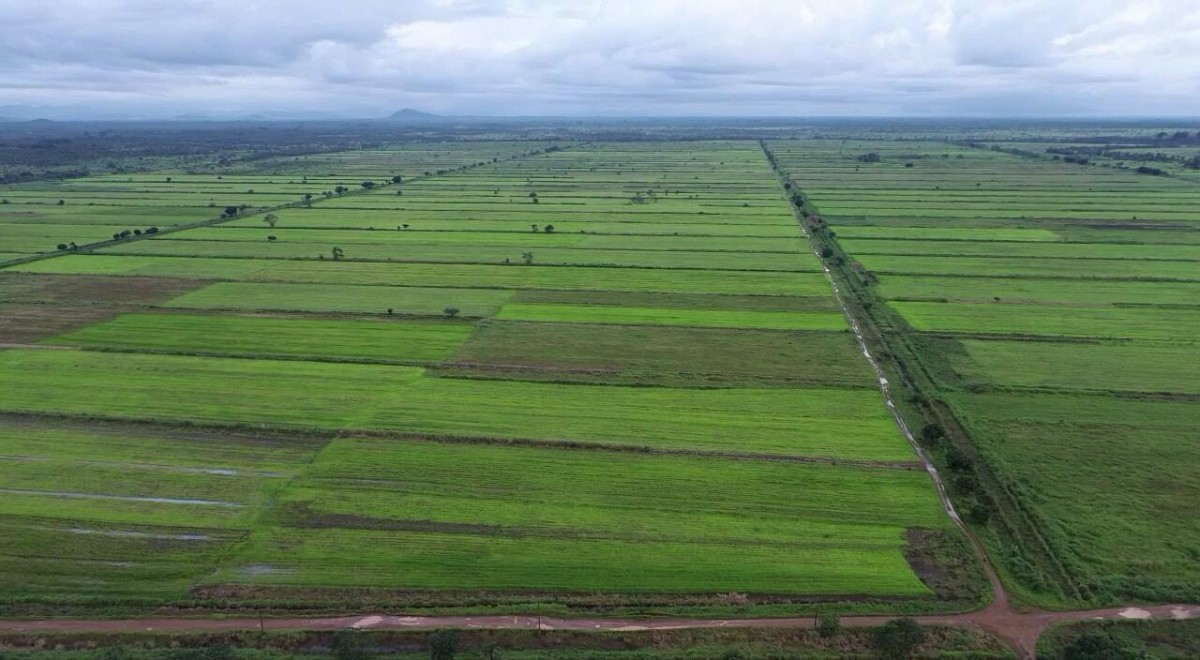
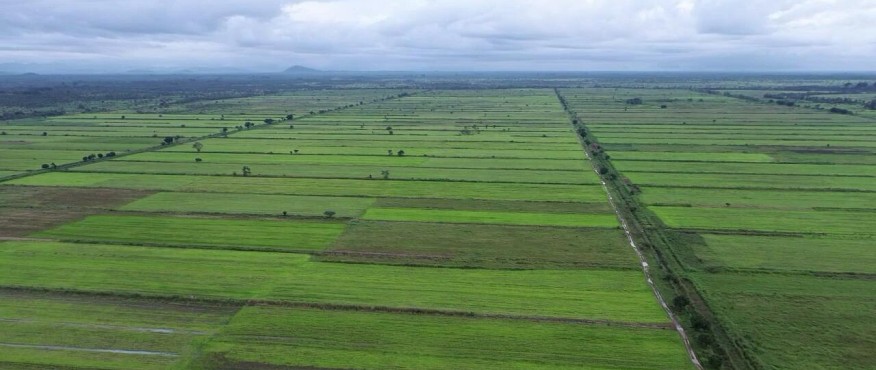
Rice field in Samu Chiefdom, Kambia District, Northern Province
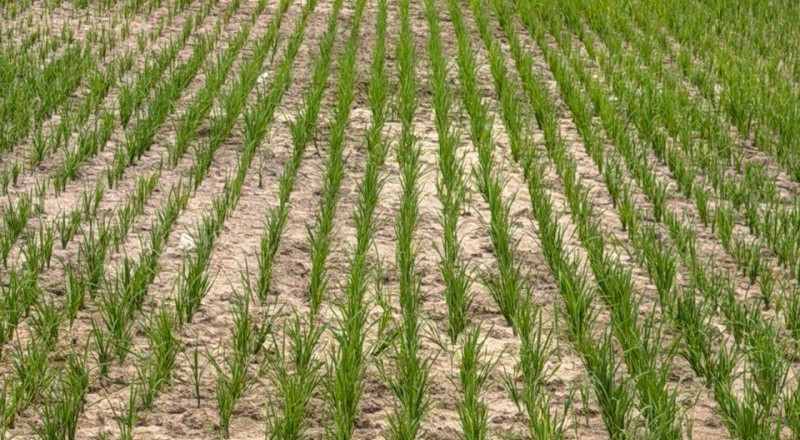
Seed multiplication of newly released varieties by HE The President in Moyamba District, Southern Province
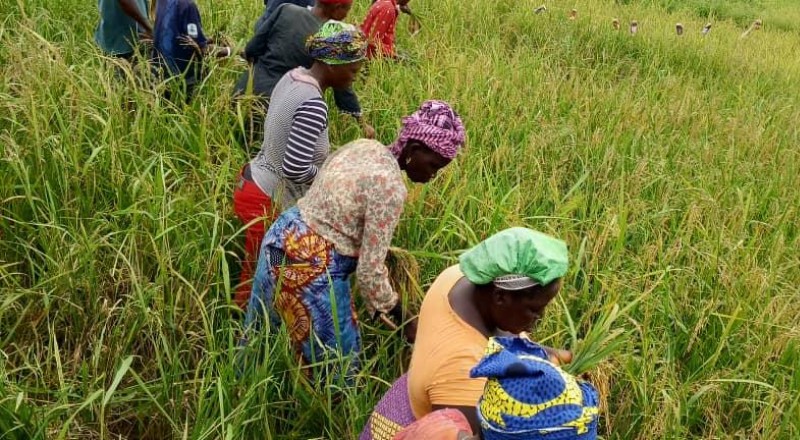
Manual harvesting of IVS rice field in Moyamba District, Southern Province
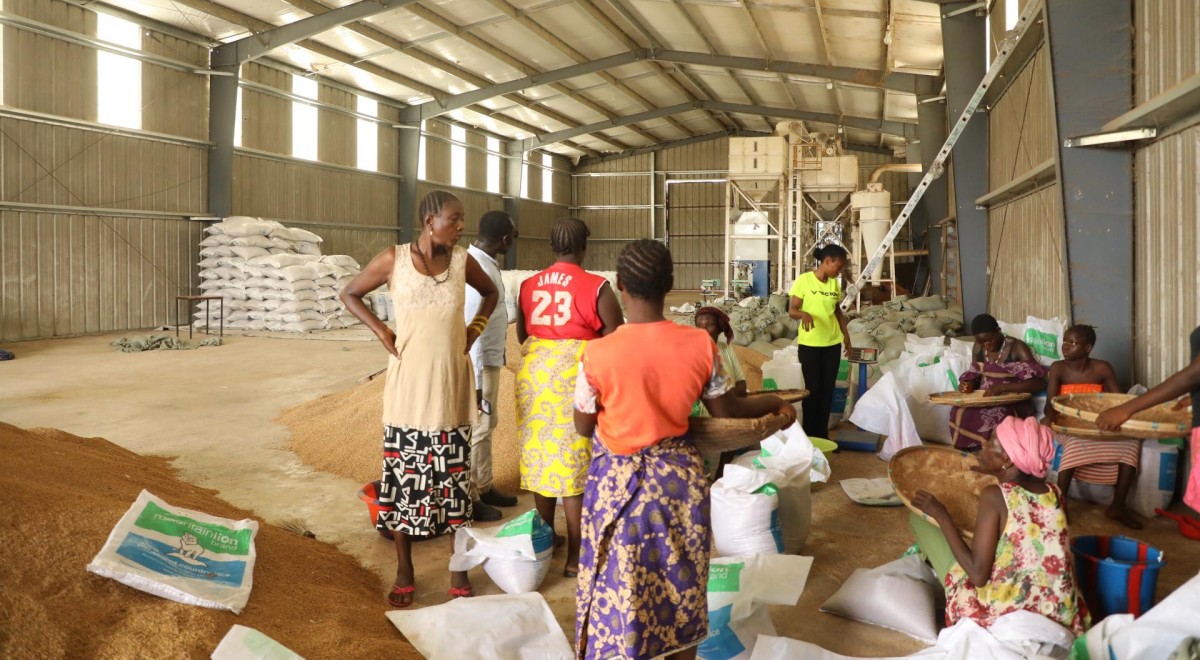
Rice Processing at Mountain Lion Agriculture in Makeni, Bombali District, Northern Province
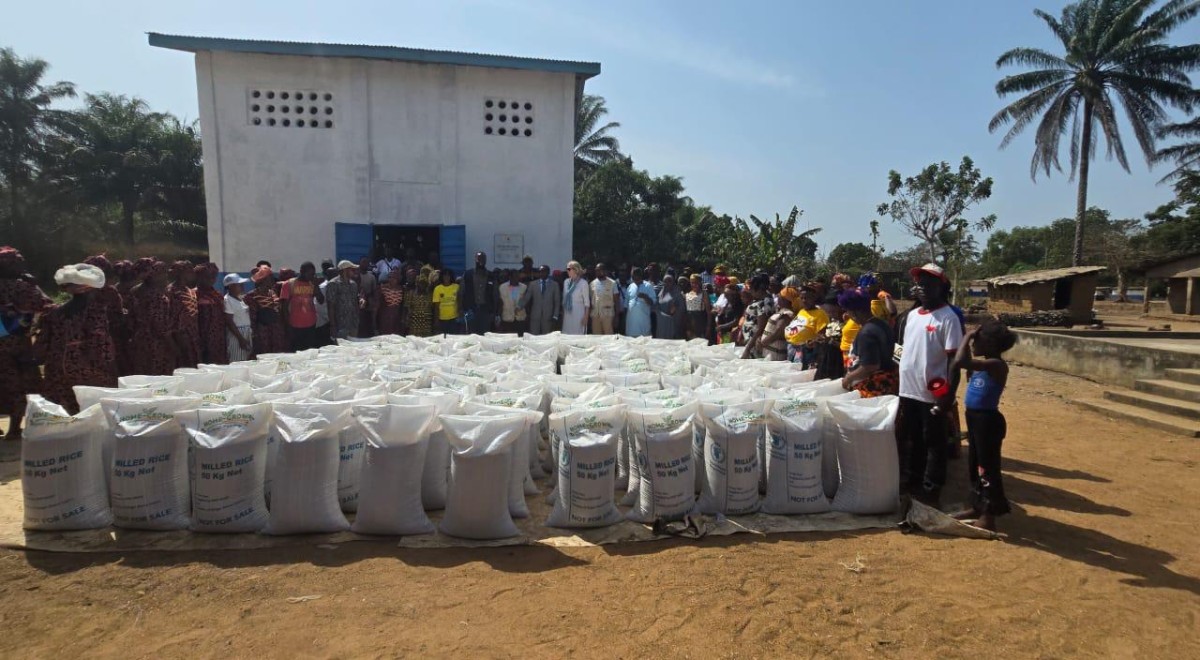
Processed rice in Kambia District ready for institutional feeding with support from WFP
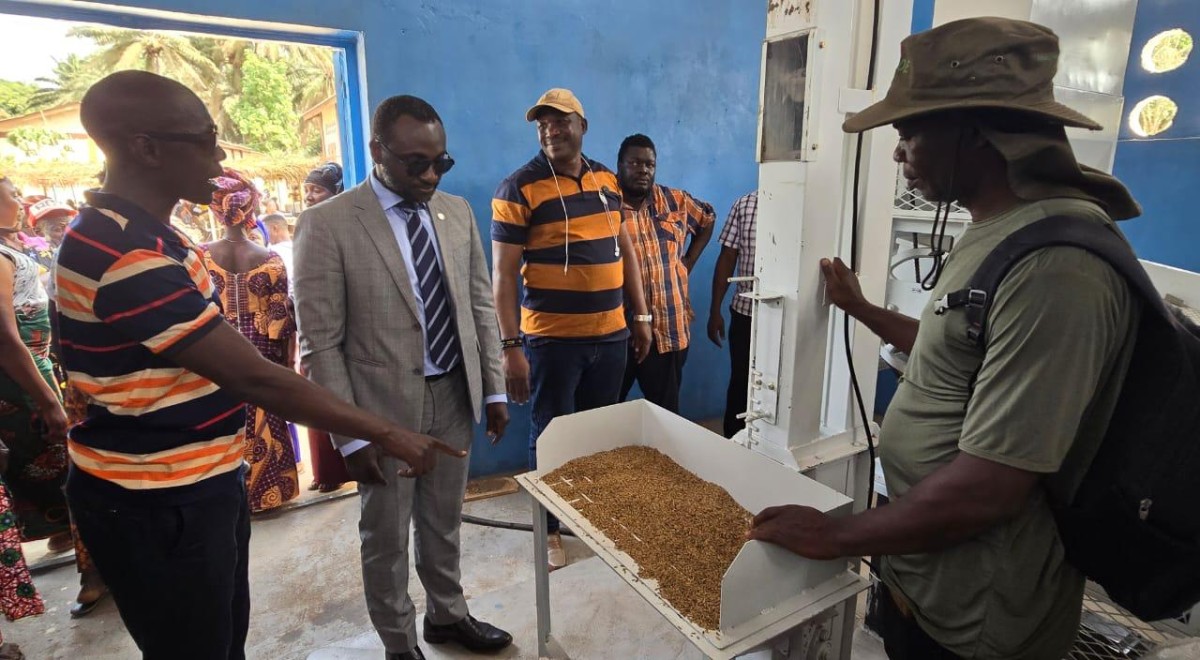
Hon. Minister of Agric. inspecting rice processing at WFP supported processing facility with Satake machine in Kambia District
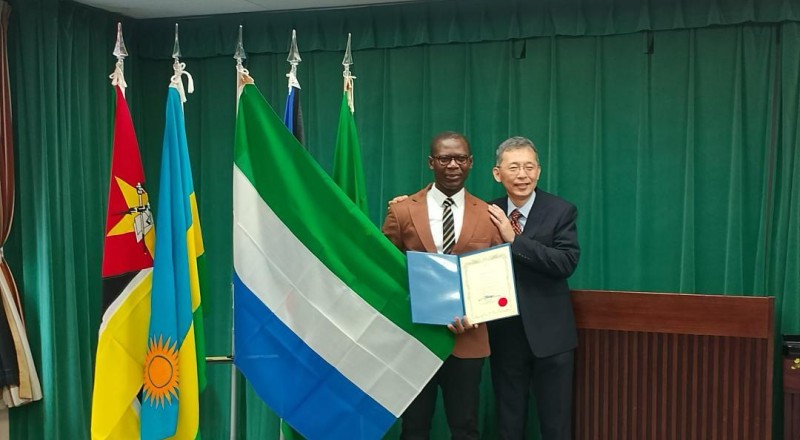
Rice Training Certification ceremony in Tsukuba, Japan with CARD General Coordinator
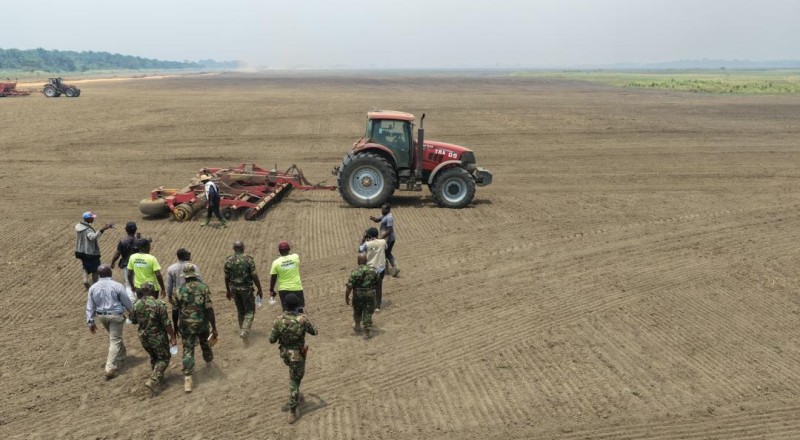
Hon. Minister of Agric. inspecting mechanical ploughing of Torma Bum rice fields in Bonthe District