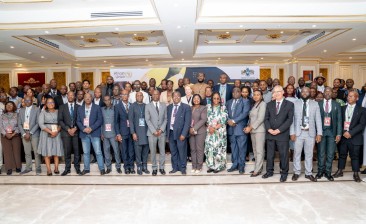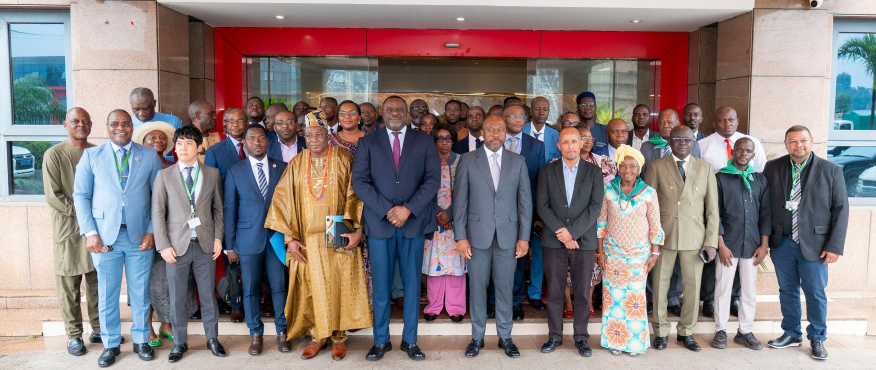
ECCAS meeting, June 2026
ECCAS accelerates the domestication of the Kampala Declaration and validates the Regional Rice Development Strategy-Central Africa with the Support of Its Partners
Accelerating the Implementation of the Kampala Declaration in Central Africa
The Economic Community of Central African States (ECCAS) organized a regional workshop in Libreville from 16 to 18 June 2026 on the domestication of the Kampala Declaration on the Comprehensive Africa Agriculture Development Program (CAADP) 2026–2035. Funded by AGRA as part of its support to the implementation of the Kampala Declaration in Central Africa, the workshop brought together representatives of ECCAS Member States, the ECCAS Commission, AUDA-NEPAD, FAO, CARD, and several technical and financial partners.
The main objective of the workshop was to support Member States in aligning their National Agricultural Investment Plans (NAIPs) and the future Regional Agricultural Investment Program (RAIP) with the commitments of the Kampala Declaration, adopted by African Union Heads of State and Government in January 2025. Discussions focused on priorities for transforming agri-food systems in the region, including increasing agricultural productivity, developing value chains, strengthening food security, enhancing climate resilience, and mobilizing public and private investment.
Participants also reviewed monitoring and evaluation mechanisms, the requirements of the CAADP Biennial Review process, and challenges related to the availability and quality of agricultural data needed to track progress against the Kampala commitments.
The workshop was also marked by the technical validation of the Regional Rice Development Strategy for Central Africa (RRDS-CA), developed by ECCAS with the technical and financial support of CARD. The strategy provides a regional reference framework aimed at strengthening coordination of interventions, accelerating rice sector development, and supporting the achievement of food security and agricultural transformation objectives under the Kampala Declaration.
The ECCAS Member States represented at the workshop were Burundi, Cameroon, Congo, the Democratic Republic of Congo, Gabon, Chad, the Central African Republic, and São Tomé and Príncipe.
Member States share progress and challenges
The second day of the workshop was devoted to presentations by Member States on the status of their NAIPs and their efforts to align national agricultural strategies with the Kampala Declaration.
Despite differing national contexts, several common challenges were identified, including insufficient financing, low levels of private investment, significant mechanization needs, limited access to quality agricultural inputs, inadequate agricultural infrastructure, and weaknesses in data monitoring and evaluation systems.
Discussions also emphasized the importance of greater involvement of the private sector, producer organizations, women, and youth in the implementation of future agricultural investment programs.
Technical validation of the Regional Rice Development Strategy for Central Africa (RRDS-CA)
One of the major outcomes of the workshop was the technical validation of the RRDS-CA. Developed at the request of ECCAS with CARD’s technical and financial support, the strategy aims to provide a common regional framework for rice sector development in Central Africa. It is fully aligned with the Kampala Declaration and contributes to regional objectives related to food security, value chain development, climate resilience, agricultural transformation, and the National Rice Development Strategies (NRDSs) of Member States.
Participants commended the quality of the document and its potential to strengthen synergies among the NRDSs of Member States. Once formally adopted by ECCAS decision-making bodies, the RRDS-CA will serve as the regional reference framework for guiding investments, mobilizing resources, and coordinating interventions to support rice sector development.
A regional roadmap toward the adoption of the RAIP, PAC 2040, and the RRDS-CA
The workshop also validated a regional roadmap leading to the adoption of the Regional Agricultural Investment Program (RAIP) 2026–2035, the Common Agricultural Policy of Central Africa (PAC 2040), and the RRDS-CA.
The next steps will focus on the technical consolidation of the documents, their review by ECCAS statutory bodies, their political adoption by Heads of State and Government, and the mobilization of the resources required for their implementation.
CARD continues supporting countries in the region
On the sidelines of the workshop, CARD continued its engagement with several Member States to review progress in the implementation of their NRDSs, discuss resource mobilization efforts, and explore prospects for implementing national priorities.
The discussions highlighted the importance of strengthening linkages between NRDSs, NAIPs/NASIPs, and the monitoring mechanisms of the Kampala Declaration. Such an approach would help improve the monitoring of rice sector performance, enhance data availability, and facilitate greater engagement from technical and financial partners.
Through its support to ECCAS and its Member States, CARD reaffirms its commitment to promoting the sustainable development of the rice sector and contributing to the transformation of agri-food systems in Central Africa.
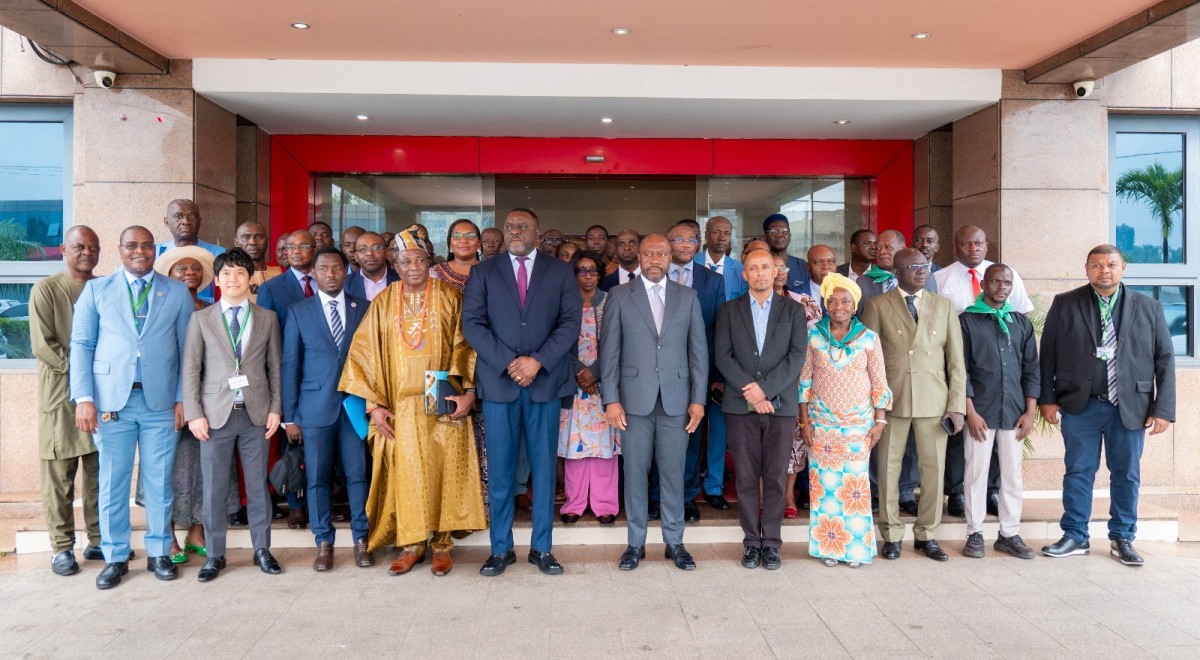
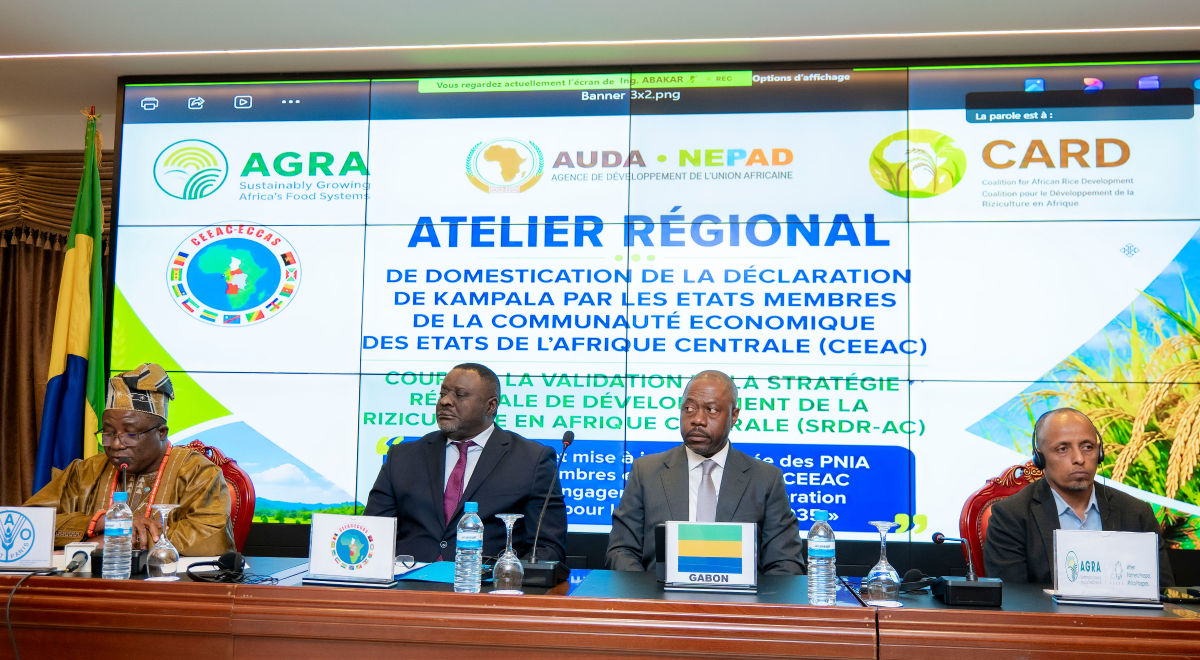
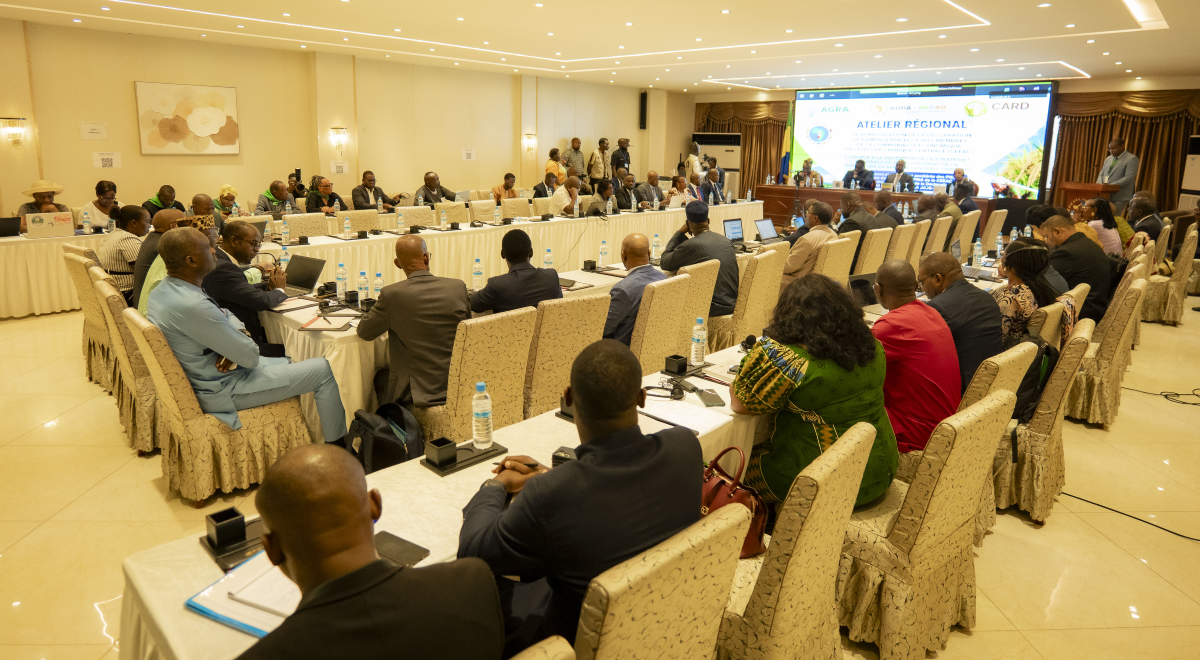
The venue for the meeting in Libreville, Gabon
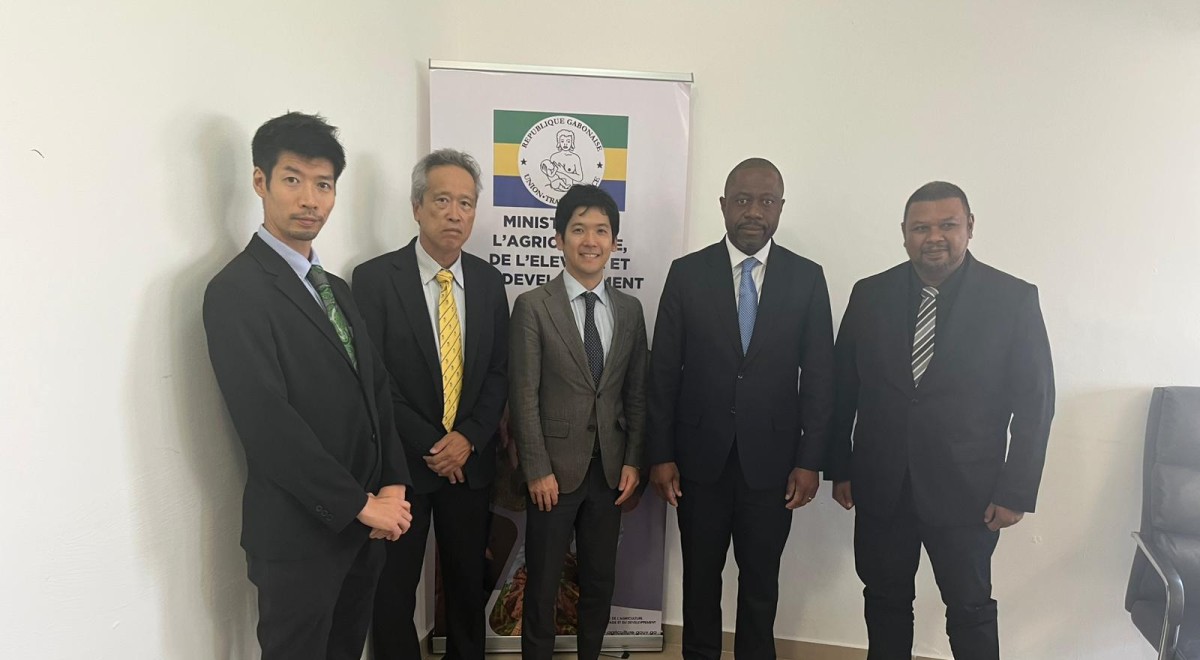
Second from the right: Minister for Agriculture, Livestock and Rural Development of Gabon, H.E. Pacôme Kossy