Equatorial Guinea, October 2026
At the Heart of Rice Sector Development in Equatorial Guinea
Interview with Mr. Domingo Bacale Nguema Angono – NRDS Focal Point in Equatorial Guinea
An agricultural engineer by training, Mr. Domingo Bacale Nguema Angono works within the Ministry of Agriculture, Livestock, Forests and the Environment. He is based at the Dumasi pilot site, where the country’s first rice production initiatives are being carried out. His direct involvement in this experience led to his appointment as Equatorial Guinea’s NRDS Focal Point, with the mission of supporting the emerging momentum to develop the rice sector.
Equatorial Guinea joins CARD
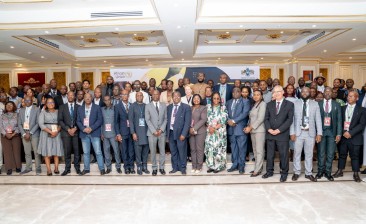
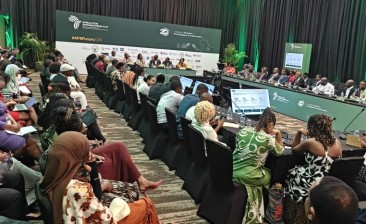
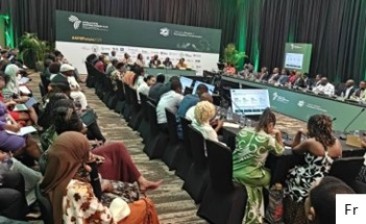
Equatorial Guinea joined Coalition for African Rice Development (CARD) in March 2026, during the 10th General Meeting held in Madagascar, following a request from the Government. The country does not yet have a National Rice Development Strategy (NRDS), but the process of formulating one is expected to begin soon to lay the foundations for the development of the rice sector.
Rice: widely consumed, but still scarcely produced in the country
In Equatorial Guinea, rice has become part of everyday life. Alongside cassava, sweet potato, plantain, malanga and other staples, it occupies an important place in household diets, particularly in major cities such as Malabo and Bata. Yet most of the rice consumed is still imported. Overall, domestic agricultural production covers less than 4.15% of the country’s needs, making the reduction of import dependence an important challenge (source Ministry of agriculture, livestock, forest, fisheries and environment).
This situation is partly rooted in the country’s agricultural history. For many years, agriculture focused on exporting crops such as cocoa, coffee and coconut. Rice cultivation, by contrast, remained underdeveloped even as rice gradually became an important part of people’s diets.
Equatorial Guinea remains highly dependent on rice imports, which reached approximately 48,088 tons in 2024. With a population estimated at 1.99 million in 2026, annual rice consumption is estimated at around 24 kg per person. These figures highlight the importance of developing domestic rice production to gradually reduce the country’s reliance on imports and strengthen food security.
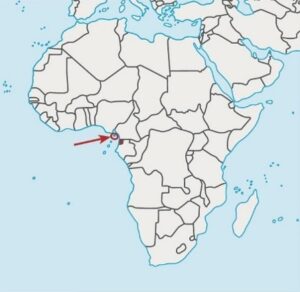
Equatorial Guinea on Africa map
A staple for everyday meals and major gatherings
Boiled white rice remains by far the most widely consumed form of rice. It is commonly served with fish and meat dishes or peanut-based sauces, often accompanied by plantain or cassava. Coconut rice is also eaten and, increasingly in urban areas, jollof rice is gaining popularity under the influence of West African cuisines.
Although there is no festival specifically dedicated to rice, it is widely served at weddings, funerals and various celebrations. For families, above all, it is a practical and reassuring staple. As Focal Point explains, having a bag of rice at home means knowing that a meal can always be prepared quickly for the whole family.
Dumasi, where local rice production is being pioneered
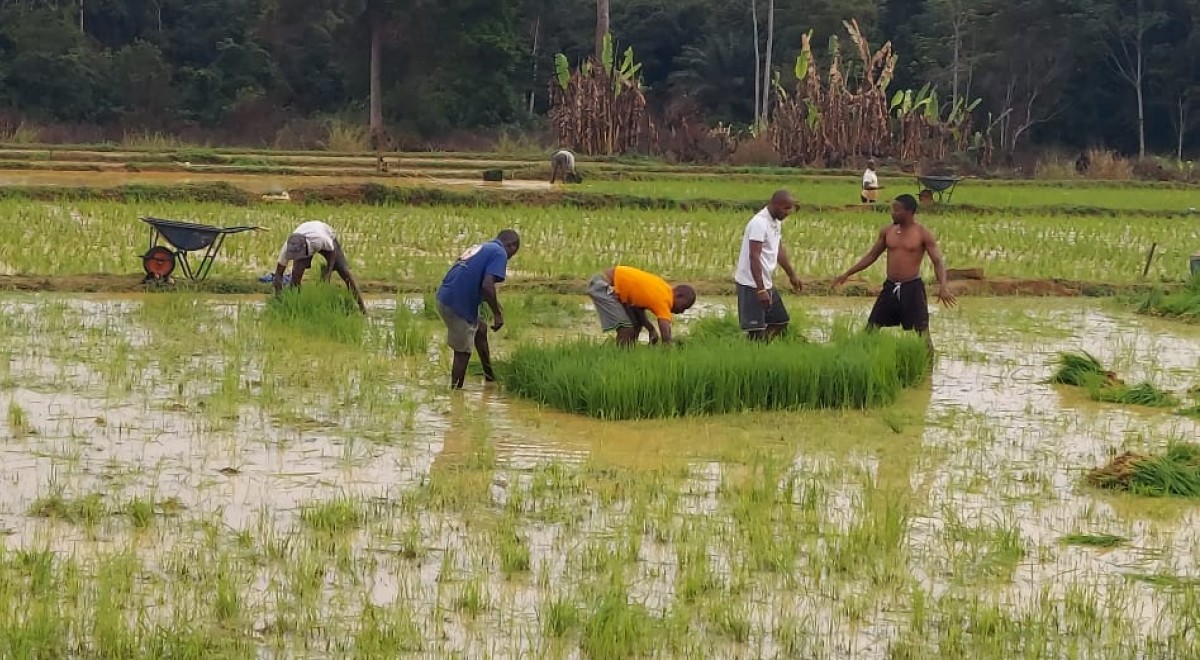
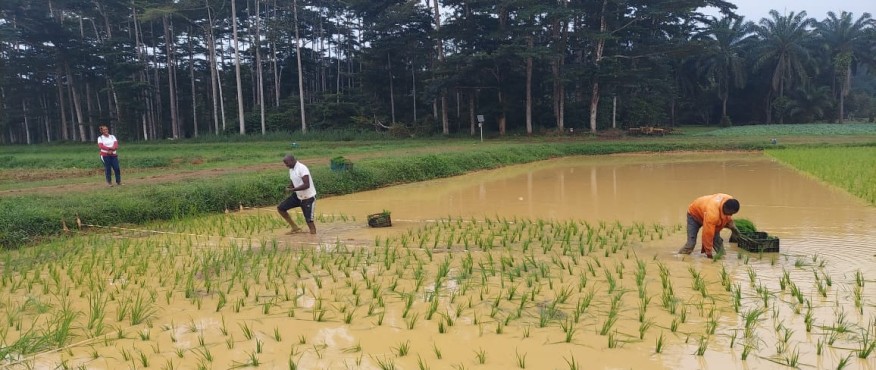
Dumasi is in the Niefang-Yeanvam district, where Mr. Domingo Bacale Nguema Angono works and is directly involved in one of the country’s first rice production initiatives. This close involvement in field activities naturally led to his role as CARD Focal Point in Equatorial Guinea.
A single project is currently under consideration with plans to develop 150 hectares. The aim is to introduce more modern production methods into an agricultural sector that remains largely family-based and minimally mechanized. The target is to produce 1,000 tons of rice on these 150 hectares, with two cropping cycles per year.
For the Focal Point, simply seeing rice grow and be harvested in Dumasi already means a great deal. The first harvests are generating interest among the population and, above all, will demonstrate that rice can be produced in the country.
Natural assets, but much remains to be built
Equatorial Guinea nevertheless has significant natural assets. Its warm and humid climate, abundant water resources and approximately 850,000 hectares of land suitable for agriculture, much of which remains unused today, offer genuine opportunities for agricultural development.
The challenge now is to translate this potential into production. This will require more skilled labor, financing, machinery and equipment, as well as improved transport infrastructure. Specific expertise in rice cultivation will also need to be developed, together with, progressively, the capacity to process and market locally produced rice.
Producing more to reduce dependence on imports
Behind the development of rice cultivation lies a simple ambition: to produce more locally to strengthen food sovereignty and food security while reducing dependence on imports.
The project’s prospects are encouraging. The objective is to develop local production progressively, with the possibility of carrying out several rice-growing seasons each year. The initiative should therefore help meet part of the country’s rice requirements. A Technical Commission established by the Government is responsible for examining its feasibility, implementation timetable and expected economic benefits.
With CARD, laying the foundations for a genuine rice sector
Equatorial Guinea’s entry into the CARD therefore marks a new stage. For a country where rice cultivation is still in its infancy, the challenge is not only to begin producing rice, but above all to progressively build a structured and sustainable rice value chain.
One of the next steps will be to launch the process of formulating the NRDS, with an initial preparatory mission planned for November 2026. This process will enable the country to define its priorities, identify the investments required and mobilize stakeholders around a shared vision.
For Equatorial Guinea, the journey is therefore only beginning. But experience already shows that local rice production is possible. With available land, abundant water resources and a commitment to revitalizing agriculture, the country now has an opportunity to progressively develop rice into a national sector that contributes to food security and economic diversification.