Senegal, April 2026
Senegal officially launches the creation of its National Rice Observatory to strengthen the Rice sector on March 31 to April 3, 2026
The Senegalese rice sector, undergoing significant transformation, is poised to take a crucial step with the establishment of the National Rice Observatory (ONR-SN). Despite notable progress in recent years, the sector continues to face numerous challenges, including the predominance of traditional production methods, limited access to quality inputs, insufficient mechanization, as well as difficulties related to irrigation, financing, and marketing.
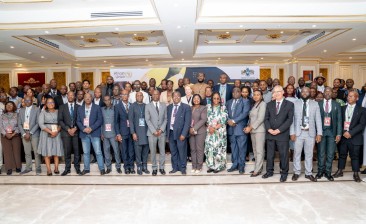
To address these issues, key stakeholders from the rice sector convened from March 31 to April 3 2026, at a dedicated workshop to establishment this observatory. The event brought together 57 participants from the public and parapublic sectors, the rice value chain (producers, processors, traders), the financial and insurance sectors, input suppliers, mechanization service providers, research institutions, and technical, financial, and civil society partners.
The workshop was part of the regional dynamic driven by the Economic Community of West African States (ECOWAS), through the Rice Offensive launched in 2014. The overarching goal of this regional initiative is to achieve rice self-sufficiency across the region by 2035.
During the event, reassuring messages were conveyed, underscoring notably the importance of establishing a national chapter aligned with current policies. It was also emphasized that the ONR-SN should serve as a privileged platform for dialogue on sector challenges, as well as for discussing technical, regulatory, and other potential solutions. Furthermore, the regional dimension of the observatory will facilitate the coordination of investments, policy harmonization, and access to financing, and will strengthen market integration.
The discussions enabled participants to :
- Update the stakeholder mapping and complete the list of actors.
- Discuss levels of influence and interest.
- Collectively validate the relevance of the mapping.
- Review the proposed thematic areas.
Six technical working groups[1] were established to address the following aspects: completing the stakeholder mapping, proposing a vision and objectives for each group, identifying the main organizations that will comprise them, developing a governance structure, defining roles and responsibilities, identifying potential risks and proposing mitigation measures, and formulating recommendations for effective implementation.
In the long term, the Observatory is expected to become a central tool to support the sustainable transformation of Senegal’s rice sector.
Furthermore, following the establishment of the Steering Committee, its secretariat and the Secretary-General of the ONR-SN will join the working group on the National Rice Development Strategy (NRDS). Their mandate will be to support the finalization of this strategy, which is currently under revision, and to contribute to the development of conceptual notes aimed at securing partner funding. This support will be based on the investment plan of the NRDS, developed with the assistance of ECOWAS/ECOA’s Regional Office (ERO).
[1] G1: Governance, Gender and social inclusion
G2: Production and productivity
G3: Seed
G4: Processing, Market, Trade, Quality and Regulation
G5: Finance and insurance
G6: Research, innovations and technologies
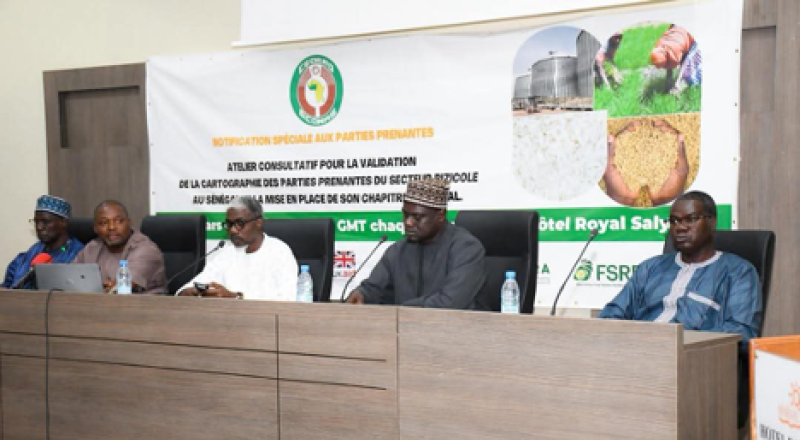
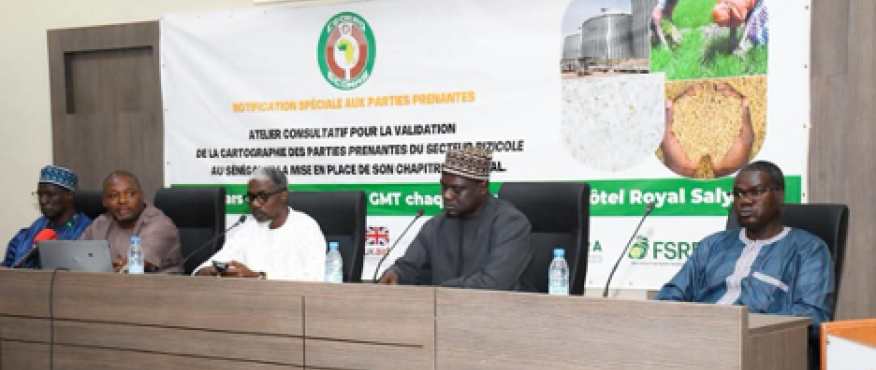
Opening ceremony
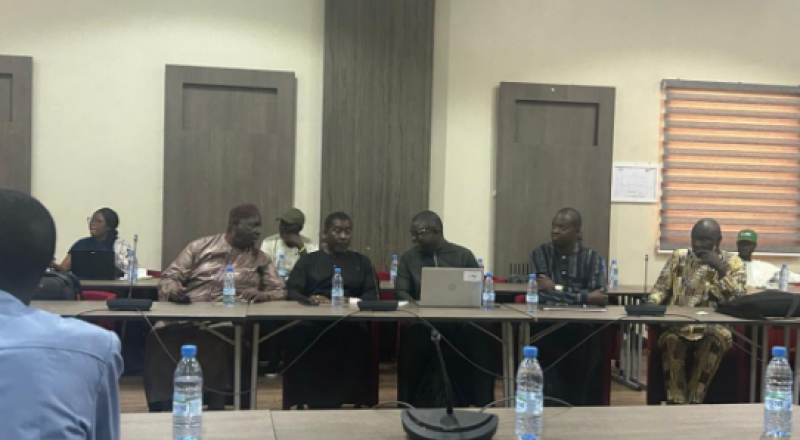
Overview of participants
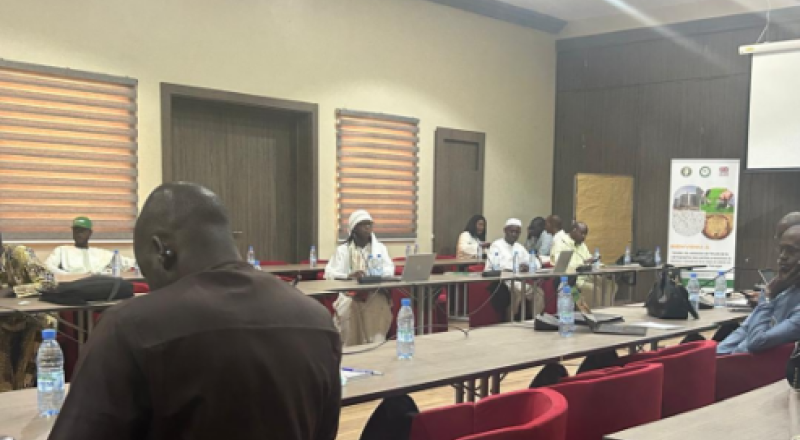
Overview of participants
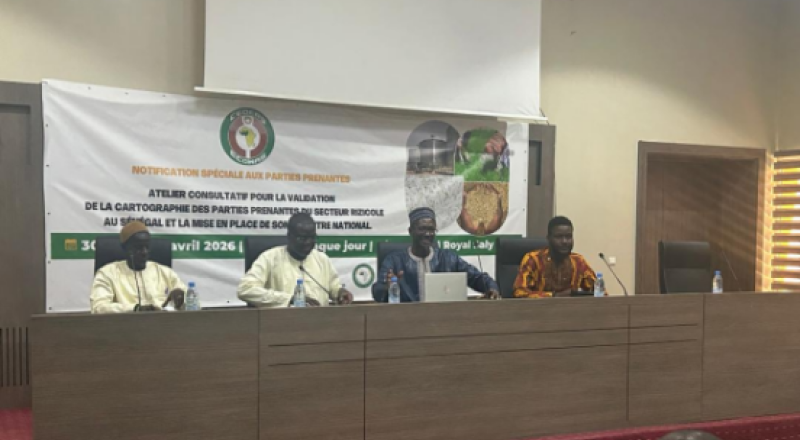
Closing ceremony