Rwanda, July 2025
Workshop on Monitoring & Evaluation of NRDS-2 in Rwanda
Background and objective of the workshop
Rice production is increasingly important in Rwanda for both economic and food security reasons. As one of the country’s key staple crops, rice plays a critical role in improving household nutrition and reducing dependence on food imports. To help address the challenges in improving local rice production and reduce the import dependence of rice markets, the Ministry of Agriculture and Animal Resources (MINAGRI), through technical and financial support of Coalition for Africa Rice Development (CARD), formulated the National Rice Development Strategy 2 (2021-2030). To appraise the implementation progress of the NRDS 2 during CARD phase 2 period, the NRDS taskforce (TF) established a Monitoring and Evaluation (M&E) framework comprising of 4 Overall (O), 3 Resilience (R), 4 Industrialization (I), 6 Competitiveness (C), 2 Empowerment (E) and Retail Price of rice (P) indicators to be conducted annually. In addition, an Annual Rice Sector Review Meeting (ARSRM) will be organized annually to share the progress of NRDS implementation with a wider range of stakeholders. Also, the ARSRM provides an opportunity for NRDS TF to share new and updated Concepts notes with potential funding sources such government, development partners and the private sector.
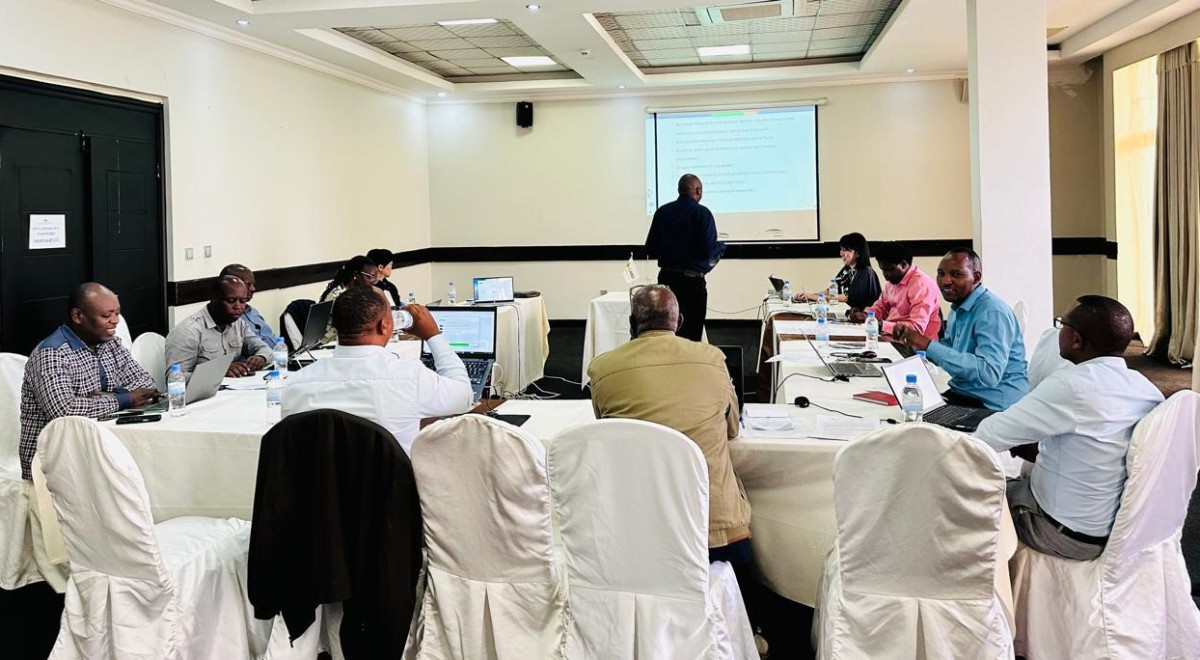
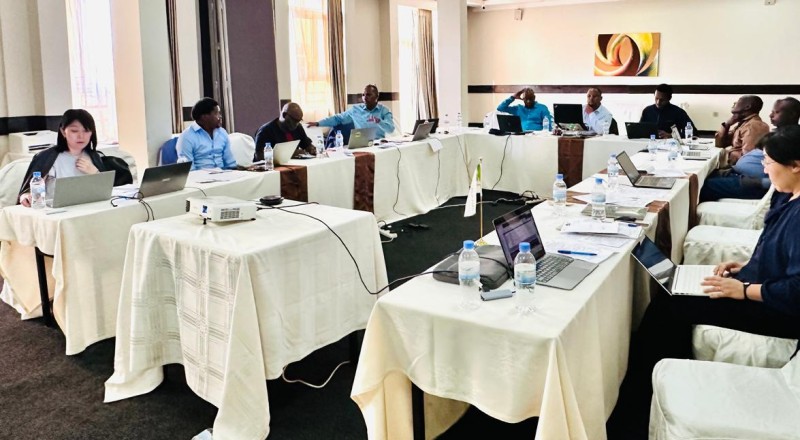
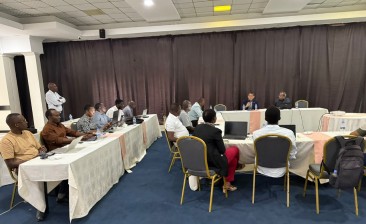
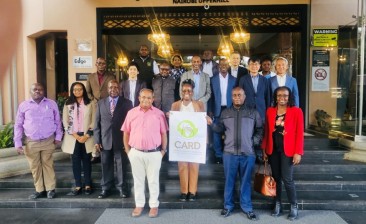
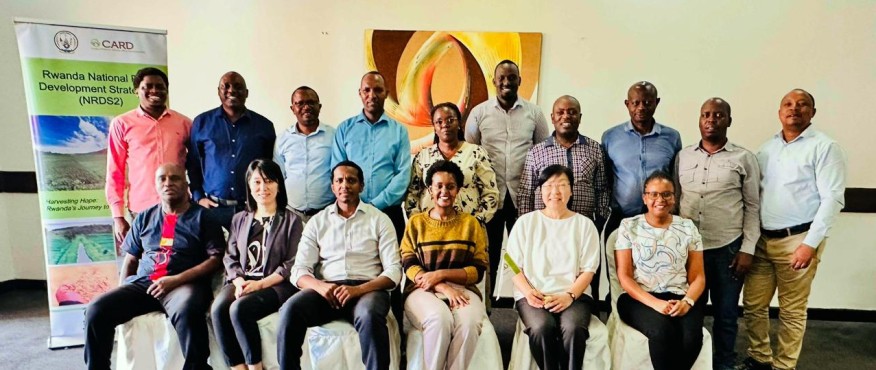
It’s with this context that the NRDS task force (TF) members requested the CARD Secretariat to organize a workshop for initiating the M&E activities, Concept notes review and development, and the planning for the second ARSRM (2025-2026). With the financial and technical support from JICA and the CARD secretariat, the workshop was held from 15th to 17th July 2025 in Nyamata, Rwanda.
Key outputs from the workshop
During this workshop, the NRDS TF members first reviewed the challenges they met while collecting data for the 20 M&E indicators last year (2024-25). Based on the lessons learnt, the TF fine-tuned the definition and/or characteristics of the M&E indicators, the secondary sources of data, and targets for some of the R.I.C.E indicators. Also, the TF members consensually assigned themselves data collection responsibilities, intending to finalize the data collection by December 2025.
To address the gaps in funding and resource mobilization, the NRDS TF updated the needs (demands) and ongoing interventions (Supply) across the rice value chain by using the Subsector Intervention Element Matrix (SIEM). Due to geopolitical unrest along the border with the Democratic Republic of Congo, activities of several ongoing projects and funding processes for new projects by Development Partners in Rwanda have been frozen. Hence, the gaps identified during the previous year (2024-25), between SIEM (Needs and Supply) along the rice value chain in the previous year (2024-25) remain the same. The NRDS TF members solicited ideas on potential use of the developed concept notes, particularly in the context of future resource mobilization.
Through an extensive discussion, the NRDS TF members formulated a new project concept note based on inputs from the stakeholders at the ARSRM held in January 2025. The new project concept note formulated by the TF members focused on the improvement of rice seed and grain quality in Rwanda.
Way forward
To enhance the NRDS2 implementation in Rwanda, the NRDS TF members agreed to collect the M&E data and submit it to the NRDS focal point by the end of December. The collected data will be consolidated and analysed for the preparations for the second ARSRM in 2025-2026.