Rwanda, March 2026
Rwanda’s Second Annual Rice Sector Review Meeting – 2026
Rice production, processing, marketing and consumption of rice are deeply entrenched in Rwanda’s food systems. Government of Rwanda has formulated Second National Rice Development Strategy (NRDS-2; 2020-2030) to increase domestic rice production by 2.6-fold from 113, 880 tons in 2018 (base line) to 294,476 tons, mainly by (a) expanding area under rice cultivation and (b) addressing the inefficiencies along the value chain. With support from CARD, the NRDS taskforce (TF) which is responsible for overseeing implementation of the NRDS had established a framework for monitoring & evaluation (M&E) to assess the progress on NRDS implementation.
Under the M&E framework, the NRDS TF annually collects secondary data on indicators measuring overall (O1-O4) performance, resilience (R1-R3), industrialization (I1-I4), competitiveness (C1-C6), empowerment (E1-E2) and market prices (P) of rice. On 7th January, the NRDS TF validated the data that was collected for the calendar year 2024. Subsequently the NRDS TF requested CARD Secretariat to organize their 2nd Annual Rice Sector Review Meeting (ARSRM) to share the collected data and discuss the progress, challenges and opportunities in rice industry with wider stakeholders in Rwanda. This report briefly summarizes the outcomes of the 2nd ARSRM.
Key outcomes of the meeting
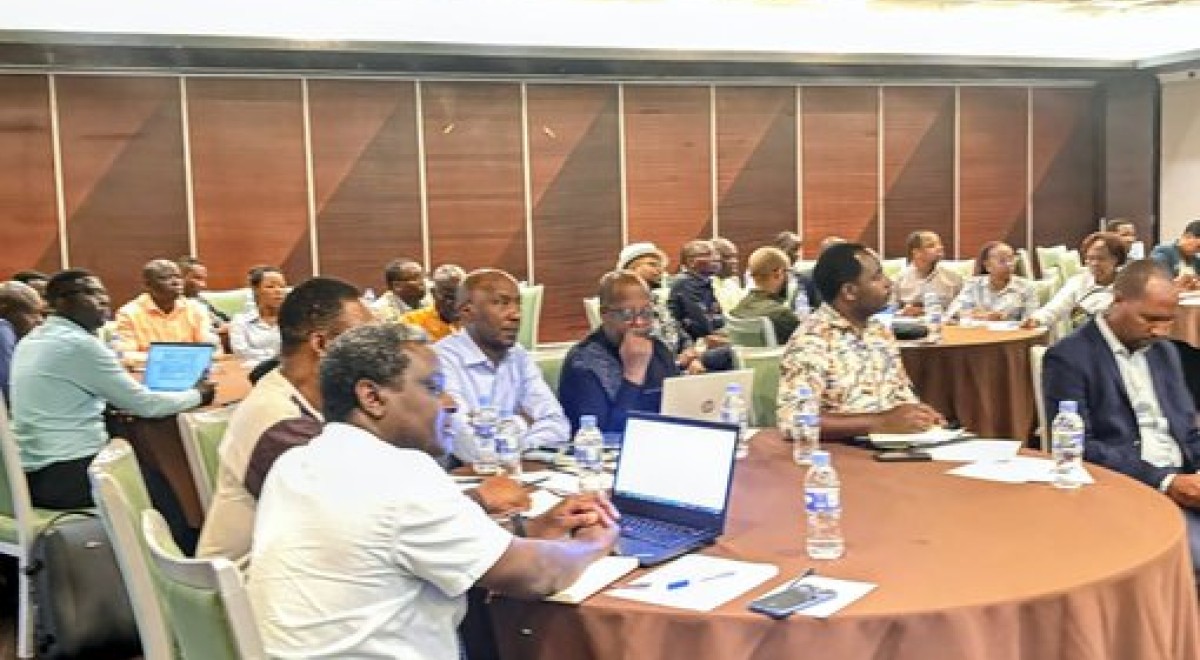
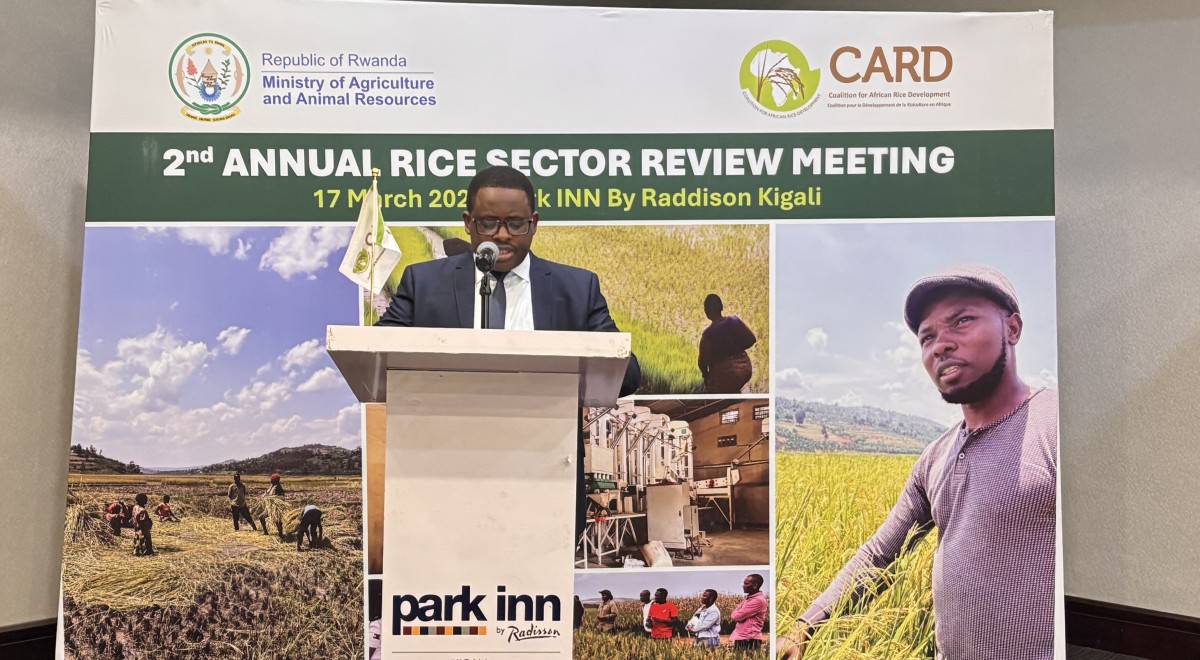
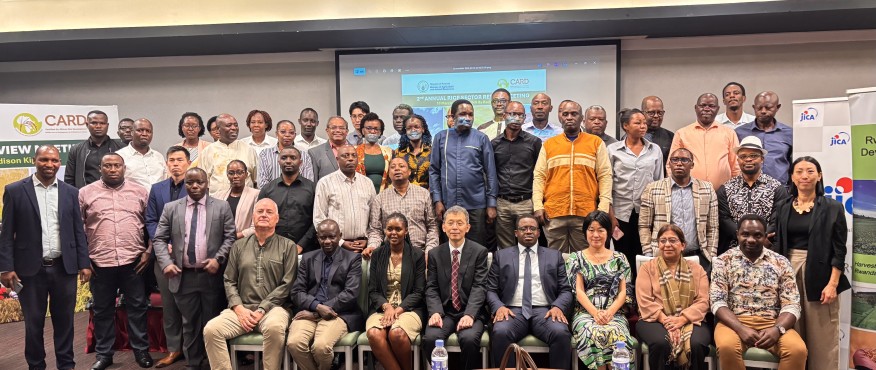
The second ARSRM was organized by the NRDS TF on 17th March in Kigali. About 45 participants representing farmers, millers, government, private sector, development partners (DPs), international research institutions, and non-government organizations attended the meeting. Permanent Secretary of Ministry of Agriculture and Animal Resources (MINAGRI) Dr. Oliver Kamana joined as a chief guest and officially opened the meeting. NRDS Focal point Ms. Alice Mukamugema (Director General, Value Chain Management and Trade) presented an overview of the rice sector development in Rwanda by highlighting the M&E results. NRDS TF member Mr. Egide Mutabazi (Analyst, MINAGRI) presented bankable project concept notes that could lead to substantial implementation of the NRDS-2.
Rice production in Rwanda has marginally increased (+6.2%) from 133,628 tons in 2023 to 141,932 tons in 2024, due largely to an increase in area under rice cultivation (from 32,882 Ha to 34,551 Ha) and a slight increase in the average yield (from 4.07 t/Ha to 4.11 t/Ha). Due to a relatively lower volume of importation of rice in 2024 (234,475 tons) than in 2023 (419,672 tons), the share of domestic rice production volume in total consumption (self-sufficiency) has slightly improved from 22.8% to 28.8%. Yet the stakeholders expressed concern at importation which stands 2.5-fold that of domestic production (milled equivalent).
The quantity of certified rice seeds produced in Rwanda has been steadily increasing (adequate for covering 30% of area under cultivation in 2024), although no new variety has been released since 2021. The level of mechanization of rice production and harvesting has not changed, compared to the previous year. Share of mixed grades of rice processed by millers in Rwanda has substantially reduced to 24.7%, although the share of local rice in mainstream markets in Kigali remains low at 12.81%. The stakeholders acknowledged the opportunities in seed production and distribution.
Rwanda has made significant progress in empowering the smallholder rice farmers, as judged from the percentage of farmers accessing credit (36%), insurance (90%) and fertilizer subsidy (95%). However, only 3% of the farmers accessed technical training through plural extension services. In this context, the stakeholders recognized the gaps in facilitating farmers on good agronomic practices (GAPs) through proximity extension services and recognized as an opportunity to increase on-farm productivity.
Market prices of the locally produced rice largely moved in tandem with regional and global prices. However, the data revealed that the two popular types of locally produced rice (short grain and long grain) do not correlate well with each other. The participants noted that the divergence could be due to different consumer profiles for these two types in markets across Rwanda.
Representatives from both the government and development partners acknowledged that Rwanda’s rice sector needs more funding for further expansion of area under rice cultivation in marshlands. Mr. Mutabazi informed that the NRDS TF is willing to facilitate communications between development partners and line Ministries, if they are interested in supporting the proposed project concept notes. Representatives from AfricaRice and JICA informed the participants that the potential for seed production and diversification of rice ecosystem to upland environments could be tested as an alternative to address concerns on negative impacts of rice cultivation in marshland ecosystem.
Representative from Rikolto International informed the stakeholders that a new project on sustainable rice production in Rwanda has been approved. Representative from Food and Agriculture Organization (FAO) and World Food Program (WFP) informed that they have planned to enhance their activities in rice value chain through various on-going interventions. Representative from International Food Policy Research Institute (IFPRI) informed that new market studies on how the imported rice from Tanzania influences the local market prices and preferences of rice consumers in Rwanda are under discussions with MINAGRI.
Way forward
The NRDS TF members met after the 2nd ARSRM to identify key future actions required to promote the implementation of the NRDS. NRDS TF member Mr. Innocent Semana, who participated at the recently concluded training program organized by JICA and CARD at Tsukuba, Japan, made a presentation on the lessons learnt. The NRDS TF members agreed that going forward resource mobilization should be prioritized for accelerating the NRDS implementation. In this context, the NRDS TF plans to engage the DPs through Permanent Secretary and Directorate of Planning at MINAGRI and Ministry of Finance for discussions on the proposed project concept notes.