Tanzania, March 2026
Tanzania’s Annual Rice Sector Review Meeting – 2026
Rice sector development in Tanzania has a profound influence on the food security of not only Tanzania, but also the Eastern and Southern African region at large. It is imperative for the stakeholders of the rice industry in Tanzania to sustainably accelerate rice production, market competitiveness and rice trading. Tanzania’s Second National Rice Development Strategy (NRDS-2; 2019-2030) aims to become a leader in rice markets in the region by increasing its surplus milled rice production from 0.4 million tons in 2018 (base year) to 5.3 million tons by 2030. These aspirations are in line with the targeted agriculture export value of 5 billion USD by 2030-31 under Tanzania Agriculture Sector Development Program, Phase II (ASDP II).
With a rapid growth in demand for Tanzania rice in the EAC markets, the ASDP-II has identified rice as a high priority value chain and supports the NRDS-2’s envisaged area under rice cultivation and commercialization through National Irrigation and Agro-Industrial Transformation (NAGITA). To apprise the advancements made in rice value chain development, the NRDS taskforce (NRDS-TF) members have established a monitoring & evaluation framework. Using a total of 15 indicators for tracking the overall (O; 4) rice sector, its resilience (R; 2) against climate change and global market snarls, industrialization (I; 2) of value chain support activities, competitiveness (C; 2) in regional and global markets, and technical- and financial empowerment (E; 2) of the stakeholders, market price (P), fertilizer use and postharvest loss.
The NRDS-TF members collected secondary data from various representative sources for the calendar year 2024 (covering the two rice harvests) and validated in November 2025. Subsequently, the TF members arranged the Second Annual Rice Sector Review Meeting (ARSRM) to (a) share the progress and (b) engage the stakeholders for identifying emerging challenges and soliciting further investments in the rice sector. This article provides a summary of activities that took place at the 2nd ARSRM.
Outputs from Tanzania’s 2nd ARSRM
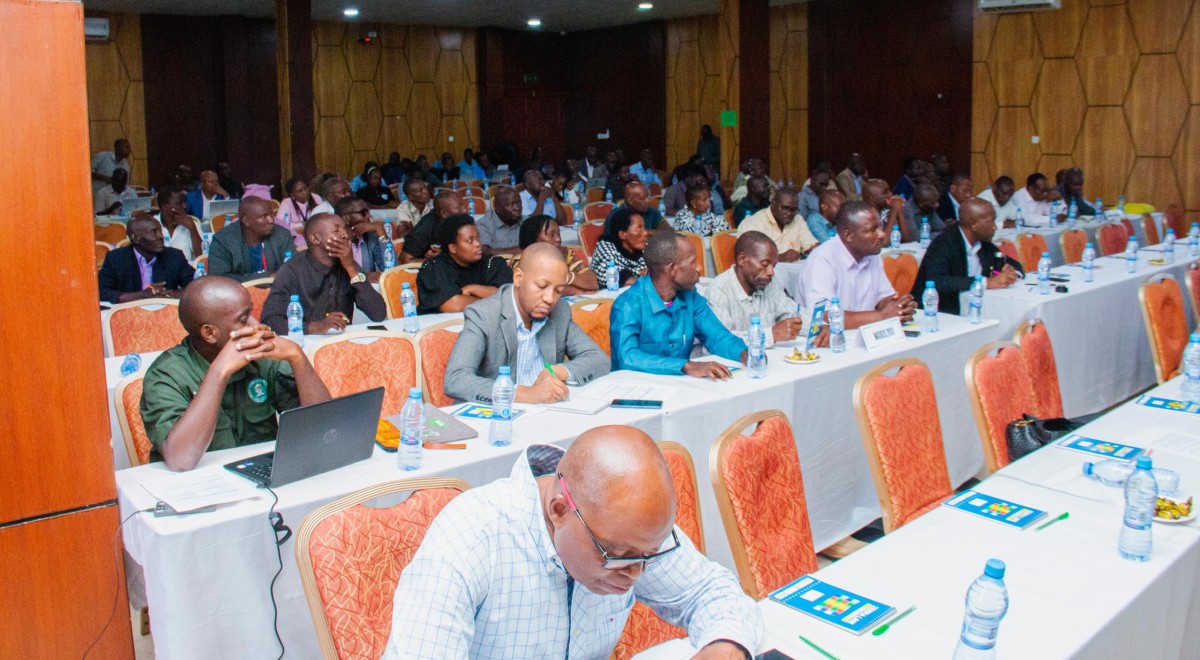
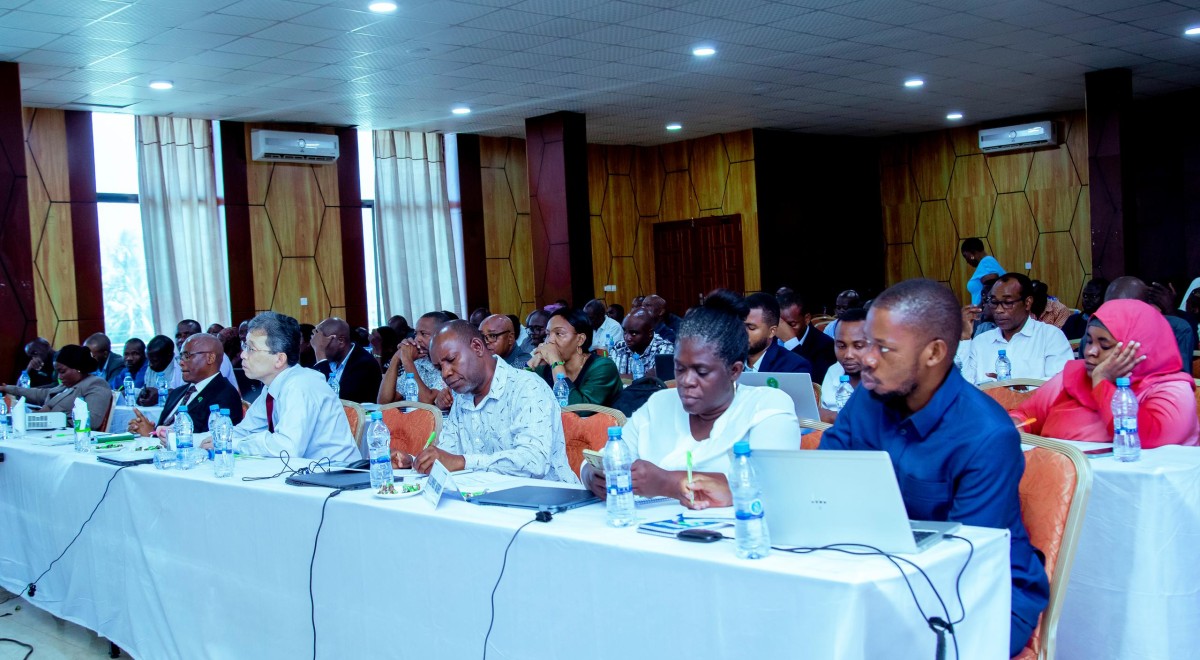
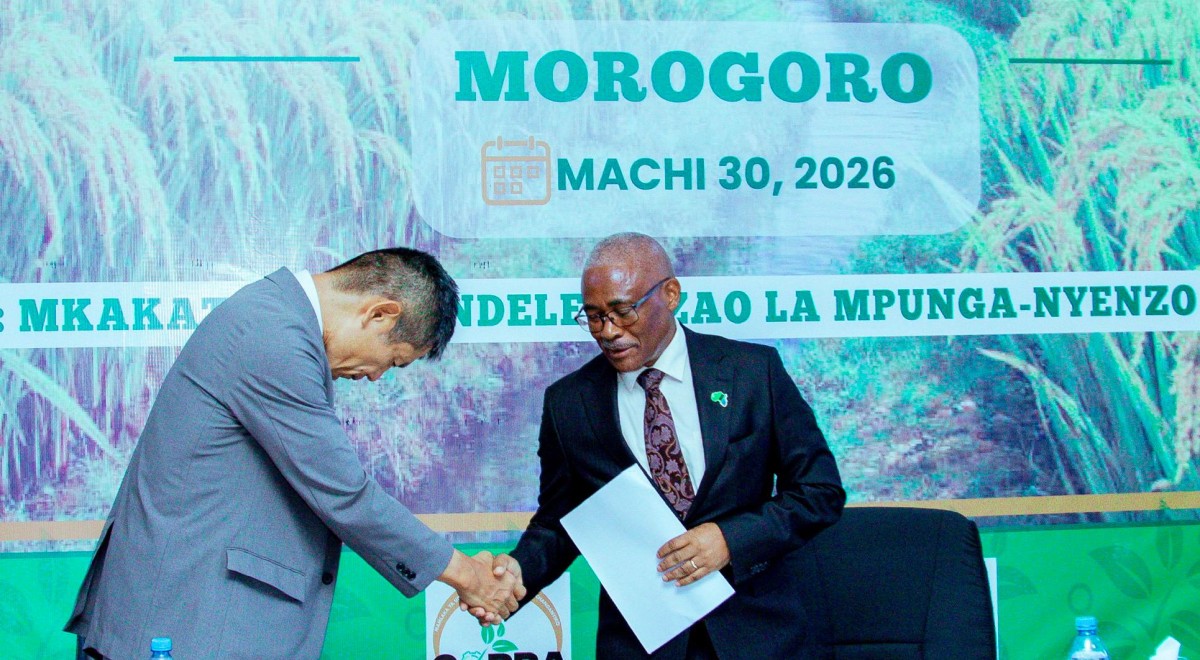
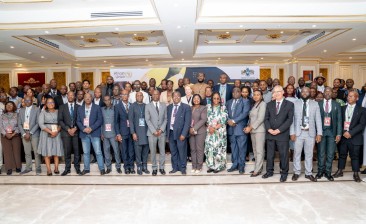
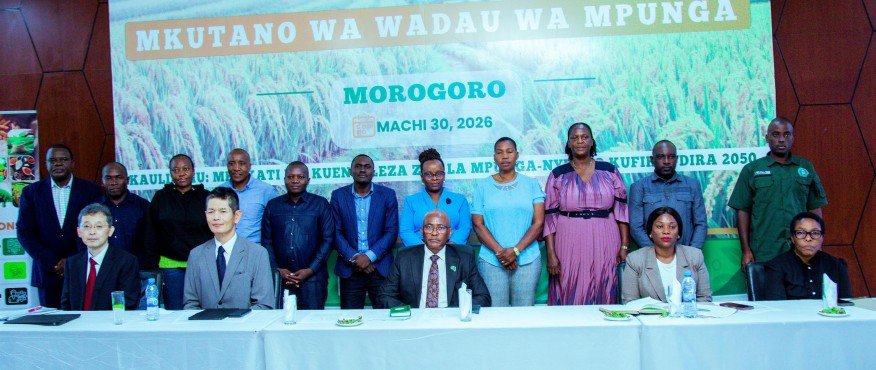
With financial support from Tanzania’s Ministry of Agriculture and Japan International Cooperation Agency (JICA); the NRDS-TF organized the 2nd ARSRM in Morogoro, Tanzania. The meeting was presided by Deputy Permanent Secretary of the Ministry of Agriculture Professor Peter L.M. Msofe and JICA’s Chief Representative in Tanzania, Mr. Hitoshi Ara. Over 100 public and private representatives from the rice value chain across the country attended the meeting. Representatives from CARD, AGRA, Rikolto, and JICA were also present.
In his opening remarks, Mr. Ara noted that JICA has been providing continuous cooperation to the rice sector since the 1970s. JICA’s new result-based Overseas Development Assistance (ODA) loan aims to strengthen Tanzania’s ownership, capacity, and implementation capabilities. He reaffirmed that JICA will continue to support rice development in the future and urged the Tanzanian side to go beyond mere review and to energetically and responsibly drive the rice sector forward.
Drawing from his experience in formulating and promoting the NRDS in the region up until 15 years ago, the CARD General Coordinator, Mr. Shinjiro Amameishi noted that rice production in Tanzania has increased more than 5-fold and irrigated area more than 3-fold since that time. These dramatic advances are due to the government’s tremendous efforts, he asserted. Mr. Amameishi suggested that through further strengthening of fund mobilization activities and autonomy of the NRDS Task Force, Tanzania can contribute to CARD initiative’s goal of doubling rice production in Sub-Saharan Africa by 2030.
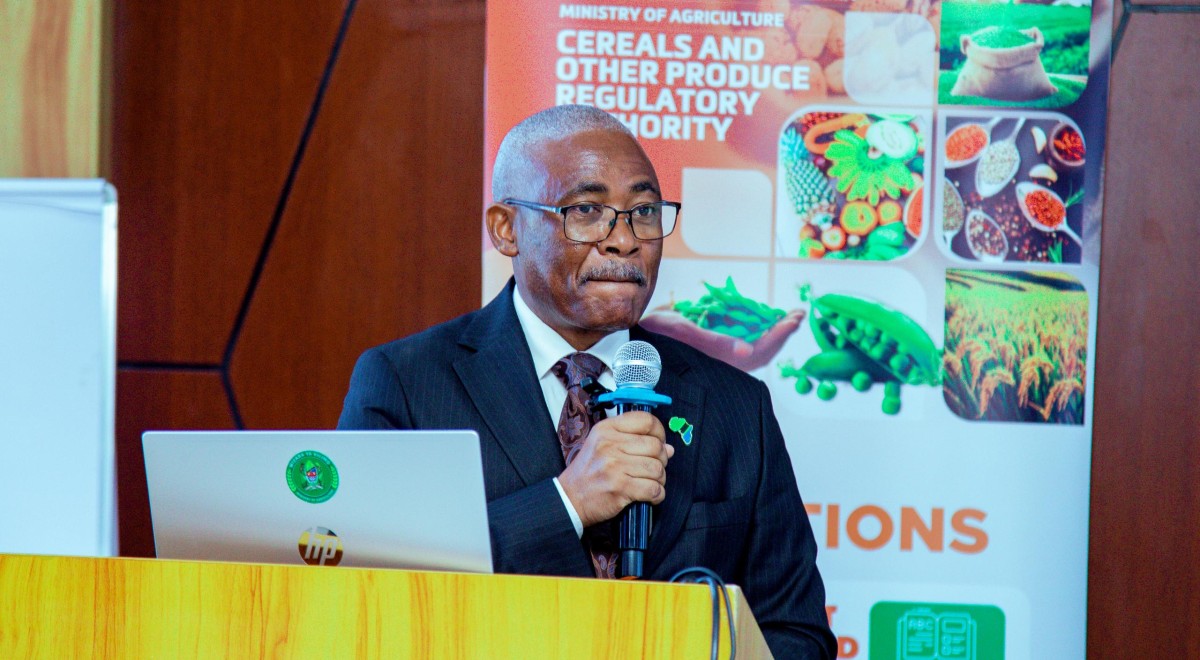
Representing the NRDS-TF members, Eng. Fadhili Mngazija of Ministry of Agriculture presented the results from the M&E data. He revealed that in 2023/24, the total paddy production increased by 30.6% over the previous year. The increment is due to a significant increase in harvested area (22.4%) and a modest increase in average on-farm productivity (6.8%) from 3 t/Ha in 2022/23 to 3.2 t/Ha in 2023/24. Due to increased production, Tanzania’s rice self-sufficiency has increased from 103% to 112% in 2023/24. However, importation of milled rice had also increased from just 187 tons in 2022 to 139,483 tons in 2023. He suggested that this could be due to a downward spiral of rice prices in global markets and market speculations, which puts Asian rice in a relatively advantageous position among the traders.
Eng. Fadhili also revealed that because of lower prices of Asian rice, Tanzania’s export volume to regional markets in East African Community (EAC) had decreased from 434,940 tons in 2022 to 298,715 tons in 2023. Nevertheless, regional trade data revealed that Tanzania’s share of intraregional rice in the EAC markets remained higher at 99.4% in 2023, reaffirming Tanzania’s position as an important market player in the EAC region. Eng. Fadhili emphasized the importance of more interventions from development partners in further accelerating the implementation of the NRDS-2 and achieving the desired goal of achieving 8.8 million tons of milled rice production in Tanzania by 2030.
The participants discussed the progress that was reported by the NRDS-TF and discussed several challenges in increasing rice production and trade in the current context. Farmer group representatives requested the stakeholders to help increase their accessibility to high-quality varieties, seeds, and fertilizers. While the participants acknowledged the expansion of irrigation facilities, they sought more interventions from the public and private sector in improving the technical and administrative capacities of water management organizations; rehabilitation of irrigation facilities; soil conservation, construction of storage warehouses, and promotion of power tiller adoption. Besides the increasing focus on youth, the participants suggested that middle-aged rice farmers also would need greater support for enhancing their activities in rice production and trading.
In his closing remarks; the Deputy Permanent Secretary, Prof. Msofe informed that rice is the second most important staple food and receives a higher priority from the Government of Tanzania. He pointed out that Tanzania is the only rice-exporter in the region that has achieved self-sufficiency. Within the SADC, rice demand is growing by 4% annually, and Tanzanian rice is meeting a portion of that demand. Under Agenda 10/30; the Tanzanian government aims to (1) increase the agricultural sector’s growth rate from 4–5% to 10%; (2) increase agricultural exports from US$1.2 billion to US$5 billion; (3) expand irrigated land to 8.5 million hectares; and (4) reduce post-harvest losses from 35% to 5%, he asserted.
Way Forward
The NRDS-TF will take efforts to address the various challenges that emerged from the stakeholders at the ARSRM by reflecting their suggestions in the project concept notes under the NRDS-2. The NRDS-TF will embrace action plans on resource mobilization for the project concept notes, as prepared by Eng. Fadhili during JICA’s training program in Tsukuba (Japan) in February 2026. With technical and financial support from government, JICA and CARD, the NRDS-TF will also carry out the next round of M&E activities during the calendar year 2026-27.
Participants at the venue