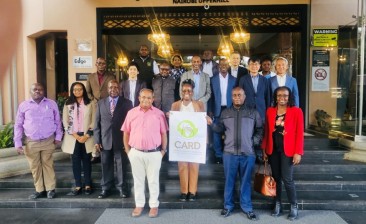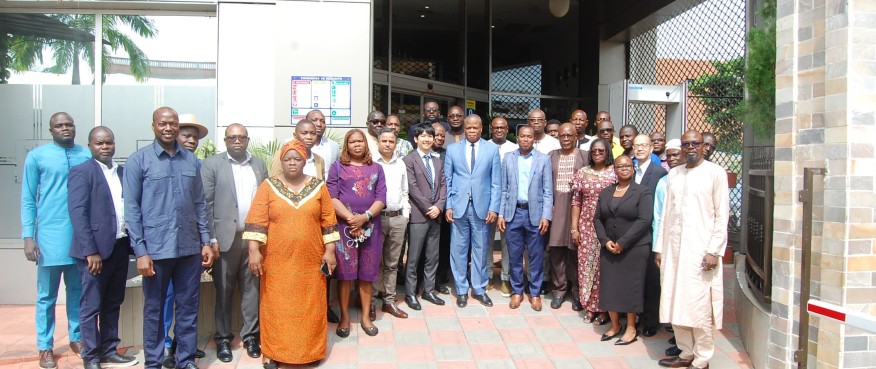
Benin, May 2025
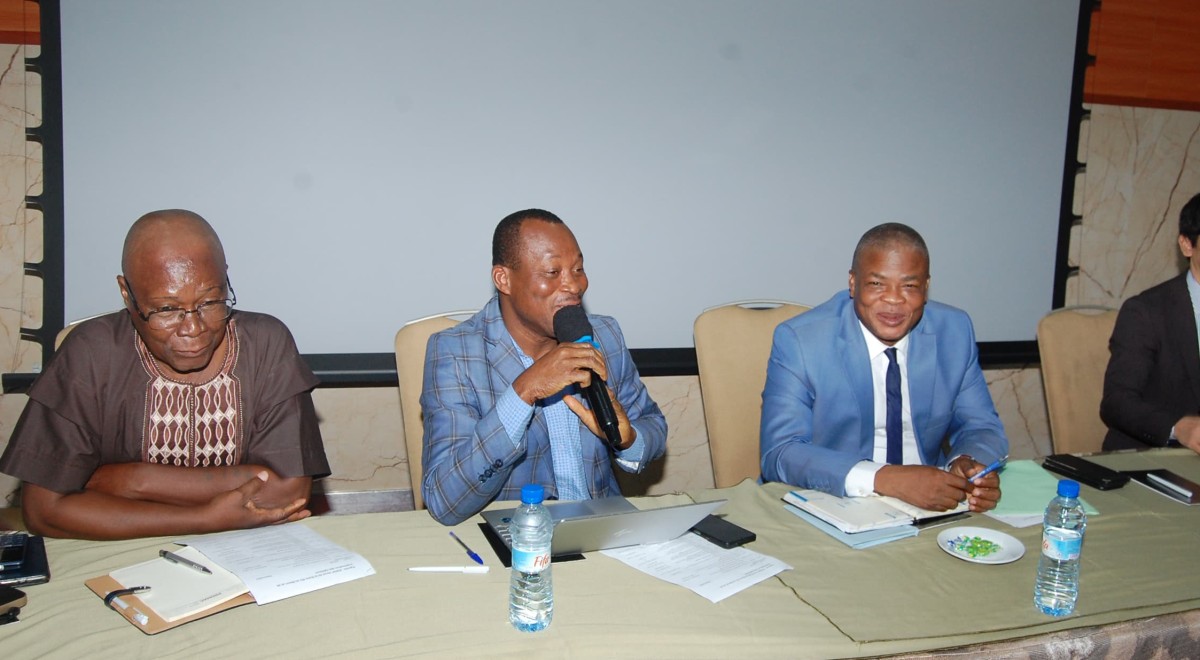
INTERVIEW with Mrs. Ing SAKA Loubatou, CARD FOCAL POINT in Cotonou, Benin on 28th May 2025
Finesse, Rigour and Efficiency at the Heart of the Rice Sector in Benin
Mrs. Ing SAKA Loubatou and Dr. Kabirou Bouraima, Key Representatives in the rice sector, respectively Focal Point of the NRDS and Coordinator of the Rice Program, play a decisive role in the implementation of actions aimed at strengthening rice production. Their leadership and priesthood are part of an ambitious vision: to achieve the government’s goal of producing one million tons of rice by 2030, thus contributing to Benin’s food sovereignty
Potential and Challenges of the Rice Sector in Benin
Benin’s territory has a huge potential for rice-cultivation areas estimated at about 375,000 hectares. However, this potential remains underexploited due to several structural constraints. Despite growing demand and favourable agro-climatic conditions, the sector suffers from a low level of existent of irrigation schemes, a lack of modernization, a low intensification of production systems, as well as a lack of technical support and financing. The competitiveness of local rice also remains a major issue. Strong political will, supported by technical and financial partners, is a key lever for overcoming these obstacles and promoting the sustainable development of the rice sector.
Rice from big ceremonies Food to a daily common Food
Historically considered as a food reserved for grand ceremonies, rice has undergone to a daily common food following the 2008 food crisis. The government’s response, in particular through the financing of the sector, the installation of processing plants in the Niger Valley, and the implementation of a system for purchasing paddy in cash, has made it possible to multiply national production by five, from 110,000 tons in 2010 to 540,000 tons in 2022. The closure of the Nigerian border in 2019 strengthened the strategic position of Beninese rice, placing it at the center of diplomatic and economic concerns, and making rice a national priority for food security and economic growth.
Production Target of 1 million Tons by 2030
Faced to the rice growing demand, Benin aims to reach a production of one million tons of rice by 2030. Currently, production stands at about 600,000 tons, nearly 60 percent of the target. To make up the deficit, it is necessary to increase irrigated areas, facilitate access to finance, strengthen technical capacity building, support research for the development of resilient and high-yielding varieties, and promote quality of the local rice. The update of the National Strategy for the Development of Rice Cultivation (SNDR) and the National Programme for the Development of the Rice Sector (PNDFR) is a crucial step in achieving these objectives.
Regional Integration and International Financing
Benin intends to take advantage of its participation in sub-regional (ECOWAS) and continental (CARD) bodies to adopt best practices and access international financing. These approaches aim to strengthen the competitiveness of the national rice sector, optimize the use of resources and ensure sustainable growth, in line with regional and international standards.
A Realistic Vision for a Sustainable Future
For the production target to become a tangible reality, it is imperative that the authorities carry out an accurate and uncompromising diagnosis, based on evidences. The definition of a clear roadmap, with appropriate resources, will ensure effective implementation. The success of this strategy will depend on collective commitment, resource mobilization and the ability to overcome structural challenges. In 2030, Benin will then be able to legitimately claim that it has achieved its goal, thus joining the small circle of African countries that are self-sufficient in rice, and consolidating its food sovereignty and economic security.