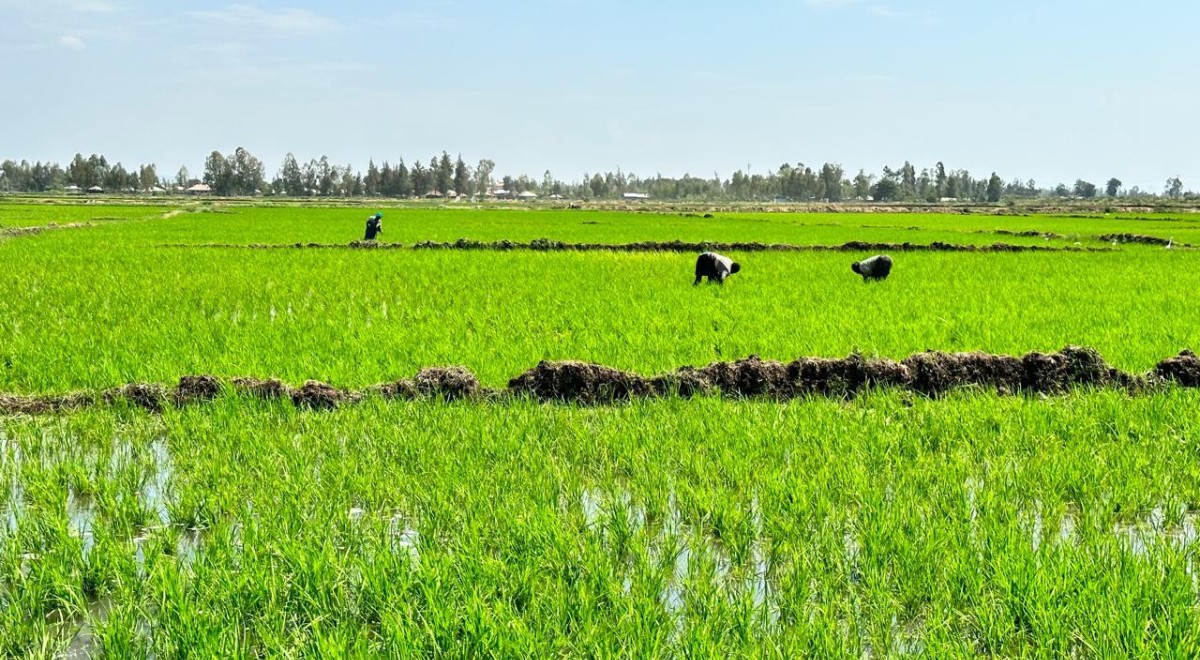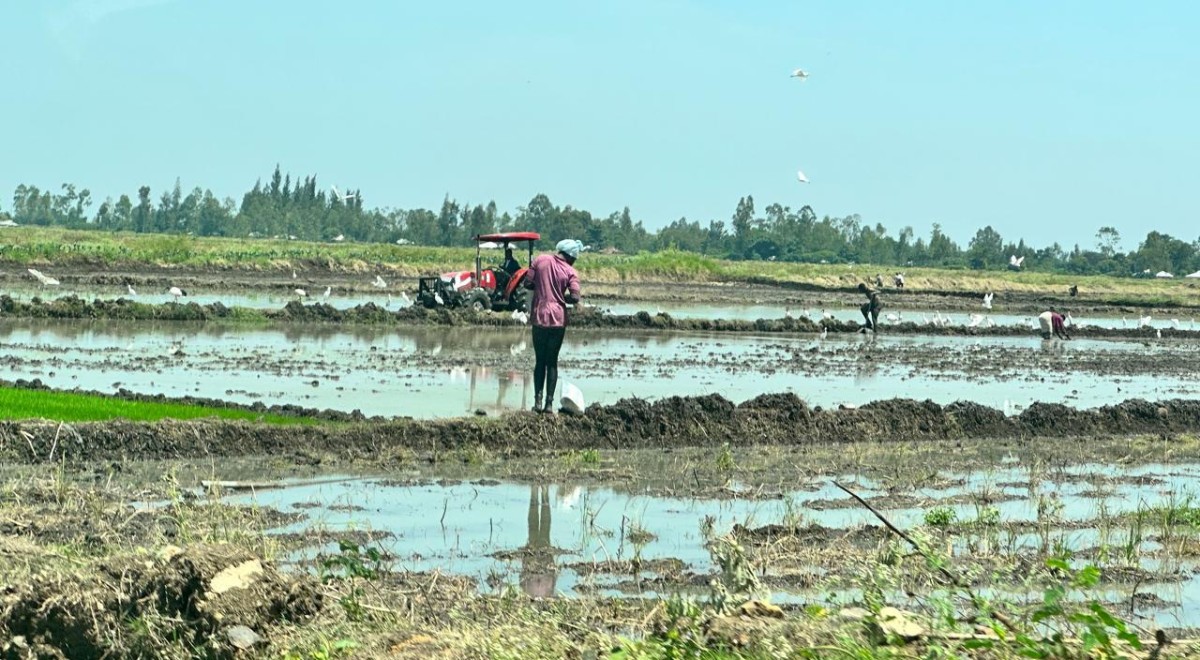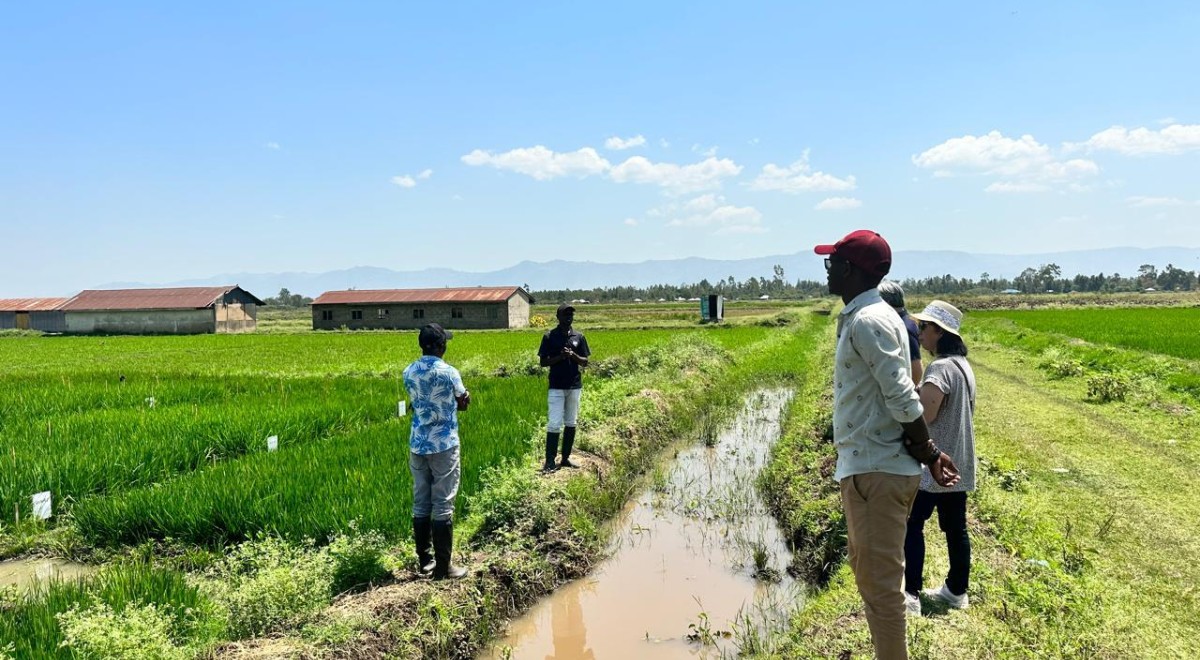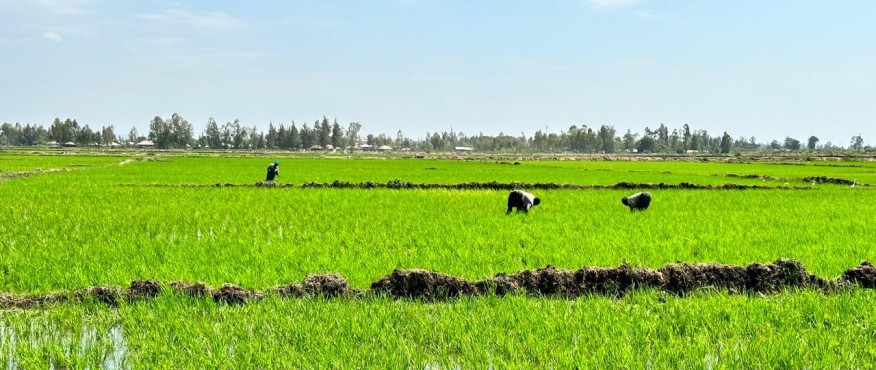
Kenya, October 2025
KENYA’S PATH TO RICE SELF-SUFFICIENCY: Insights from Dr. Mary Mutembei, Head of Rice Promotion Program in the Ministry of Agriculture, Livestock and Development (MoALD) and Kenya National Rice Development Strategy (NRDS) Focal Point
Rice is steadily gaining ground in Kenya’s food system. Once a minor crop, it is now the third most important cereal after maize and wheat, with demand rising by over 10% annually, driven by urbanization, population growth, and shifting food habits. From the coastal fields of the 1870s to today’s ambitious self-sufficiency goals, rice has come a long way in Kenya. Consumption is soaring, imports dominate the market, and farmers are striving to catch up. In this exclusive interview, Head of Rice Promotion Program in the MoALD and Kenya’s NRDS Focal Point, Dr. Mary Mutembei, takes us inside the country’s rice journey, its history, hurdles, and hopes for a more resilient and competitive future.
1. GENERAL OVERVIEW OF RICE IN KENYA
How rice is produced and consumed in Kenya
In Kenya, rice is an important food crop ranking third among the staple cereals. Nearly 80% of rice in Kenya is produced under irrigated ecologies. Kenya’s rice production is estimated at 230,000 tons per year, with the local production meeting only about 20% of the country’s demand. Despite the increasing production volumes and yields in Kenya, driven by government initiatives, new rice varieties, infrastructure, and improved farming techniques, consumption has been rising sharply due to growing demand occasioned by a population increase, urbanization, and changes in food habits, especially among the youth. This increase in demand has been growing faster than the increase in local production, hence creating a demand gap of almost 80% annually that is usually filled through imports. Consumer preference is mainly for long, slender, non-sticky grains. In addition, aromatic rice has a niche market and is normally sold at a premium price compared to non-aromatic rice.
The history of rice cultivation in Kenya, and when it first became a staple crop
Rice cultivation in Kenya dates back to the 1870s among coastal communities along the Kenyan coast, although earlier reports suggest that the crop was officially introduced in 1907. However, rice didn’t receive much attention until the 1950s when 2000 ha of the Mwea Irrigation Scheme (MIS) were developed in Central Kenya. Subsistence rice production in the coastal region remains a common practice, with over 19 traditional varieties grown. Rice was not considered a traditional crop, although it was included in the National Development Plans in the 1960s and 1970s, where there was some investment in the development of irrigation infrastructure and introduction of aromatic variety in the Mwea irrigation scheme. This led to a rapid increase in rice consumption in the 1970s, which could not be met through local production resulting to importation to close the gap. In 1992, levies were imposed on various commodities, including rice, to curb the dumping of cheap imports; farmers were also offered minimum prices to encourage increased production. It was also around this time that the government intervened in milling through the installation of a milling facility in Mwea and later another mill was set in Kisumu to meet the rising demand in rice consumption.
The Mwea irrigation scheme has since expanded to be the largest rice irrigation scheme of 12,400 ha, accounting for at least 70% of rice production in the country. The introduction of improved varieties led to the adoption of rice as a commercial crop in MIS from 1997.
A rice-specific strategy was drafted in 2008 when the first National Rice Development Strategy (2008-2018) came into force. The prioritization of rice as a strategic staple crop during this phase attracted collaboration and partnerships among local and international organizations. This has resulted in significant milestones in production from 47,256 tons in 2008 to 147,572 tons in 2018 and total productivity with yields escalating from 2.87 tons/ha to 4.28 tons/ha in 2018. This was due to capacity building and the adoption of improved technologies by farmers. Among them was increased mechanization, adoption of high-yielding and climate-resilient varieties, good agricultural practices, post-harvest handling and milling.
Implementation of the 2nd phase of the NRDS 2019-2030 is going on with the goal of moving the country towards self-sufficiency and achieving the 2030 target of increasing rice production from 147,572 tons in 2018 to 1,301,000 tons by 2030. The current rice production in 2024 stands at 304,003 tons with a yield of 5.6 tons/ha. During this phase, mechanization along the rice value chain has increased, leading to increased production and improved quality of locally produced rice.
Although maize remains the dominant staple, rice has experienced the fastest growth in demand (over 10% annually), making it a critical crop for Kenya’s food security and economic development.
2. SECTOR ACTORS AND PRODUCTION DYNAMICS
Kenya’s rice value chain is largely driven by the private sector, with the government playing a regulatory and facilitative role through policy formulation, coordination, and development of strategies to guide rice development. Rice production is mainly undertaken by smallholder farmers with farm sizes ranging between 0.10 and 12.14 Ha (0.25 and 30 acres). Private actors dominate mechanization services along the rice value chain, agro-dealerships, financial services, processing, and marketing. Rice consumption is high in both rural and urban areas, though urban households remain the primary consumers. Kenya’s current rice production stands at approximately 230,000 tons per year, while domestic demand is estimated at over one million tons per year. Therefore, the local production meets only about 20% of the national demand. As a result, this leaves a significant annual deficit, leading the country to heavily depend on imports. Kenya imports approximately 770,000 tons annually, roughly 80% of its rice to meet its domestic needs, with the rice particularly imported from Asia (India and Pakistan being the primary Asian suppliers) and 1% from Tanzania.
3. CHALLENGES AND OPPORTUNITIES
Kenyan rice farmers face 3 major challenges;
- Limited access to quality inputs, especially certified seeds and fertilizer, remains a major challenge.
- Adoption of mechanization at land preparation, harvesting, and milling is on the increase in irrigated ecologies. However, mechanization in land leveling, transplanting, and drying is low. In addition, there is limited mechanization in rainfed ecologies along the value chain.
- Inadequate water for irrigation and financing
For researchers, limited funding and a shortage of skilled rice scientists remain significant constraints. In the market, locally produced rice often struggles to compete with imported rice on price and quality, reducing its market share. Locally produced rice is usually higher and of inferior quality than imported rice.
Although there are no targeted campaigns to promote the consumption of local rice, the Government of Kenya is focusing on increasing local production through expansion of area under rice, as well as encouraging private sector participation along the value chain, among other interventions. It is expected that increased production will bring down the price of locally produced rice and improve local consumption. Rice consumption is also promoted through the procurement and marketing of local rice through government institutions. Currently, significant opportunities for growth or improvement in the Kenyan rice industry exist. There is a large unexploited potential for rice production, investment in milling, value addition in rice and rice byproducts, and mechanization at land leveling, transplanting, and post-harvest handling.
4. ROLE OF CARD AND NATIONAL RICE DEVELOPMENT STRATEGY (NRDS)
Major benefits of joining CARD
Kenya’s joining the CARD has been significant in advancing its rice sector. CARD’s technical and financial support led to the formulation of two National Rice Development Strategies (NRDS Phase 1: 2008-2018 and Phase 2: 2019-2030), which guide rice development in Kenya. Also, CARD support led to the setting up of a rice office at the Ministry of Agriculture headquarters to improve coordination and enhance focus on rice as a staple crop. In addition, CARD has supported the development of project concept notes as tools for resource mobilization. The NRDS, as the guiding document in rice development, attracts support from local, regional, and international organizations in infrastructure development, mechanization, research, training, increased job creation, and partnerships. These concerted efforts lead to an increase in rice production and value. This has resulted in increased adoption of improved production technologies and the use of certified seeds. In addition, it has increased private sector investment, leading to livelihood diversification and increased employment along the rice value chain. CARD is currently supporting monitoring progress in NRDS implementation and general development in Kenya.
Solutions NRDS has put in place to boost production and improve the competitiveness of local rice
The 2nd Phase of the NRDS 2019-2030 focuses on four strategic objectives:
- Expansion of production area in irrigated and rain-fed ecologies.
- Increasing productivity in irrigated and rain-fed ecologies
- Decreasing imports through increased competitiveness of locally produced rice.
- Promotion of private sector participation along the value chain.
Some expectations to CARD
Kenya is still highly import-dependent and among the most vulnerable countries to shocks in the global rice trade. We hope that CARD will support resource mobilization and development of projects based on the NRDS concept notes to make rice self-sufficiency a reality by the end of Phase 2 in 2030.
5. SUSTAINABILITY AND FUTURE OUTLOOK
Steps being taken to ensure sustainable rice production in Kenya and sub-regional level, and towards increasing rice production in the short and long terms
Kenya is partnering with local and international stakeholders in the development and dissemination of improved rice production technologies, enhancing access to climate-resilience, high-yielding varieties, promotion of circular economies, like the use of rice by-products, including biochar, as well as strengthening marketing infrastructure. The Country has also been actively participating in regional interventions in rice development.
Any questions regarding Inclusive farming?
“How can inclusive farming be enhanced in the rice value chain?”
Looking ahead, it’s important to emphasize inclusive and resilient growth, ensuring that smallholder farmers, women, and youth benefit equitably from the expanding rice sector.
“Enhancing rice value chain for job creation in Kenya”, KIPPRA article – 11th Jun 2025