Equatorial Guinea, December 2025
CARD supports the launch of the National Rice Development Strategy
A mission was requested following Equatorial Guinea’s official application to join CARD
This mission was conducted following the official request submitted by the Government of Equatorial Guinea in June 2025 to join the CARD initiative. In response to this request, the CARD Secretariat deployed an initial technical mission to Bata in Equatorial Guinea from December 8th-12th 2025 to engage directly with national authorities, assess the status of the rice sector, and lay the groundwork for CARD’s support to the formulation of the National Rice Development Strategy (NRDS).
Supporting national authorities in understanding the NRDS process
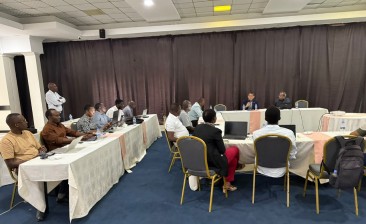
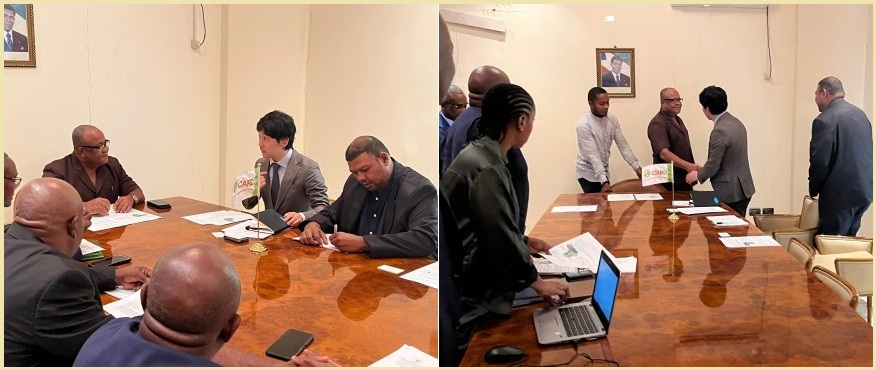
The mission aimed to support the Equatorial-Guinean authorities in understanding and taking ownership of the NRDS formulation process. Working sessions were held with His Excellency Minister of Agriculture, Livestock and Fisheries: Jose Juan Ndong Tom Mekina, the Director General of Agriculture, M. Nicanor Ela Ncogo Abogo as well as several technical directors and GNQ NRDS focal point and his deputy. During these exchanges, the key stages of the process were presented, ranging from diagnostic and data collection to project formulation and validation of the strategic document. The discussions also enabled the pre-identification of the main administrations and technical partners expected to take part in the process.
The country’s first value-chain agricultural strategy
In a context characterized by the absence of formal agricultural value chain strategies, the NRDS will constitute the country’s first agricultural value chain strategy. It will play a structuring role in the development of the rice sector and contribute to reducing the country’s dependence on rice imports.
An initial field diagnosis and the need for a gradual approach
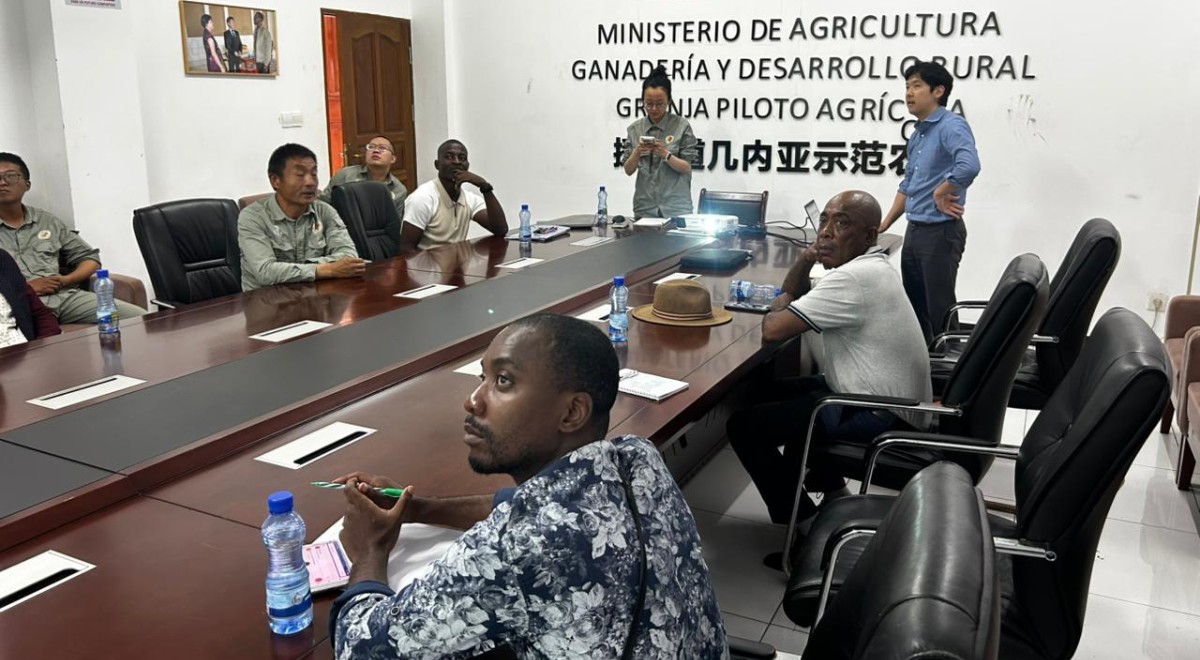
The mission also made it possible to carry out an initial assessment of the rice sector, highlighting the limited availability of technical data, the absence of rice processing facilities, and the need to adopt a progressive approach adapted to national capacities. A visit to the Niefang Research Center underscored the importance of capitalizing on existing experiences while avoiding the large-scale replication of technological models that are difficult to reproduce nationally and instead identifying more sustainable production models.
First steps toward operational implementation
At the conclusion of the mission, the next steps of the NRDS process were outlined, including the continuation of data collection, the formalization of the National Task Force, and the preparation of the first working phase, planned for the first half of 2026.
Through this mission, CARD reaffirms its commitment to supporting Equatorial Guinea in establishing a solid strategic framework for the sustainable development of the rice sector and the strengthening of food security.
Some part of the meeting was covered by National Television of Equatorial Guinea as below YouTube channel.
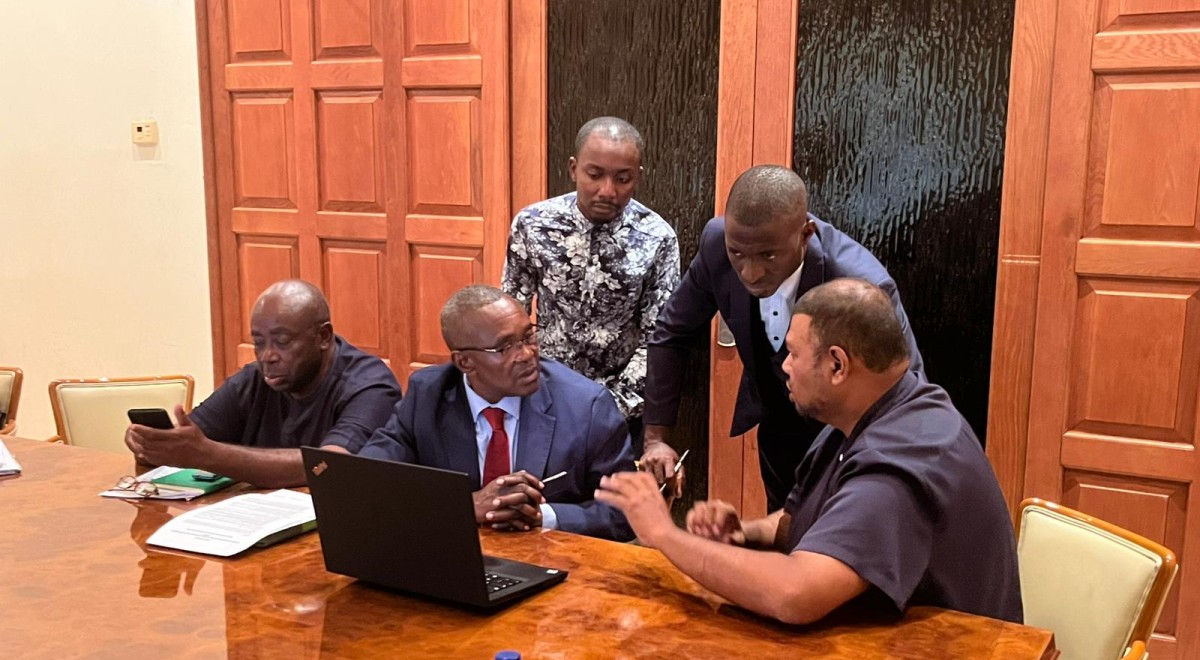


The meeting was covered by national television of Equatorial Guinea