Cote d’Ivoire, December 2025
Interview of the Focal Point of Côte d’Ivoire
Côte d’Ivoire: A country where the challenge of ‘local rice consumption’ has become the driving force behind a new national dynamic
Presentation of the Focal Point of Côte d’Ivoire
Mr. Yacouba Dembélé, General Director of the Agency for the Development of the Rice Sector (ADERIZ). ADERIZ emerged from the National Office for Rice Development (ONDR). In 2019, the ONDR’s status was reformed to transform ADERIZ into an implementing agency, endowed with greater autonomy and responsibilities, to better fulfill its assigned missions. ADERIZ’s role is to coordinate and regulate all activities within the rice value chain. It does not produce, process, or directly sell rice but ensures that each actor has the best conditions to operate profitably, with the common goal of achieving rice self-sufficiency.
Rice, a staple food in continuous evolution
Present in Ivorian diets long before independence, especially in the Central-West and West regions where some communities had a genuine rice culture, rice has become an essential product across the entire country. Initially consumed during big events, it has now become the primary food crop, favored over maize. Urbanization and modern lifestyles have accelerated this transition, making rice a daily food for all social classes. Indeed, rice has become a convenient, easy-to-preserve food suited to urban lifestyles. As a result, rice now occupies the top position in consumption in Côte d’Ivoire. It is followed by maize, which also plays an important role, particularly in human and animal nutrition. Nevertheless, rice remains the main staple consumed by the entire population.
Growing Production Coupled with Persisting Deficit
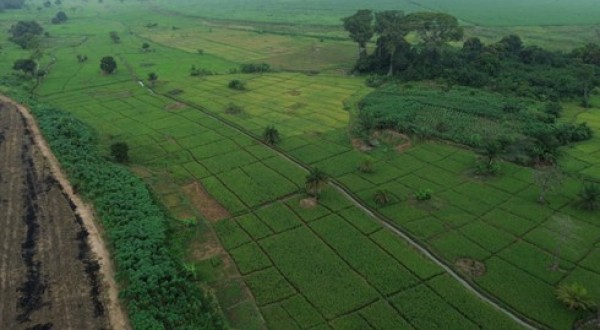
In 2024, Côte d’Ivoire produced approximately 1,547,000 tons of white rice, corresponding to 2,381,000 tons of paddy rice. Most of this production results from partial or full water control, allowing multiple cropping cycles per year (30,000 hectares of irrigated land, 430,000 hectares of rainfed lowlands, and nearly 350,000 hectares of upland). However, demand still exceeds supply, with a deficit of about 900,000 tons, which is compensated for by imports.
Rice as a key Sector from a Socioeconomic perspective
Regarding the importance of rice, it should be noted that rice plays a significant social role as an essential daily food for all social strata. Economically, rice is a structuring crop that generates employment across the entire value chain. It is one of the few sectors where the entire cycle is carried out locally, promoting wealth redistribution and rural vitality.
Challenges and Opportunities
The main challenges include:
- Access to certified seeds, a challenge largely addressed through recent investments in seed production centers and certification laboratories.
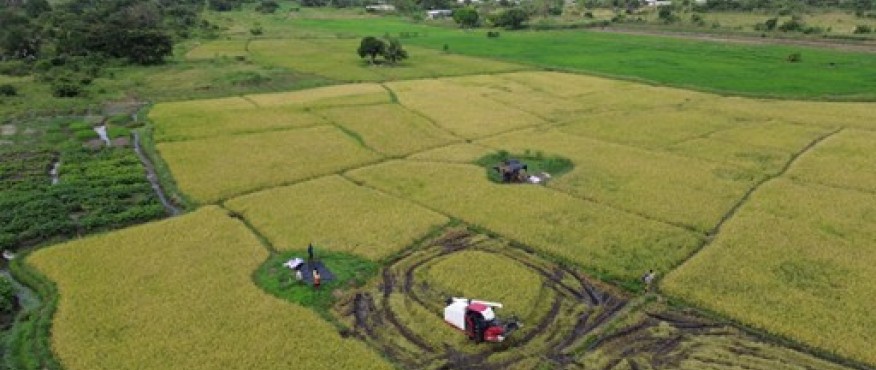
- Mechanization, which remains low, though progress is underway.
- Water management remains the major challenge requiring significant and sustainable investments.
Alongside these challenges, it should be noted that one of the main constraints facing the sector is the fact that research has historically suffered from a lack of institutional coordination, deteriorating infrastructure, and insufficient investment. Since the return of agricultural research (CNRA) to the supervision of the Ministry of State, Ministry of Agriculture, Development and Food Production (MEMINADERPV), a recovery has been observed, but significant efforts are still needed to rehabilitate research centers, strengthen equipment, and reinforce the capacity of human resources.
Opportunities to Seize
The sector’s potential is considerable: agro-ecological resources, a robust seed network, increased processing capacities, modernization of production, structured financing mechanisms, and private sector involvement. These assets offer promising prospects for the future.
Replacing Imported Rice with Local Rice: A huge Challenge
To substitute local rice for imported rice, the main challenge lies in quality and competitiveness. Indeed, Ivorian consumers are demanding, both in terms of visual, taste, technological quality, and price. To effectively replace imported rice, local rice must meet the same quality standards while remaining competitive. In this regard, several initiatives are underway to promote local rice, notably the Local Rice Promotion Project (PRORIL), supported by Japanese cooperation (JICA) as well as other projects.
CARD and NRDS
CARD promotes experience sharing, identification of best practices, pitfalls to avoid and provides greater clarity on sector challenges. It also facilitates the mobilization of technical and financial partners to address identified gaps in NRDS. Given CARD’s role, Côte d’Ivoire expects the Coalition to deepen discussions, especially on agricultural financing mechanisms and other relevant points. Human resource training for rice policy implementation is also a critical element that CARD should continue to support.
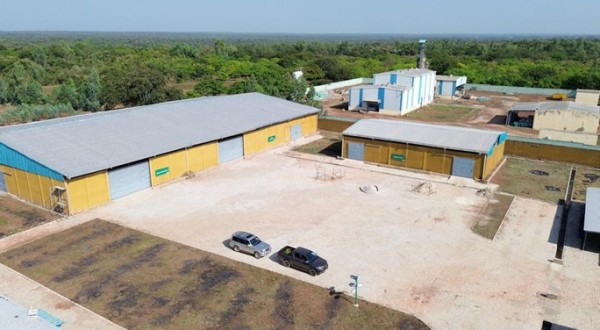
NRDS 2, unlike the previous NRDS 1, is based on a more mature and structured approach, focusing on : (i) Developing certified seeds, (ii) Mechanization through specialized service providers, (iii) Rehabilitation and expansion of irrigated areas, (iv) Improving processing, (v) Financing rice producers, identified as a key lever to achieve self-sufficiency, and (vi) An aggregation model with main actors being millers.
Measures Taken to Achieve NRDS Goals
The key actions in the sector mainly rely on seed availability, mechanization, and water management. However, beyond these achievements, a major issue remains: regulation of imports.
Sustainability and Future Perspectives
Perspectives for the sustainability of the sector include :
- At the national level, measures should be taken with the private sector to strengthen water control, mechanization, and access to quality seeds. Improving seed access alone could increase national rice production by about 30%, highlighting its strategic role in achieving self-sufficiency.
- At the sub-regional level, the challenge is to enhance regional complementarity by leveraging each country’s specific strengths. For example, part of the paddy produced in Côte d’Ivoire is exported to neighboring countries, notably Guinea. With better organization, Côte d’Ivoire could capitalize on its processing capacities, while other countries with vast agricultural land could increase production. Such an approach would aim beyond national self-sufficiency to regional self-sufficiency, pooling resources, expertise, and industrial capacities. CARD could play a key role in structuring this dynamic to better meet the growing needs of West Africa.