JICA Tsukuba 2026
JICA Knowledge Co-Creation program, “Promotion of African Rice Development for Sub-Saharan Countries”, in Tsukuba, Japan
Background of the mission
The Knowledge Co-Creation program is an annual event of the Japan international Cooperation Agency (JICA) to support Africa countries in building capacities of their work force. This year’s program themed ‘’The promotion of Africa Rice Development for Sub-Saharan Africa Countries’’ was designed to train selected CARD member countries to better practice the Japanese experience in good examples of rice production. The expected outcome for all participant will be to return to their country and replicate the knowledge gained by cascading such knowledge to the task force members thereby leading to the development of the rice sector of their respective country. This year’s focus was mainly on resource mobilization geared towards the implementation of the various concept notes developed by each country based on their National Rice Development Strategy (NRDS). The participants were therefore instructed on better ways of sensitization to the government in order to leverage the country budget, secondly sensitization to the various development partners, existing platforms and private sector. In carrying out these objective various modules were implemented during the three weeks training.
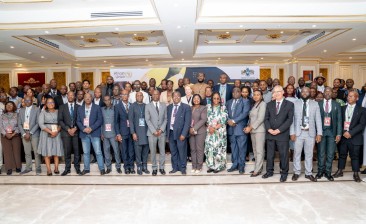
The training was implemented in two parts at the JICA training centre in Tsukuba city. The first part was for the French speaking participants which took place between January 22nd to February 05th, 2026 And comprised of the following countries Gabon, Benin, Central Africain Republic, Chad, Senegal, Guinea, Guinea Bissau, Togo, DRC, Cote d’Ivoire and Burundi. The second part was for the English-speaking countries; this took place from the 5th to 20th February 2026. The participating countries were Rwanda, Mozambique, South Sudan, Sierra Leone and Tanzania. The Technical Coordinator Kota Miyazaki ant the Regional Advisor Andry Randriantsoa supported the French speaking countries whereas the CARD General Coordinator (GC) Shinjiro Amameishi and the Senior Regional Advisor (SRA) Mike Nasamu provided support to the English-speaking countries. Officials of NTC International were responsible for coordinating the training.
The training was implemented through five modules:
Module 1: Inception report
Module 2: Solutions to address challenges
Module 3: The Japanese experience
Module 4: Improving the implementation of the NRDS
Module 5: Action Plan
Japan experience (1) Knowledge sharing (post-harvest management).:In order to gain experience in post-harvest management the participants paid a visit to the Ikenobe rice processing mill in Ibaraki Prefecture. The objective of this visit was to study post-harvest technologies based on objective evaluation and quality standardization and to understand the health control and distribution systems that ensure product reliability in the market. At the end of the visit the participants had a hand-on experience of the technical areas of rice processing which can be employed to improve the quality of local rice in their countries.
Japan experience (2) Knowledge sharing (Enhancing productivity through the synergy of extension services & agricultural financing): The participants paid an on-the-spot visit to the office of Japan Agricultural Cooperative (JA) to further study the workings of the organization. The management explained that JA is a private organization which work closely with the Ministry of Agriculture. JA assist their members to source for inputs at discounted rates and provide technical training for their members. The JA Tsukuba has a total membership of 28,000. The participants shared the organization of the cooperative society in their various countries.
Good example and approaches for resource mobilization: The training objective was to study successful examples of NRDS implementation through collaboration with development partners and to understand how to mobilize resources to implement the NRDS using the method of the Annual Rice Sector Review Meeting (ARSRM)
Direction of rice development through CARD Phase2 at country level: The training focused on two objectives
- Realize project ideas with the support from SC members and DPs
- Formulation of effective and realistic concept notes
- Budget allocation by national governments
- Approach DPs and potential external agencies
- Enhance leadership and autonomy of national governments in NRDS
Financial and human resources
Implementation of NRDS process with minimum support from CARD Secretariat in a sustainable manner
Japan experience (3) Lecture by NEWGREEN on climate change mitigation (Introducing the methane gas reduction mechanism and the process of attaching environmental premiums through data collection). A representative of NEWGREEN Ltd delivered a lecture on climate change rice cultivation using AIGAMO ROBO- A case study of methane reduction and high quality, low emission rice production in Vietnam was shared.
Japan experience (4). Discussion on methane reduction, data collection and certification process for environmental premium rice: The course content dwelled on climate mitigation strategy: ‘’Alternate wetting & drying (AWD)’’ and how it is both water saving and yield stability by activating the natural resilience of the root. The purpose is to reduce the methane production in paddy field
Japan experience (5) Seed production in Ibaraki Prefecture: The lecturer Prof.Asanuma explained that seed production system is very important. The Ibaraki prefecture has a seed production plan. From formulation of seed production plan => seed production management => seed production. Once rice seed is not properly selected the flowering time will be longer and yield will decrease while the opposite is the case when seeds are well selected. Pure line selection increase paddy yield and whiteness.
Simple paddy quality check: The focus of this training was to explain the parameters that are considered when determining the quality of paddy and why most mills do not patronize poor quality paddy because it impacts negatively on the final cost of the milled rice.
Development of action plan: An action plan was formulated and presented by each participant. The action plan will guide the implementation of the NRDS and form the basis for monitoring and evaluation of activities in the rice sector development by each country for the next one year.
A visit to JICA Headquarter: The participants paid a visit to JICA HQ. The objective of this visit was for a deeper one-on-one interaction for the realization of project ideas with the JICA officials responsible for their countries. It was an opportunity to know exactly what JICA was planning to do in their respective countries and also an opportunity for the participants to share their country most pressing need in the rice sector, thus this was a kind of fund mobilization strategy.
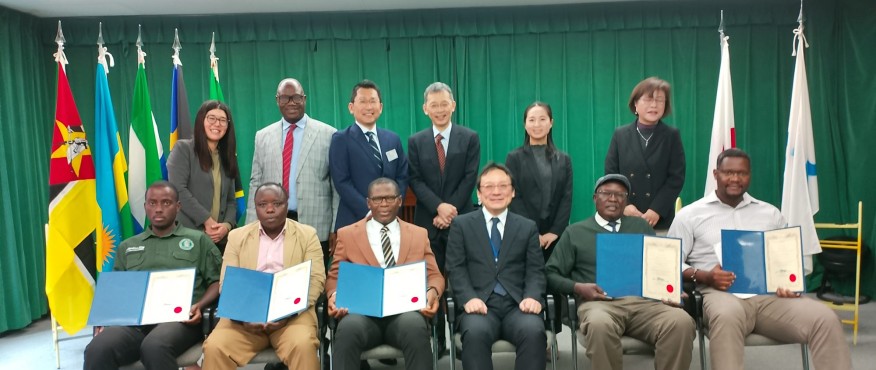
Closing ceremony. The training came to a close with a training evaluation and the presentation of certificates to the participants by the JICA Director of Training.
Way forward
As a way forward, each participant was supposed to go back home and step down the knowledge gained to the task force members and to sensitize the government about the outcome of the training through the writing of a back to office report and physical briefing. Most importantly each participant is expected to put into practice the content of the action plan and to map out strategies for fund mobilization through organizing the Annual Rice Sector Review Meetings (ARSRM) in their respective countries.
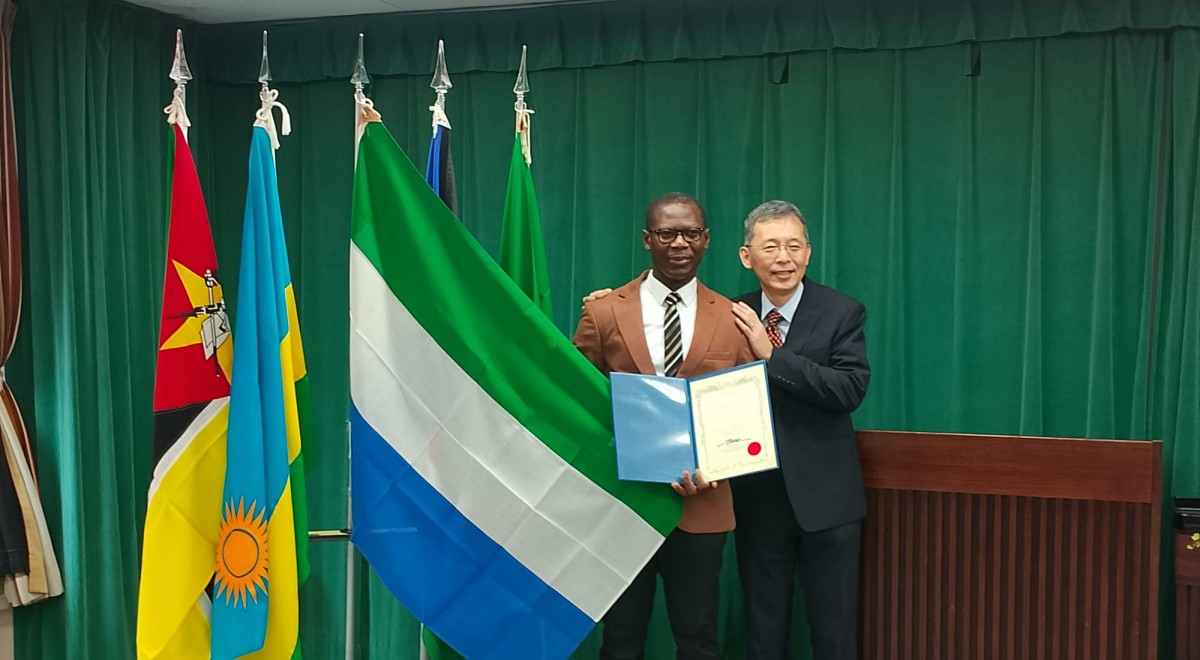
from Sierra Leone
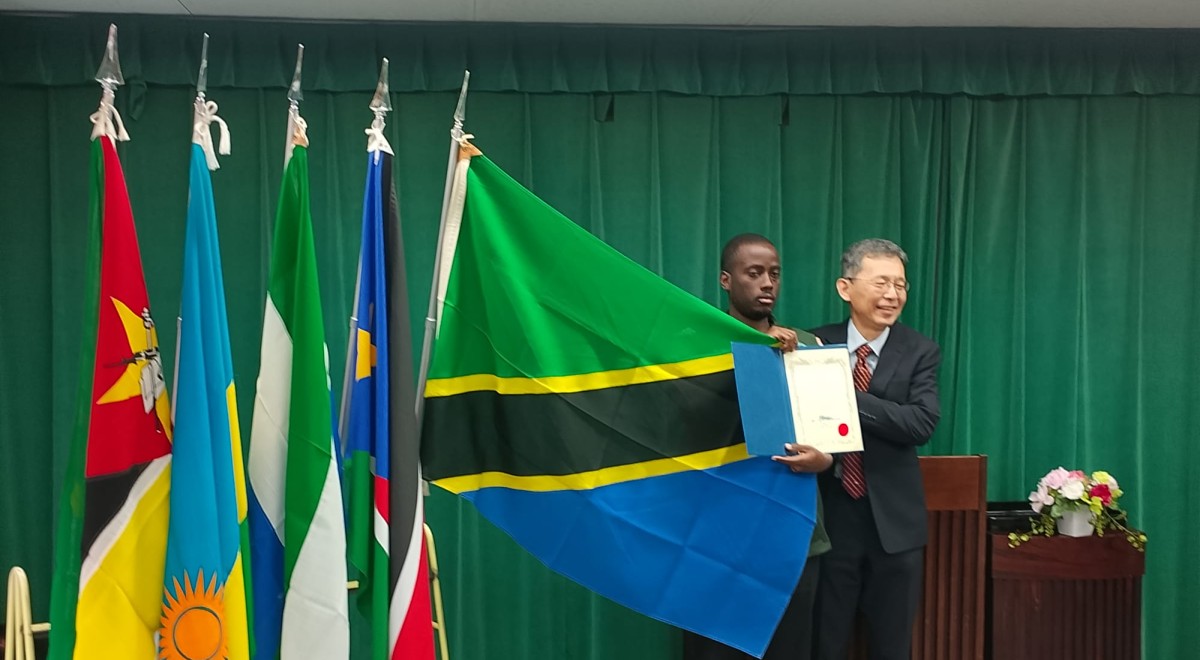
from Tanzania
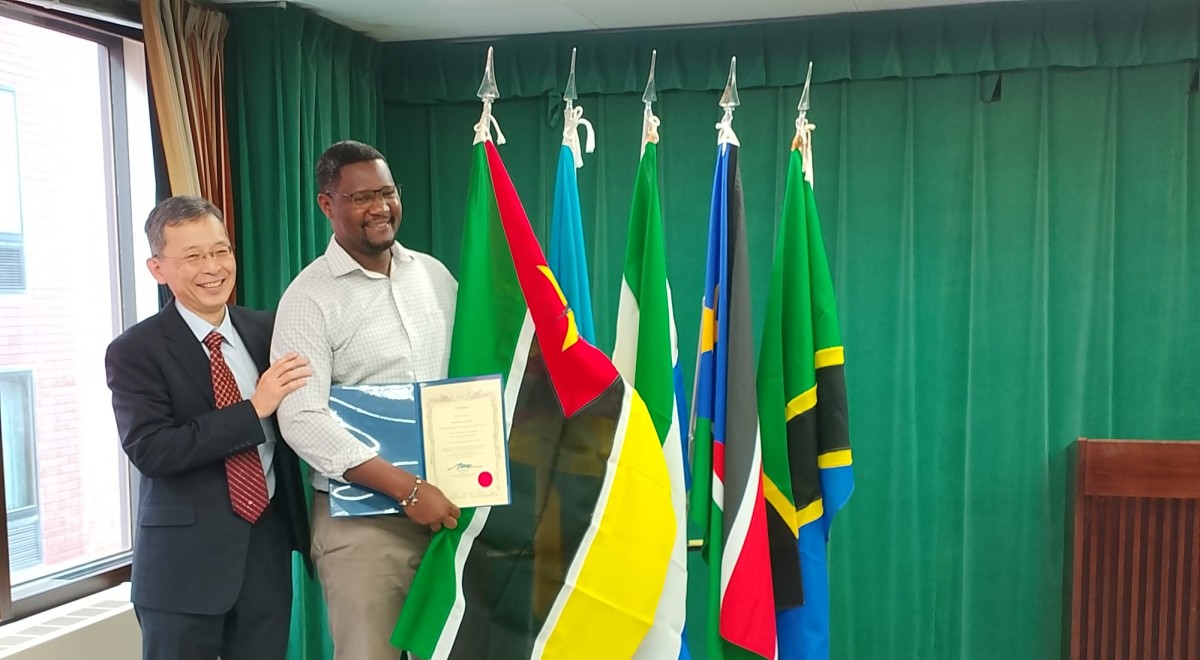
from Mozambique
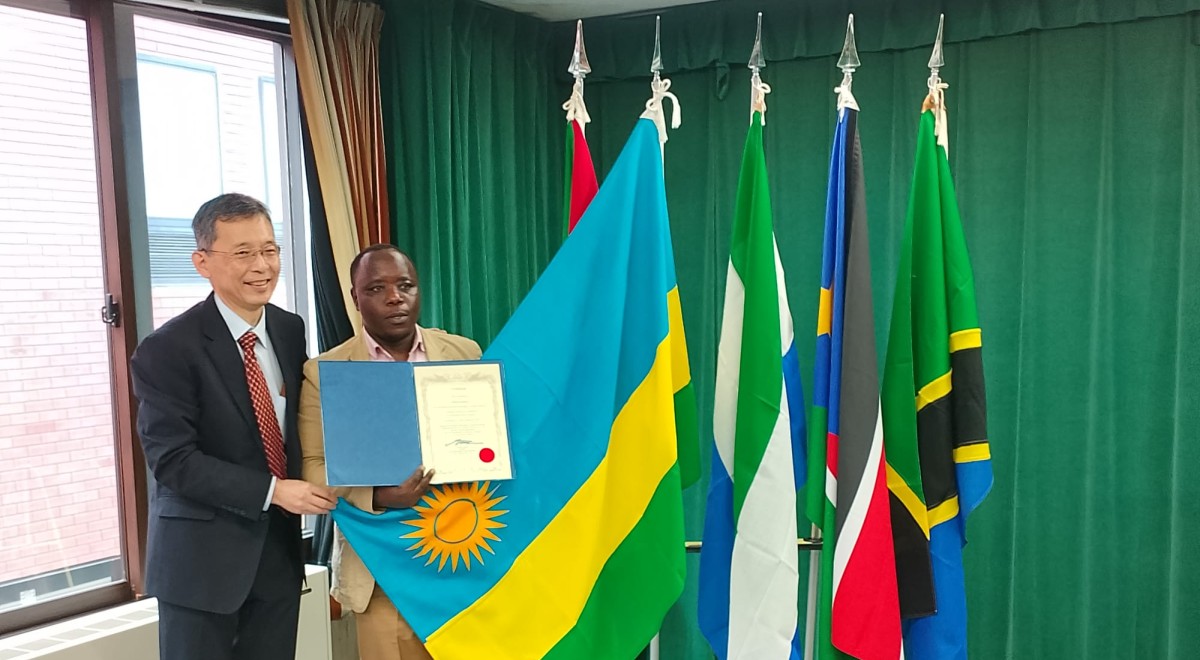
from Rwanda
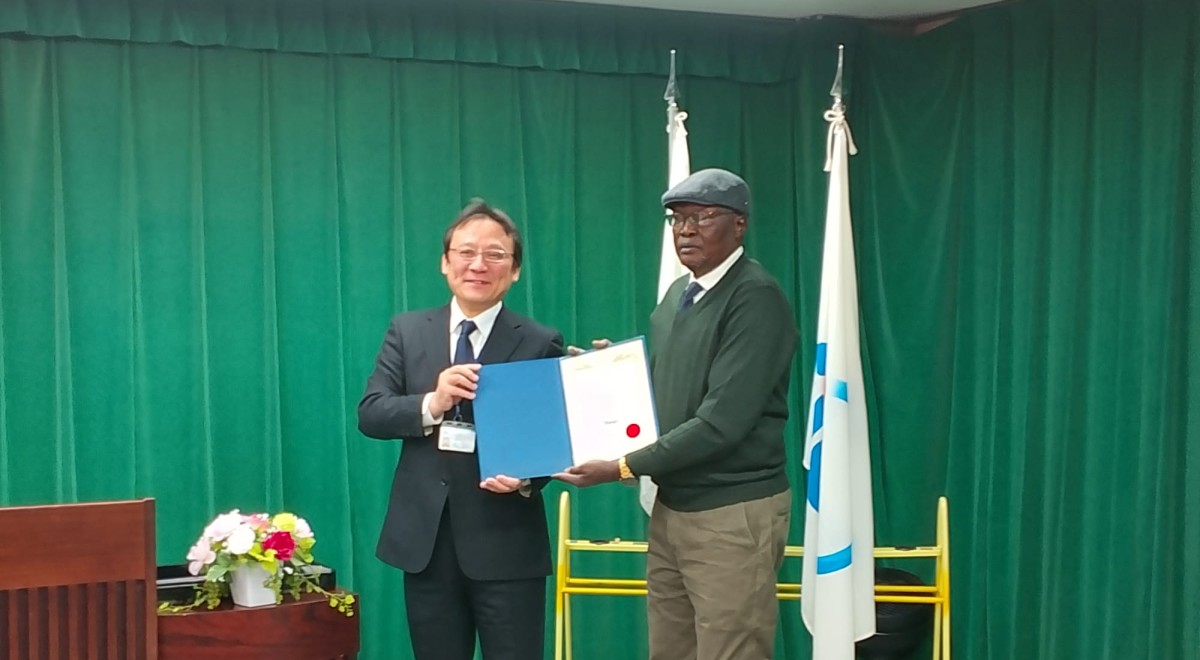
from South Sudan