A New Book on “African Rice” Published
Introduction to the publication:
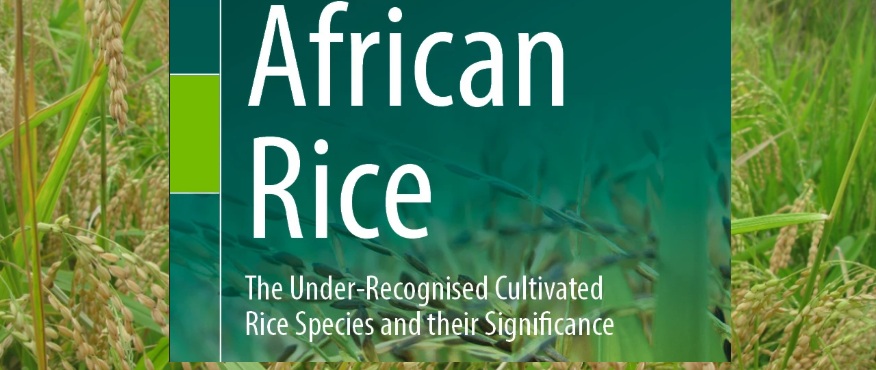
Futakuchi K, Arouna A (eds) 2026. African Rice – The Under-Recognised Cultivated Rice Species and their Significance. Springer, Cham. pp. 268. DOI: 10.1007/978-3-032-22733-1.
African rice (Oryza glarerrima Steud.), the other cultivated rice species than Asian rice (O. sativa L.), has various unique characteristics. But they have not been well recognized or documented compared with Asian rice. For the first time, the book at a one-stop shop provides readers descriptions of all about African rice from biology, genetics, agricultural and food sciences and socioeconomics. The two editors are AfricaRice scientists and authors of different chapters are from national and international research institutes and universities.
The book contents include the reviews of past relevant studies published by AfricaRice and other organizations and new research results by AfricaRice.
Overview of the book:
The book comprises of the five sections with 13 chapters: (1) Introduction (one chapter); (2) African Rice: Its Botanical, Physiological and Morphological Characteristics (four chapters); (3) Varietal Development Exploiting African Rice (three chapters); (4) African Rice and African People (four chapters); (5) Conclusion (one chapter).
African rice as genetic resources to improve resistance to abiotic and biotic stresses has relatively been well-known with several past studies published. The book summarizes such past research outputs including AfricaRice’s and provides information on other useful characteristics which have not yet been sufficiently focused.
Directly useful information for rice breeding is provided. Experiences of breeding using African rice and their outputs in AfricaRice activities are shared. The efforts of AfricaRice and partners are not only on interspecific breeding combined with Asian rice but also on improvement of African rice. Progresses of technologies to support/accelerate rice breeding using African rice, which may include genetic conservation, are summarized.
Economic values of African rice and socioeconomic environments affecting the values are examined. These analyses will provide some guidance for the scaling of varieties derived from the use of African rice.
The contents of the book will be useful for and satisfy academic and industrial researchers including students in various disciplines who are interested in rice/crops in Africa.
Key themes and findings:
- Responses of African rice to almost all important abiotic stresses (drought, iron toxicity, salinity, water-logging etc.) and biotic stresses (diseases, insects, weeds, parasite weeds, nematodes etc.) in Africa are well showcased by systematic reviews of published research including center’s own.
- New—at least not yet well documented—values of African rice such as use for foliage, early morning flowering (EMF) to escape from a heat stress, and nutrition values (micronutrient and protein contents) are introduced. The results of EMF and nutrition values came from the recent screening of the almost whole set of the African rice collection of the AfricaRice genebank, which is the largest one in the world.
- Past and recent experiences of AfricaRice in rice breeding using African rice and their outputs are shared. Some of them have not yet been published in other sources.
- Economic values of African rice are estimated. This is also information valuable for breeders and seed sector but difficult to find in other documents.
Relevance to Africa’s rice sector:
The book offers readers various knowledges around African rice, some of which will be associated with insights to rice sector development in Africa, particularly sector involved in varietal development. African rice is known as a crop highly adaptable to indigenous environments in Africa. The book contents systematically showcase valuable characteristics of African rice for breeding in Africa including those under recognized before. Other information related to the use of African rice such as breeding activities, state-of-art technologies to accelerate breeding, economic values will provide better understanding how to use African rice.
The characteristics of African rice need to be better and more exploited to develop durable rice systems against the climate change conditions. The species is a rich genetic source for malnutrition of African people, another big issue of the continent.
Relevance to CARD and NRDS implementation:
To achieve the goal of CARD II, sustainable rice cultivation area expansion and yield increase are approaches in NRDS of all countries. Exploitation of African rice strongly contribute to the development of varieties durable against the climate change.
Access to the publication: African Rice The Under-Recognised Cultivated Rice Species and their Significance
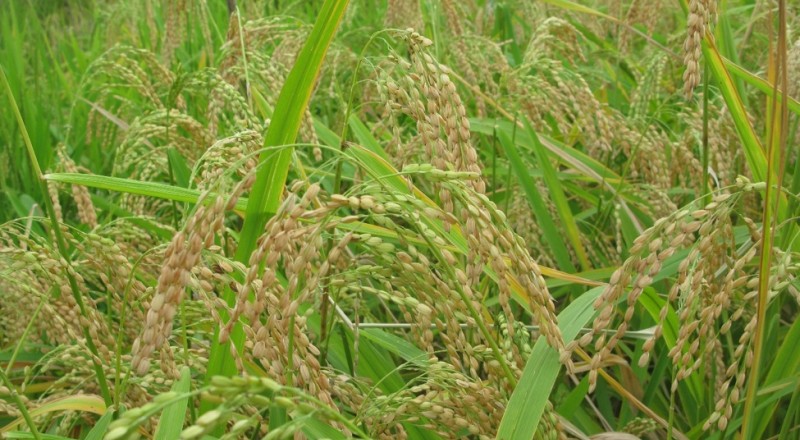
Sativa variety at maturity (photo by the AfricaRice Genebank)
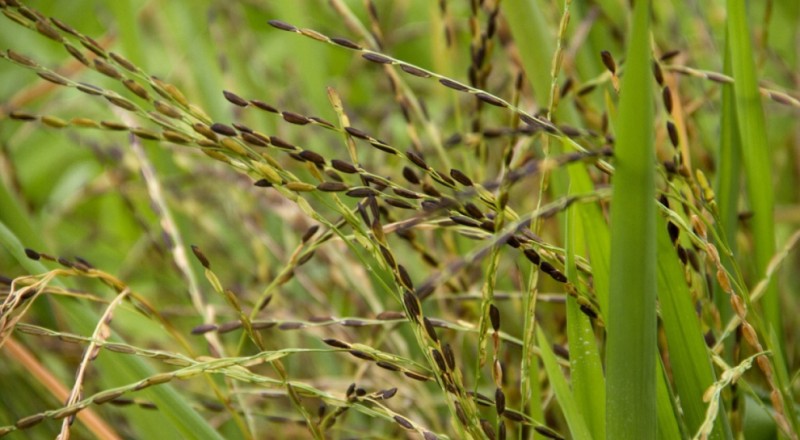
Glaberrima line at maturity (photo by the AfricaRice Genebank)